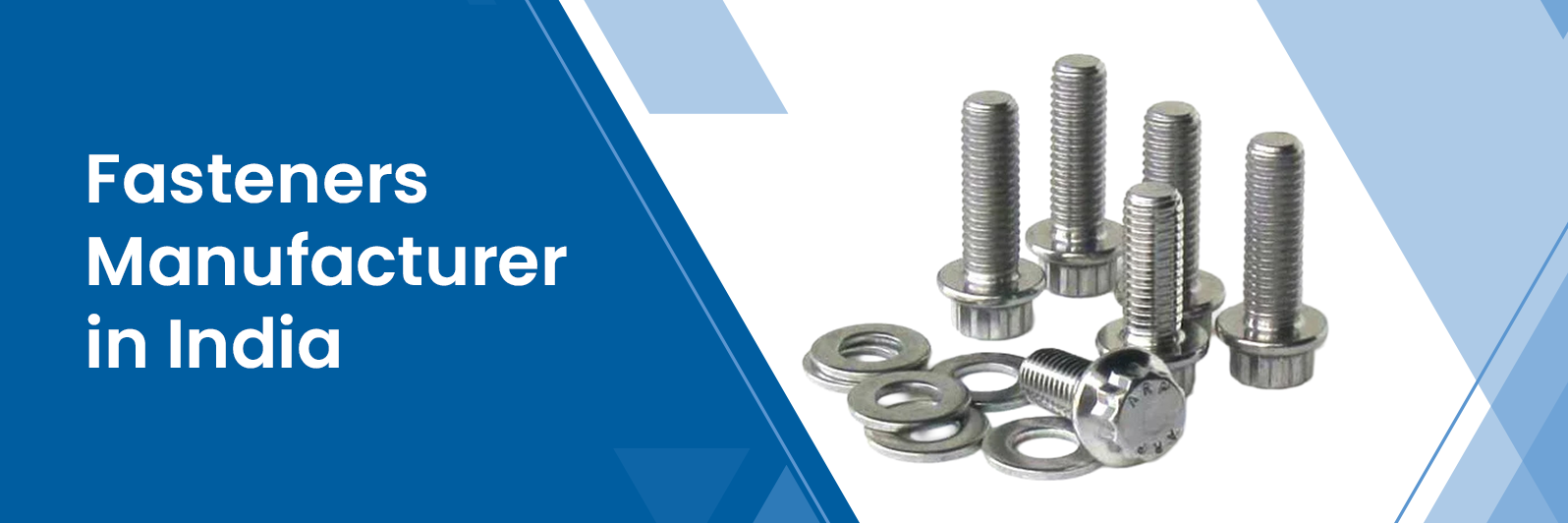
A fastener may be one of the smallest components in a flange or equipment assembly, but the wrong material can make it the weak point of the connection. Unifit Fastener works from the service condition outward - chloride exposure offshore, sour-service duty, aggressive process media, elevated temperature or high mechanical load - to match the bolt, nut, stud and washer material to the job. As a fasteners manufacturer in India, Unifit manufactures and supplies carbon and alloy steel fasteners, stainless steel fasteners, duplex fasteners and super duplex fasteners, plus nickel-alloy grades including Inconel, Monel and Hastelloy for industrial projects in India and export markets.
Fasteners are supplied to applicable ASTM, ASME, DIN and ISO requirements, with Mill Test Certificates (MTC) to EN 10204 3.1 provided with every order, as stated on the current page. From this overview, buyers can move directly to industrial bolts, nuts, stud bolts and washers, or continue by material family and standard before sending the project specification for quotation.
Request a Quote | Send EnquiryTable of Contents
- Industrial Fastener Product Range
- Fasteners by Material and Alloy Family
- Fastener Standards and Specifications
- Custom and Non-Standard Fastener Requirements
- Industries and Applications
- Quality, Inspection and Documentation
- Why Source Industrial Fasteners from Unifit Fasteners?
- Fastener RFQ Checklist for Procurement Teams
- Frequently Asked Questions
Send Your Enquiry
Industrial Fastener Product Range
Industrial procurement usually starts with the fastener form, then moves to material, grade, dimensional standard and service condition. The main product families supplied by Unifit are outlined below.
- Bolts - Hex, heavy hex, high-tensile, anchor and application-specific bolting for structural, machinery and process equipment assemblies.
- Nuts - Matching nut configurations and grades for bolts and stud assemblies, including hex, heavy-hex and other project-specified forms.
- Washers - Flat, spring, lock and application-specific washers used for load distribution, spacing and fastening assemblies.
- Stud bolts - Fully threaded and project-specified stud bolting commonly used for flanges, pressure equipment and petrochemical connections.
- Threaded rods - Metric and imperial threaded rod requirements can be specified by diameter, thread series, material/grade and required length.
- Screws and special fasteners - Standard and non-standard configurations can be reviewed for machinery, fabrication and drawing-based requirements.
- PTFE / Teflon coated fasteners and Xylan coated fasteners - Surface systems for projects that specify controlled friction, corrosion protection or defined coating requirements.
Fasteners by Material and Alloy Family
Material selection starts with the service condition: corrosion media, chloride exposure, operating temperature, required strength and the governing project specification. Use material names naturally in the explanation - stainless steel, alloy steel, duplex, super duplex or nickel alloy - and reserve phrases such as "stainless steel fasteners" for the relevant category link.
| Material family | Typical grade examples | Buyer / application consideration |
|---|---|---|
| Stainless steel fasteners | 304/304L, 316/316L and other specified grades | General corrosion resistance across process, fabrication and industrial service. |
| Alloy steel | ASTM A193 B7/B16 and other specified grades | High-strength and elevated-load bolting where the grade and heat-treatment requirement are defined. |
| Duplex steel | UNS S31803 / S32205 | Strength plus resistance to chloride-related corrosion and stress-corrosion cracking in suitable service. |
| Super duplex | UNS S32750 / S32760 | Higher-alloy duplex options for severe chloride, marine and offshore environments where specified. |
| Inconel | 600, 601, 625, 718, X-750 | High-temperature and corrosion-resistant service; the required grade depends on the operating condition. |
| Incoloy 825 | Alloy 825 / UNS N08825 | Corrosion-resistant service in chemical and process environments where this alloy is specified. |
| Hastelloy | C22, C276, B2 and other specified grades | Severe chemical and corrosive process conditions depending on media, temperature and grade. |
| Monel | 400 / K500 | Marine, seawater and selected chemical environments where Monel is specified. |
| Nickel alloy | Nickel 200 / 201 and related nickel alloys | Applications requiring nickel chemistry, corrosion resistance or process compatibility. |
| Titanium | Grade 2 / Grade 5 | Corrosion resistance and strength-to-weight benefits where the design specification calls for titanium. |
| Copper nickel | 70/30 and 90/10 | Marine and seawater systems where copper-nickel compatibility is required. |
*Grade-specific chemistry, mechanical properties and dimensional data are available on the linked material and product pages.
Fastener Standards and Specifications
Industrial fasteners are usually defined by more than one reference. A buyer may specify a material standard, a dimensional standard, a thread standard and an inspection requirement in the same RFQ. The governing combination must be confirmed for the specific joint and service condition.
| Standard family | How it is used in fastener procurement |
|---|---|
| ASTM | Material and mechanical requirements for many industrial fastener grades. Common process-bolting references include ASTM A193, A194 and A320 where applicable. |
| ASME | Dimensional, piping and thread references used in pressure-piping and bolting assemblies, depending on the product and project code. |
| DIN | Metric fastener dimensions and product forms used in machinery and general engineering. Examples include DIN 931/933 bolts and DIN 934 nuts. |
| ISO | International fastener dimensions, mechanical-property classes and thread/product standards, including common bolt, nut, socket and washer references. |
| BS / BIS / IS | British and Indian national standards used where the project or purchasing specification calls for them. |
| ANSI | Use only where the applicable product, joint or project specification specifically references an ANSI standard. |
Useful technical references: DIN fasteners | ISO fastener standards guide | ASTM A194 | ASTM A320 | ASTM A193
Custom and Non-Standard Fastener Requirements
Not every industrial joint can be satisfied by a catalogue fastener. Where the project calls for a non-standard configuration, Unifit can review the requirement against the buyer's drawing or technical specification. This is especially useful when the part has a special diameter, length, head form, thread, tolerance, material condition or surface requirement.
For drawing-based fasteners, send the latest drawing revision and identify critical dimensions, material and grade, thread form or pitch, tolerances, heat-treatment condition where relevant, coating or finish, quantity and inspection/documentation requirements. State the operating environment as well if temperature, corrosion, pressure or media exposure affects material selection.
Related pages: special alloy products | fastener coatings guide
Share Drawing | Request Technical QuoteIndustries and Applications
The same fastener geometry can require a different material, grade or coating when the operating environment changes. Procurement should therefore connect the fastener specification to the equipment, joint and service conditions.
- Oil, gas and petrochemical - Flange and equipment bolting may require controlled mechanical properties, temperature resistance, corrosion resistance and traceable documentation.
- Marine and offshore - Seawater and chloride exposure can make pitting, crevice corrosion and material compatibility central to the fastener choice.
- Power generation - Bolting may be selected around load, temperature, pressure, creep resistance and maintenance conditions in boilers, turbines and related systems.
- Chemical and process plants - Alloy selection should consider the actual process media, concentration, temperature and corrosion mechanism rather than strength alone.
- Construction and infrastructure - Property class, dimensional standard, coating, environment and installation method can influence the final fastener specification.
- Heat exchangers and pressure equipment - Fastener grade should be compatible with the joint design, service temperature, pressure conditions and the applicable equipment or piping code.
- OEM and engineering fabrication - Repeatability, dimensional control, material traceability and drawing revision control become important for recurring production requirements.
Quality, Inspection and Documentation
For industrial fasteners, the purchasing specification should define the inspection and documentation scope before the order is released. Depending on the product and requirement, this may include raw-material identification, dimensional and visual inspection, verification of mechanical or chemical requirements, hardness or tensile requirements, coating checks and document review.
Where traceability is required, identify the material certificate and batch-control expectation in the RFQ. If PMI, third-party inspection or additional testing is required, state it before quotation so the scope and applicable reports can be confirmed. For critical-project documentation, buyers may also specify Mill Test Certificates to EN 10204 3.1 where applicable to the order.
Procurement control: Do not assume a test or certificate is included by default. Put the exact inspection, MTC, PMI, third-party or project-documentation requirement in the RFQ and purchase order.
Why Source Industrial Fasteners from Unifit Fasteners?
- Multiple fastener categories - Bolts, nuts, washers, stud bolts, threaded products and selected special fasteners can be evaluated within one sourcing requirement.
- Material coverage - Stainless steel, alloy steel, duplex and super duplex grades, nickel-based alloys, titanium, copper nickel and other specified materials.
- Specification-led enquiries - Requirements can be reviewed against material grade, dimensions, thread, standard, drawing, finish and documentation.
- Standard and drawing-based requirements - Procurement teams can send catalogue-type requirements or non-standard drawings for technical review.
- Industrial application focus - Fastener and material selection is presented around engineering, process, marine, power and project requirements.
- Grade-specific data - Dedicated product and material pages carry detailed grades, dimensions and technical references for specification review.
Company information: About Unifit | Contact Unifit
Fastener RFQ Checklist for Procurement Teams
A complete RFQ reduces clarification cycles and lowers the risk of quoting the wrong grade, dimension or standard. Include the following information wherever available:
| RFQ field | What to provide |
|---|---|
| Fastener type | Bolt, nut, washer, stud bolt, screw, threaded rod or special component. |
| Diameter and length | Include metric or imperial units and any unthreaded shank requirement. |
| Thread | Metric/UNC/UNF or other series, pitch or TPI, class/fit and full or partial thread where relevant. |
| Material and grade | ASTM, UNS, ISO property class or project designation as applicable. |
| Standard or drawing | State the dimensional/product standard and attach the latest drawing revision for non-standard parts. |
| Finish or coating | Define PTFE, Xylan, zinc, galvanizing or other specified system together with any thickness/test requirement. |
| Quantity and schedule | Separate one-time project quantity, prototype requirement and recurring demand where relevant. |
| Application and environment | Temperature, corrosion media, seawater/chloride exposure, pressure/joint type or other selection factors. |
| Inspection and documentation | MTC, PMI, hardness/tensile tests, third-party inspection, ITP or project-specific documentation. |
Related technical resource: threaded rod weight chart
Send Specification | Request QuoteFrequently Asked Questions
Which types of industrial fasteners does Unifit supply?
Unifit supplies industrial bolts, nuts, washers and stud bolts, together with selected threaded, coated, high-tensile and special fastener requirements. Specify the material, grade, dimensions and governing standard in the RFQ; use the linked product pages for grade- and type-specific details.
Which materials are available for industrial fasteners?
Available material families include stainless steel, alloy steel, duplex and super duplex grades, Inconel, Incoloy, Hastelloy, nickel alloys, Monel, titanium and copper nickel, subject to the specific fastener type and grade. Selection should follow service temperature, corrosion exposure, mechanical requirements and the governing project specification.
Can Unifit supply custom or non-standard fasteners?
Drawing-based and non-standard requirements can be reviewed when the buyer provides the latest drawing or technical specification. Include critical dimensions, thread details, material and grade, tolerances, finish or coating, quantity and any inspection or documentation requirement so the quotation scope can be assessed correctly.
Which standards can be specified for fasteners?
Industrial fastener enquiries may reference ASTM/ASME, DIN, ISO, BS/BIS/IS or other project standards depending on the product and application. For process bolting, ASTM A193, A194 and A320 are common material families. The exact combination of material, dimensional and thread standards should be stated in the purchase specification.
How should I select the correct fastener material?
Start with the operating environment and design requirements: temperature, load, corrosion media, chloride or seawater exposure, pressure/joint type and required mechanical properties. Then confirm the material grade against the applicable code, equipment requirement or project specification rather than selecting an alloy from a generic strength or corrosion claim.
Does Unifit supply fasteners across India?
Unifit serves industrial buyers in India and also addresses export requirements. For a project enquiry, include the delivery location, required quantity and schedule so packing, dispatch and commercial terms can be confirmed for the specific order.
Can fasteners be supplied against drawings or project specifications?
Yes. Drawing- or specification-led enquiries can be evaluated for standard and non-standard requirements. Attach the latest drawing revision and identify critical dimensions, thread, material, standard, coating, quantity and inspection requirements. Any proposed deviation should be documented and approved before manufacturing or supply.
What should I include when requesting a fastener quotation?
Include fastener type, diameter, length, thread, material and grade, dimensional or material standard, finish or coating, quantity, application, operating environment and required test documentation. For special parts, attach the latest drawing. A complete RFQ helps prevent the wrong grade or dimensional standard from being quoted.
Request a Quote for Industrial Fasteners
Send your fastener requirement with the material and grade, dimensions, thread or governing standard, quantity, application and required documentation. For non-standard parts, attach the latest drawing revision. Unifit can then review the specification and respond with the appropriate product route and quotation scope.
- Fastener type
- Material / grade
- Diameter / length / thread
- Standard or drawing
- Finish / coating
- Quantity
- Delivery location / schedule
- Testing or documentation requirement