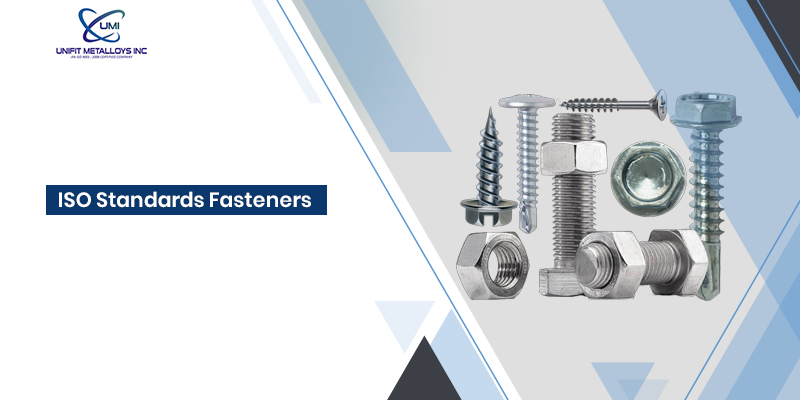
Standards refer to rules and requirements that are shared among manufacturers, OEMs, and international organizations. Standards in the fastener industry apply to every stage of production and verification, including: quality systems, base materials, dimensions, thread forms, surface treatments and coatings, and head markings. Clear fastener standards help define performance and interchangeability across suppliers and applications.
There are hundreds of recognized specifications in use, each with its own purpose and issuing authority. In this article, we focus on ISO fastener standards. You’ll learn what ISO standards are, why they matter to buyers and engineers, and how they compare with other sets of fastener standards. Along the way, we’ll reference key ISO documents commonly used in the field, including ISO 4042 (electroplated coatings), ISO 4029 (internal hexagon set screws), ISO 3506 (stainless steel grades and properties), ISO 10684 (hot dip galvanized coatings), and ISO 898 (mechanical properties for carbon and alloy steel fasteners).
What Are ISO Standards for Fasteners?
ISO stands for the International Organization for Standardization, a global body that develops and publishes widely adopted specifications for manufacturing and quality across many industries. Fasteners are just one part of ISO’s catalog, but for engineers, buyers, and QA teams, ISO fastener standards are central to ensuring consistent dimensions, materials, coatings, and mechanical properties.
ISO began formalizing fastener standards nearly five decades ago. Since then, these documents have become a common language for global trade and assembly, helping different suppliers and markets work to the same requirements. Many manufacturers and regulatory authorities advocate using ISO as the primary reference to simplify cross-border sourcing and improve consistency. For example, families such as ISO 4042 (electroplated coatings), ISO 3506 (stainless steel grades), ISO 898 (mechanical properties), ISO 10684 (hot-dip galvanizing), and ISO 4029 (internal hexagon set screws) are widely cited across industries when aligning to recognized fastener standards.
Common ISO Standards for Fasteners Like ISO 898, ISO 4042 & Others
The following ISO standards for fasteners outline the core requirements engineers rely on for strength, fit, and corrosion performance across industries.
ISO 898-1:
It defines the mechanical and material requirements for metric bolts, screws, and studs made from carbon or alloy steel. It sets out “property classes” (4.6, 8.8, 10.9, 12.9, etc.) and the verification methods for tensile strength, yield strength, elongation, and hardness. This is the most widely referenced ISO fastener mechanical standard and underpins global fastener standards for high-tensile steel hardware.
Property class numbers link directly to strength levels. For example, 8.8 indicates ~800 MPa nominal tensile strength and a yield strength around 80% of that. Heads are marked with the class (8.8, 10.9, 12.9) for easy identification and interchangeability in design and maintenance.
ISO 4014 & ISO 4017
Spring washers are helical or conical components designed to maintain tension. When a bolt loosens due to vibration or thermal cycling, the spring washer compensates for any gap, restoring clamp force. Types include:
- ISO 4014 (partially threaded): This specification is used when a smooth, unthreaded shank is necessary to create a shear strength connection, accurately align components, or keep threaded portions of the fastener out of the shear plane. The ISO 4014 specification is typically used for structural connections, engine mounts, and on the connection interfaces of machinery.
- ISO 4017 (fully threaded): This alternative specification is often chosen when maximum engagement of threaded shank is required with nuts or tapped holes. This is often ideal in connection applications where materials are thin, or engagement range/adjustment is important. ISO 4017 fasteners may also be installed with standard wrenches and therefore has the possibility of an increased clamping length.
Large scale construction, automotive and general manufacturing depend on these two ISO fasteners to consistently provide proper head geometry, thread fit, and predictable nationwide torque–tension performance. The selection of ISO 4014 vs. ISO 4017 filled thread engagement or unfilled shank shear capacity in highly critical joint design.
ISO 4762
It defines the dimensions and properties for metric socket head cap screws (hex drive type), in common sizes. It was functionally aligned with the legacy standard, DIN 912, into ensure compatibility with an hex key, and using common thread lengths.
The cylindrical, compact head and the internal hex drive make a strong advantage of this type of screw in applications with limited wrench clearance. The screw will sit flush in counter bored holes, making them quite popular when designers need high strength with a low-profile head form. They are used in machines, die and molds, adhere to automotive assembly, and used in heavy equipment. They are often supplied in higher property classes (i.e., 12.9) leading to strong clamping while using less fasteners and other components, with an improvement of reliability and serviceability.
ISO 3506
The ISO 3506 series sets mechanical property requirements for corrosion-resistant stainless steel fasteners like bolts, screws, studs, set screws, and nuts. Think of it as the stainless counterpart to ISO 898 but tuned to stainless behavior and corrosion performance.
Markings combine material family and strength class:
- A2-70: Austenitic 304-series stainless, ~700 MPa tensile strength.
- A4-80: Austenitic 316-series stainless, ~800 MPa tensile strength. Families (A1–A5 austenitic, C1–C4 martensitic, etc.) with classes (-50, -70, -80) help engineers match corrosion resistance and strength to the environment (e.g., A4 for marine or chemical exposure).
Benefits of ISO Certifications for Nut, Bolt, Screw, and Rivet Manufacturing
Adhering to fastener standards and ISO certifications delivers clear advantages. Here’s how ISO programs benefit manufacturers:
- Product Consistency: Standardized processes minimize dimensional variation, defects, and rework across production lines.
- Customer Confidence & Global Recognition: Demonstrates conformity to international quality and performance requirements, improving trust in global supply chains.
- Regulatory & OEM Compliance: Supports automotive, construction, and industrial buyer criteria for certified suppliers.
- Safety & Workforce Welfare: ISO 45001 helps create safer workplaces with fewer incidents.
- Energy & Cost Efficiency: ISO 50001 guides reductions in fuel and electricity use in heat treatment and machining.
- Sustainability: ISO 14001 promotes waste reduction and responsible material handling.
- Testing Accuracy & Product Validation: ISO/IEC 17025 strengthens the credibility of in-house lab results and test certificates.
- Efficiency: Lowers scrap rates, streamlines maintenance, and improves machine uptime.
- Market Competitiveness: ISO-certified suppliers often gain preference in government and international tenders.
- Long-Term Business Growth: Certification builds reliability, customer trust, and readiness for global trade.
How Unifit Fastener Ensures ISO Compliance?
At Unifit Fastener, ISO compliance runs through every step of production so each ISO fastener matches the drawing and the required fastener standards. We translate customer specs into the right ISO references, dimensions to ISO 4014, ISO 4017, ISO 4762, or ISO 4029; mechanical properties to ISO 898; stainless grades to ISO 3506; and coatings to ISO 4042 (electroplating) or ISO 10684 (hot-dip galvanizing). Certified raw materials with full traceability move through controlled forming and thread rolling with in-process gauging and SPC. Coatings are checked for thickness, adhesion, appearance, and hydrogen-embrittlement relief where required by ISO 4042; galvanized finishes are verified to ISO 10684. Our lab confirms tensile, proof load, hardness, and wedge tests to the specified classes (8.8, 10.9, 12.9 per ISO 898; A2-70, A4-80 per ISO 3506) and reviews microstructure to avoid defects like decarburization. Each lot ships with certificates tied to the lot and the exact ISO standard; approved processors are audited; and packaging and labels protect threads and clearly state the standard, property class, material, finish, and trace codes.
What This Means for Your Next Fastener Specification
Unifit Fastener can ensure ISO fastener solutions with predictable fitment, strength, and corrosion performance based on ISO 898, ISO 3506, ISO 4042, ISO 10684 and product forms like ISO 4014, ISO 4017, ISO 4029, and ISO 4762. We specify the ISO products to mitigate the qualification process for customer organizations, ensure cross supplier interchangeability and deliver clean, auditable documentation for engineering and QA teams. Additionally, any projects with specific reliable fastener standards will have the ability to procure services, such as high-tensile carbon steel bolts or stainless fasteners, with a specified coating. The Unifit Metalloys process provides consistent quality, faster approvals and manages risk in critical joint applications.
Frequently Asked Questions About Fasteners Standards
What is the difference between ISO 4017 and ISO 4018 fasteners?
ISO 4017 fasteners are fully threaded hex screws, while ISO 4018 fasteners are hex screws only available in coarse threads and are considered non-preferred standards.
What is the difference between ISO 14583 and DIN 7985 fasteners?
ISO 14583 covers hexalobular socket pan head screws; DIN 7985 specifies cross recessed (Phillips/Pozi) pan head screws. Both are machine screws but with different drive types.
What is ISO 14010 standard related to fasteners?
ISO 14010 provides guidelines for environmental auditing, not specific to fasteners, but for auditing environmental management in manufacturing, including fastener production.