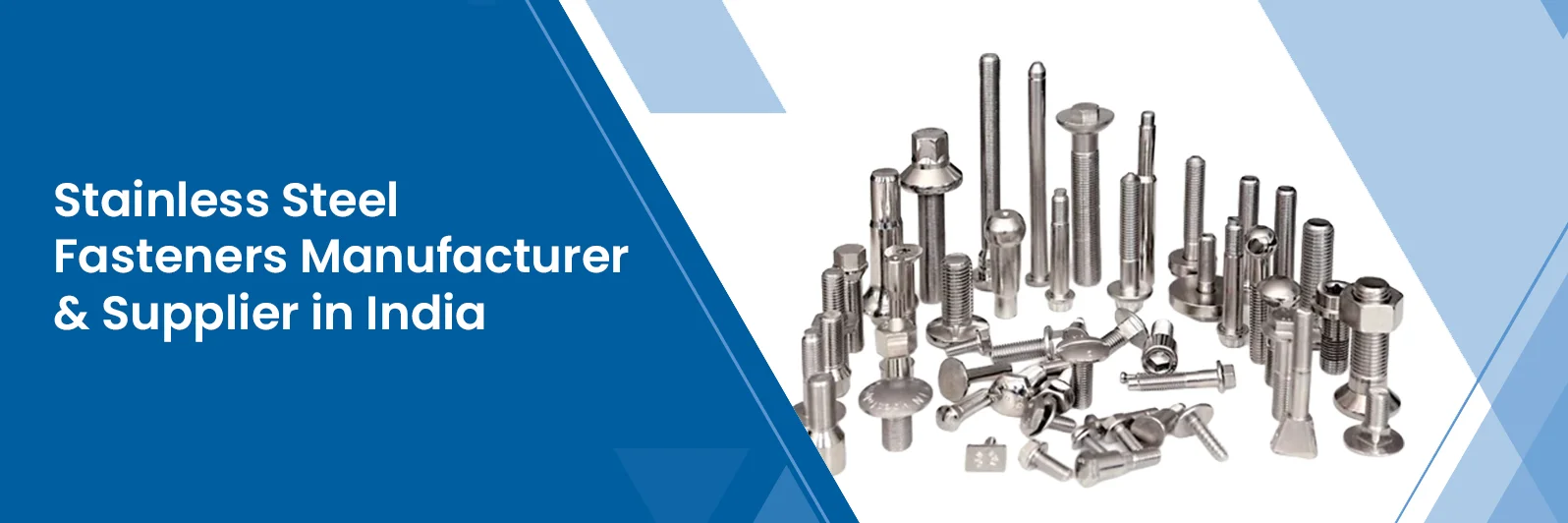
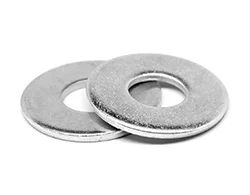
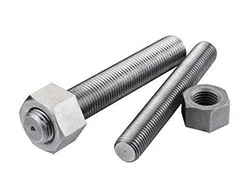
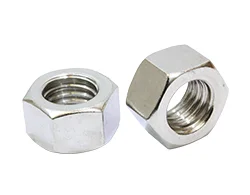
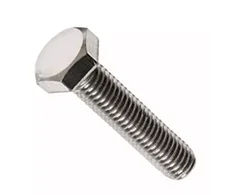
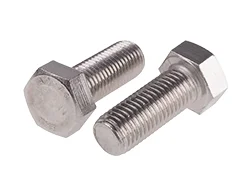
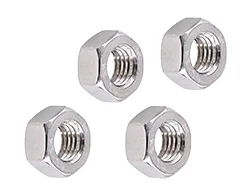
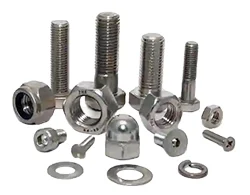
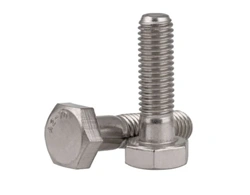
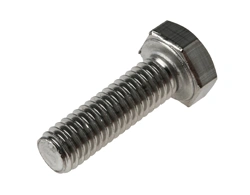
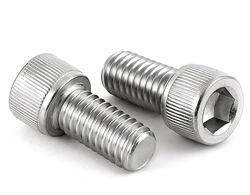
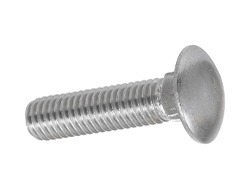
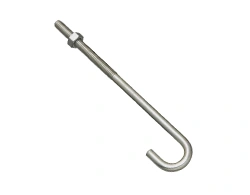
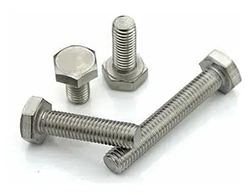
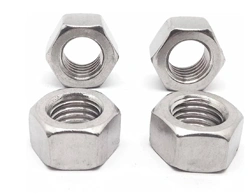
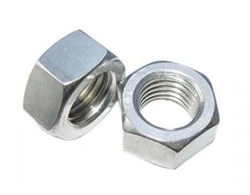
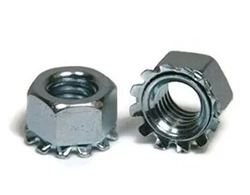
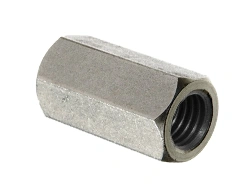
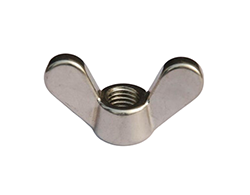
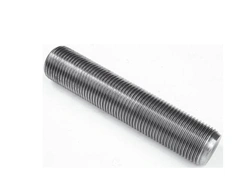
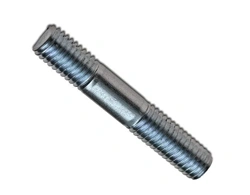
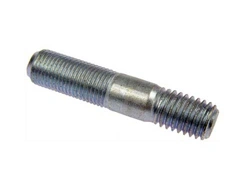
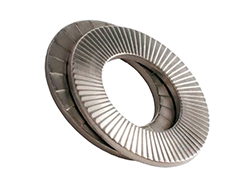
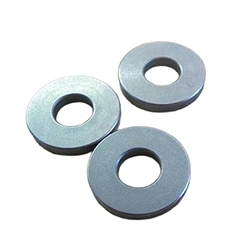
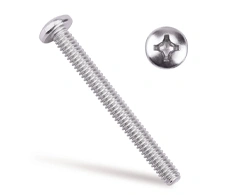
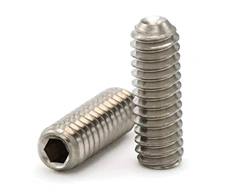
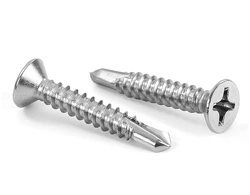
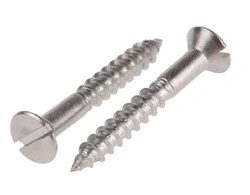
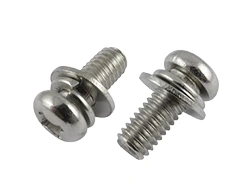
Unifit Fasteners is a trusted stainless steel manufacturer of fasteners in India, with full in-house capabilities, the leading stainless steel fastener provider with precision, reliability, and assured supply. We have a product line consisting of SS 304 bolts, SS 316 nuts, stainless steel 316L fasteners, A 2 A4 stainless steel bolts and marine grade stainless fasteners that fulfill the high standards needed by industries like food processing, pharmaceutical, chemicals, marine and construction. The stainless steel fasteners can be considered as excellent corrosive, hygienic and mechanical strength and thus they can be used in critical situations. Our grades are varied with 304, 316, 316L, 310, 410 and 430 in the whole spectrum of stainless steel hex bolts to SS 316 stud bolts. Unifit Fasteners deliver the best performance in their passivated stainless fasteners or food grade stainless bolts. Get to know more about our products at Fasteners Manufacturer in India.
Request QuoteThe stainless steel fasteners are a high performance hardware that consists of iron with a minimum of 10.5 percent chromium that creates a thin and unseen chromium oxide passive layer on the surface. The layer is highly corrosion-resistant to ensure that fasteners are not corroded in extreme conditions. Stainless steel is preferred due to its durability, aesthetic value, and hygienic qualities compared to carbon steel and therefore, is best suited to the food processing, pharmaceutical, chemical, marine, and construction sectors. Based on grade, stainless steel fasteners may be non-magnetic or magnetic, austenitic being non-magnetic and martensitic being magnetic. Stainless steel fasteners are available in the form of bolts, nuts, studs, and others, and can easily be used because they are reliable, durable, and withstand wear. They are the preferred choice when deciding on the fasteners to be used in an industry or commercial setting.
| Grade | UNS | Series | Composition (Cr-Ni-Mo) | Magnetic? | Corrosion Resistance | Typical Use |
|---|---|---|---|---|---|---|
| SS 304 | S30400 | Austenitic | 18–8–0 | No | High (General) | Food processing, kitchenware, architectural trim. |
| SS 304L | S30403 | Austenitic | 18–8–0 (Low C) | No | High (Reduced Intergranular) | Welded structures, pharmaceutical tanks. |
| SS 316 | S31600 | Austenitic | 16–10–2 | No | Very High (Chloride) | Marine hardware, coastal builds, chemical vats. |
| SS 316L | S31603 | Austenitic | 16–10–2 (Low C) | No | Very High (Anti-pitting) | Medical implants, marine welding applications. |
| SS 310S | S31008 | Austenitic | 25–20–0 | No | High (Oxidation Heat) | High-temperature furnaces, kiln components. |
| SS 321 | S32100 | Austenitic | 18–9–0 (+Ti) | No | High (Stabilized) | Aircraft exhaust systems, expansion bellows. |
| SS 410 | S41000 | Martensitic | 12–0–0 | Yes | Moderate | Pump shafts, valve stems, self-tapping screws. |
| SS 430 | S43000 | Ferritic | 17–0–0 | Yes | Moderate | Automotive trim, household appliances. |
| Duplex 2205 | S32205 | Duplex | 22–5–3 | Yes | Superior (Stress/SCC) | Desalination, oil & gas piping, pressure vessels. |
| Property Class | Tensile Strength (Rm) (MPa) | Yield Strength (Rp0.2) (MPa) | Equivalent Grade | Applications |
|---|---|---|---|---|
| A2-50 | $500$ | $210$ | SS 304 (Soft) | Low-stress decorative or architectural parts. |
| A2-70 | $700$ | $450$ | SS 304 (Cold Worked) | Standard Industry Grade: General machinery. |
| A2-80 | $800$ | $600$ | SS 304 (High Tensile) | High-load structural brackets and framing. |
| A4-50 | $500$ | $210$ | SS 316 (Soft) | Chemical tanks and valves with low pressure. |
| A4-70 | $700$ | $450$ | SS 316 (Cold Worked) | Standard Marine Grade: Coastal piping. |
| A4-80 | $800$ | $600$ | SS 316 (High Tensile) | Subsea equipment and critical chemical flanges. |


| Product Type | Available SS Grades | Size Range (mm/inch) | Standards | Finish Options | Common Industries |
|---|---|---|---|---|---|
| Bolts & Socket Screws | 304, 316, 316L, 310, 410 | M3 – M100 (1/8 – 4) | DIN 931/933, ISO 4014, DIN 912, ASME B18.2.1 | Plain, Passivated, Electropolished | Food, Pharma, Construction, Marine |
| Nuts & Lock Nuts | 304, 316, 316L | M2 – M100 (#2 – 4) | DIN 934, ISO 4032, DIN 985, ASME B18.2.2 | Plain, Piling, Waxed (Anti-galling) | Automotive, Water Treatment, Dairy |
| Stud Bolts | 304, 316, 316L, B8, B8M | M6 – M64 (1/4 – 2.1/2) | ASTM A193, ASME B16.5 | Plain, PTFE Coated | Oil & Gas, Chemical Piping, Flanges |
| Washers | 304, 316, 316L | M1.6 – M100 (#0 – 4) | DIN 125, DIN 9021, DIN 127, ASME B18.22.1 | Plain, Hardened | HVAC, Infrastructure, Solar |
| Screws (Machine/Self-Tap) | 304, 410, 316, 305 | M2 – M12 (2 – 1/2) | DIN 7985, DIN 7504, DIN 571 | Passivated, Black Oxide | Aerospace, Marine Decking, Electronics |
| Threaded Rods | 304, 316, 310 | M6 – M64 (1/4 – 4) | DIN 975, DIN 976, ASME B18.31.2 | Plain, Cut-to-length | Seismic Bracing, HVAC, Plumbing |
| Specialty (Pins/Anchors) | 304, 316 | Per Drawing | DIN 1, DIN 7, DIN 94, Custom | Passivated | Coastal Structures, Precision Engineering |
| Standard | Type | Region | Covers | SS Grades Included |
|---|---|---|---|---|
| ASTM A193 | Bolting (High-Temp) | North America | High-pressure, high-temp service. | B8 (304), B8M (316), B8T (321) |
| ASTM A320 | Bolting (Low-Temp) | North America | Cryogenic and low-temp service. | B8 (304), B8M (316) |
| ASTM A194 | Nuts | North America | Matching nuts for high-pressure bolting. | Grade 8 (304), Grade 8M (316) |
| ASTM F593 | Product (Bolts) | North America | Generally use stainless bolts/screws. | 304, 316, 410, 430, Duplex |
| ASTM F594 | Product (Nuts) | North America | Generally use stainless nuts. | 304, 316, 410, 430 |
| ISO 3506 | Performance | International | Metric mechanical property classes. | A1, A2, A4, C1, C3, C4 |
| ASME B18.2.1 | Dimensional | North America | Imperial hex bolts and cap screws. | Any Grade |
| DIN 933 / 931 | Dimensional | Europe | Metric hex bolts (Full/Partial thread). | A2 (304), A4 (316) |
| BS 3692 | Dimensional | United Kingdom | Precision metric hex bolts and nuts. | A2 (304), A4 (316) |
We supply SS 316 marine grade fasteners engineered for seawater, coastal, and chemical environments. All materials can be provided with EN 10204 3.1 Material Test Certificates (MTC) for full traceability and compliance.
Get Quick Quote| Grade | C | Cr | Ni | Mo | Mn | Si | P | S | N |
|---|---|---|---|---|---|---|---|---|---|
| 304 | ≤ 0.08 | 18.0 - 20.0 | 8.0 - 10.5 | — | ≤ 2.00 | ≤ 0.75 | ≤ 0.045 | ≤ 0.030 | ≤ 0.10 |
| 304L | ≤ 0.03 | 18.0 - 20.0 | 8.0 - 12.0 | — | ≤ 2.00 | ≤ 0.75 | ≤ 0.045 | ≤ 0.030 | ≤ 0.10 |
| 316 | ≤ 0.08 | 16.0 - 18.0 | 10.0 - 14.0 | 2.0 - 3.0 | ≤ 2.00 | ≤ 0.75 | ≤ 0.045 | ≤ 0.030 | ≤ 0.10 |
| 316L | ≤ 0.03 | 16.0 - 18.0 | 10.0 - 14.0 | 2.0 - 3.0 | ≤ 2.00 | ≤ 0.75 | ≤ 0.045 | ≤ 0.030 | ≤ 0.10 |
| 316Ti | ≤ 0.08 | 16.0 - 18.0 | 10.0 - 14.0 | 2.0 - 3.0 | ≤ 2.00 | ≤ 0.75 | ≤ 0.045 | ≤ 0.030 | —* |
| 310 | ≤ 0.25 | 24.0 - 26.0 | 19.0 - 22.0 | — | ≤ 2.00 | ≤ 1.50 | ≤ 0.045 | ≤ 0.030 | — |
| 321 | ≤ 0.08 | 17.0 - 19.0 | 9.0 - 12.0 | — | ≤ 2.00 | ≤ 0.75 | ≤ 0.045 | ≤ 0.030 | ≤ 0.10 |
| 410 | 0.08-0.15 | 11.5 - 13.5 | — | — | ≤ 1.00 | ≤ 1.00 | ≤ 0.040 | ≤ 0.030 | — |
| 430 | ≤ 0.12 | 16.0 - 18.0 | ≤ 0.75 | — | ≤ 1.00 | ≤ 1.00 | ≤ 0.040 | ≤ 0.030 | — |
| Grade | Tensile Strength (MPa) | Yield Strength (0.2% Offset) (MPa) | Elongation (%) | Hardness (Brinell) | Magnetic? |
|---|---|---|---|---|---|
| SS 304 (Annealed) | 515 | 205 | 40% | 160 | No |
| SS 304 (Cold Worked) | 700+ | 450+ | 15–25% | 210+ | Slightly* |
| SS 316 (Annealed) | 515 | 205 | 40% | 160 | No |
| SS 316 (Cold Worked) | 700+ | 450+ | 12–20% | 210+ | Slightly* |
| SS 310 (Heat Resistant) | 515 | 205 | 40% | 170 | No |
| SS 321 (Stabilized) | 515 | 205 | 40% | 160 | No |
| SS 410 (H & T) | 760 | 550 | 15% | 250 | Yes |
| SS 430 (Annealed) | 450 | 205 | 22% | 155 | Yes |
| Duplex 2205 | 620 | 450 | 25% | 290 | Yes |
The right finish and coating boost stainless steel fastener performance, and here are some of the most common finishes below.
There are a number of natural finishes of stainless steel fasteners. Mill finish is machined and dull gray in appearance, suitable for typical industrial use. Bright finish is both reflective and polished using cold drawing, and it provides aesthetics and smoothness. The satin finish (#4 brushed) is smooth and even to the touch, possessing functional durability.
Passivation is a chemical process that reinforces the layer of chromium oxide on stainless steel, which increases corrosion resistance and erases the free iron surface. It is usually done in accordance with ASTM A967 standards and consists of either nitric acid or citric acid, depending on the needs. It makes fasteners more resistant to adverse conditions.
Electropolishing is an electrochemical treatment that removes a thin layer of material on the surface, leaving it with a mirror-like finish. This finish is suited to pharmaceutical, food and semiconductor applications in which cleanliness, hygiene and smooth surfaces are of paramount importance.
Specialized coating can be used in certain applications. PTFE/ Teflon coatings are used in order to decrease friction and eliminate galling, whereas Xylan coating is utilized in order to ensure very high chemical resistance in harsh conditions. Stainless steel fasteners are not typically plated with zinc or cadmium since this may result in galvanic corrosion and negate the advantage of stainless steel. In coated types, please see PTFE Coated Fasteners and Xylan Coated Fasteners.
The Stainless steel fasteners are used by many industries and some of the most common are given below.
| Industry | Recommended Grades | Why? | Alternative Materials | Typical Products |
|---|---|---|---|---|
| Marine & Coastal | SS 316 / A4 | Molybdenum content prevents pitting from salt/chlorides. | Duplex 2205, Monel 400 | Dock hardware, boat cleats, coastal handrail bolts. |
| Food & Beverage | SS 304 / A2 | Non-reactive to organic acids; excellent sanitization surface. | SS 316 (for high salt) | Mixing tank bolts, conveyor screws, kitchen hardware. |
| Pharmaceutical | SS 316L | Low carbon prevents corrosion at weld points; ultra-smooth. | Hastelloy C-22 | Reactor vessel studs, cleanroom fasteners. |
| Oil & Gas | Duplex 2205 | High strength and resistance to stress corrosion cracking. | Super Duplex 2507 | Subsea valves, pipeline flanges, pressure vessels. |
| High-Temp / Energy | SS 310 / 310S | Maintains structural integrity and scale resistance up to 1150°C. | Inconel 600 | Furnace bolts, kiln liners, heat exchanger studs. |
| Automotive | SS 410 / 430 | 410 is heat-treatable for strength; 430 is cost-effective. | Zinc-plated Steel | Exhaust manifold bolts, trim clips, self-tapping screws. |
| Aerospace | SS 321 / 347 | Titanium/Niobium stabilized to handle extreme heat cycling. | Titanium Grade 5 | Jet engine fasteners, exhaust ducting screws. |
In a comparison between stainless steel (SS) and carbon steel, the most distinguishable characteristic is the corrosion resistance- stainless steel is better than carbon steel, thus it is applicable in the outdoors, corrosive, and hygienic environment. Carbon steel, in its turn, is able to be heat-treated to get higher strength and, as a rule, is cheaper. Stainless steel has better finishing, and it does not rust aesthetically. Look into High Tensile Fasteners in case of high strength and durability.
Galvanized steel is carbon steel that has been covered using zinc to combat corrosion. Although it is inexpensive at first, its durability and looks are minimal; scratches interfere with protection. Stainless steel forms a passive chromium oxide layer, which keeps its shine and heals itself and provides durability in the long run. Stainless steel is used where aesthetics and low maintenance are needed in the project.
316 stainless steel contains 2-3 percent molybdenum, which gives the material high resistance to chlorides and salt, and is suitable in marine, chemical and coastal applications as well as in the general corrosion applications. 304 stainless steel is good for indoor and general corrosion. Note that 316 costs 20-30 % higher than 304 because it has a higher corrosion resistance.
The most commonly used stainless steel is called austenitic (300 series) and is non-magnetic, extremely corrosion-resistant, and non-ferromagnetic. Ferritic (400 series) is magnetic, cheaper and moderately corrosion resistant. The Martensitic stainless steel is magnetic and has a heat treatment and the greatest strength, but has low corrosion resistance. The balance between the strength, corrosion resistance, and application environment is what determines the choice of the correct grade.
The most common challenges of stainless steel fasteners are given below.
Galling, or cold welding, is a phenomenon that takes place when stainless steel fasteners are clamped under large friction, or when material of the same type is joined together resulting in thread seizing. The methods to avoid this are to use anti-seize compounds, coat with PTFE or Xylan, install gradually, use different materials (e.g., SS bolt with brass nut) and to be sure that they are well lubricated when assembled.
Stainless steel is more prone to thread stripping compared to carbon steel, as it is softer. The preventive measures are coarse threading, sufficient thread engagement (at least 1.5× the diameter) and not over-torque in installation.
SCC happens under tensile stress in chloride-rich environments and some grades of stainless steel are vulnerable to it but 304 stainless steel is more vulnerable; 316 or duplex are better resistant. The risk can also be reduced through a reduction in tensile loads.
Crevice corrosion forms in narrow spaces between stagnant liquids, which undermines the fasteners in the long run. This can be prevented by use of 316 or duplex stainless steel in constructing assemblies in a manner that eliminates crevices.
Galvanic corrosion occurs as a result of contact between stainless steel with dissimilar metals, such as aluminum or zinc. SS is a cathode, which leads to corrosion of the other metal. Some of the preventive measures are the use of insulating washers or fasteners that are constructed in the same metal as the other component.
The manufacturing process of the stainless steel fasteners, followed by use, is given below.
Before the production starts, stainless steel is obtained as certified mills in the form of wire rods or bars, and it is guaranteed of adequate grade, chemical composition, and complete heat traceability.
A raw material is made by the accuracy of diameters to provide homogeneous mechanical characteristics and dimensional precision.
The head and body are forged, either by cold beating or by hot beating, depending on the size and design of the fastener; this furnishes the head and body with a due flow of grain and strength.
The threads are rolled to achieve more strength and fatigue resistance or cut when the design factors need it.
Martensitic-like SS 410 are heat treated, whereas austenitic ones are annealed in solution in order to re-establish corrosion resistance.
Passivation of all stainless steel screws is done in order to strengthen the chromium oxide coating and eliminate free iron.
To achieve uniform quality and secure delivery throughout the world, each batch is grade-marked, examined at every pass, recorded, and loaded in export-quality packaging.
All our products come from the Positive Material Identification test that is used to verify the proper Monel grade and chemical makeup, thus removing chances of material confusion.
Elemental composition is confirmed using the Optical Emission Spectrometry (OES), which is in accordance with prescribed standards.
Calibrated equipment like calipers, micrometers and optical comparators are used to measure dimensions like diameter, length, and tolerances.
GO / NO-GO gauges are used to check the threads according to ISO and ASME standards to check their proper pitch, class, and engagement.
The tests are carried out using tensile strength, proof load, and hardness tests in respect of relevant ASTM requirements.
In necessary cases, corrosion resistance can be tested by ASTM B117 salt spray testing.
Passivated fasteners are examined to ensure that they are free of free iron and corrosion protection is improved.
On the full basis of documentation and compliance information, Mill Test Certificates (EN 10204 3.1 / 3.2) are issued.
All manufacturing and supply is tracked by complete heat number and batch traceability.
That can be independently checked by certified agencies like SGS, Bureau Veritas, or other similar ones, at a request.
| Size | Length Range | Head Style | Grade | Thread Type | Availability |
|---|---|---|---|---|---|
| M6 | 6–100 mm | Hex, Socket, Button | SS 304 / 316 | Metric ISO | Ex-stock |
| M8 | 8–150 mm | Hex, Socket, Flat | SS 304 / 316 | Metric ISO | Ex-stock |
| M10 | 10–200 mm | Hex, Socket, Pan | SS 304 / 316 | Metric ISO | Ex-stock |
| M12 | 12–250 mm | Hex, Socket, Button | SS 304 / 316 | Metric ISO | Ex-stock |
| M16 | 16–300 mm | Hex, Socket, Flat | SS 304 / 316 | Metric ISO | Ex-stock |
| M20 | 20–400 mm | Hex, Socket, Pan | SS 304 / 316 | Metric ISO | Ex-stock |
| M24 | 24–500 mm | Hex, Socket | SS 304 / 316 | Metric ISO | Ex-stock |
| M30 | 30–600 mm | Hex | SS 316 | Metric ISO | Made to order |
| M36 | 36–800 mm | Hex | SS 316 | Metric ISO | Made to order |
| M42 – M100 | Upto 1000+ mm | Hex / Custom | As Specified | Metric / UNC / UNF | Custom (2–4 weeks) |
Unifit Fastener is a reliable supplier of stainless steel fasteners because it has a broad range of grades, such as 304,316, 316L, 310, 410, and 430 fasteners produced in accordance with ISO 3506 and ASTM requirements. We supply various industrial requirements precisely with high-pressure ASTM A193 B8/ B8M bolts, as well as with custom-made fasteners based on drawings. The passivation is done in-house, PMI testing is done on each batch, and full certification of MTC 3.1 ensures that quality and grades are consistent. Unifit Fastener has an easy stock of common sizes, competitive bulk prices, fast delivery within and outside India, and high-quality technical support that ensures it is a reliable supplier of stainless steel fasteners in a variety of food, pharma, marine, and chemical industries in Mumbai and India.
The maintenance and care of the stainless steel fasteners can increase the lifespan of your components. So the basic maintenance and care rules are given below.
SS 304 contains chromium and nickel and offers good general corrosion resistance at a lower cost. SS 316 includes molybdenum, which gives it better resistance to chlorides and chemicals, making it ideal for marine and chemical environments, but it is more expensive.
The Austenitic grades like 304 and 316 are generally non-magnetic. Ferritic (430) and martensitic (410) stainless steels are magnetic by nature.
No, it is not recommended. Mixing materials can cause galvanic corrosion. Using the same material for both bolt and nut is best.
These are ISO 3506 property classes. A2 and A4 indicate the material grade (304 and 316), while 70 or 80 shows the strength level.
By using simple methods like anti-seize or lubrication, install slowly, and consider coated fasteners to reduce friction.
Yes, SS 316 (A4) is recommended. SS 304 may corrode faster in saltwater conditions.
Passivation is a chemical process that improves corrosion resistance by strengthening the protective oxide layer. It is recommended after manufacturing.
No, stainless steel is naturally corrosion resistant. PTFE coatings may be used to prevent galling.
SS 304 handles up to about 800°C intermittently, SS 316 up to around 850°C. For higher temperatures, SS 310 is preferred.
Yes, if the passive layer is damaged or in very harsh environments. Types of corrosion include pitting, crevice, and stress corrosion.