Titanium Fasteners Manufacturer in India
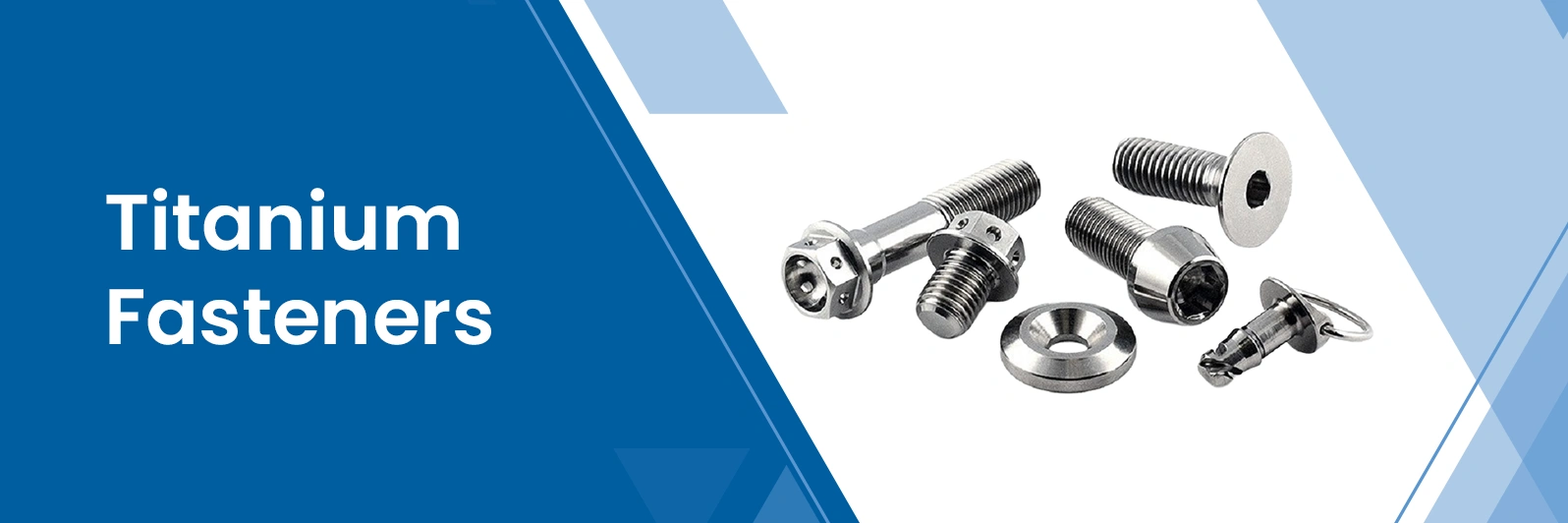
Unifit is a reputed Titanium Fasteners Manufacturer in India, specializing in marine titanium fasteners, chemical processing, and aerospace applications. Our fasteners are strong, with a high strength to weight ratio, and have a strong performance in terms of durability, corrosion resistance, and lightweight, suited to offshore platforms, desalination plants and marine structures. Aerospace and medical assemblies are also made using biocompatible Grade 23 (ELI) fasteners, which provide a long service life.
We have Grade 2, Grade 5 ( Ti-6Al-4V fasteners India ) fasteners, Grade 7 fasteners supplier, Grade 12, and Grade 23 (ELI). We produce high quality 2nd grade Titanium nuts, Titanium stud bolts, Titanium socket head cap screws, and Titanium threaded rods, which are used by marine, chemical, aerospace, and EPC professionals.
Unifit usually provides a solution of titanium fasteners for seawater applications, Grade 2 vs Grade 5 titanium fasteners, and titanium fasteners for chemical processing plants. Get to know more and get to know what we have to offer on our hub, Fasteners Manufacturer in India.
Request QuoteTable of Contents
- What are Titanium Fasteners?
- Titanium Grades We Manufacture / Supply
- Titanium Grades Comparison
- Types of Titanium Fasteners We Supply
- Titanium Product Range Matrix
- Specifications & Standards of Titanium Fasteners
- Chemical Composition of Titanium Fasteners
- Mechanical Properties of Titanium Fasteners
- Applications of Titanium Fasteners
- FAQs About Titanium Fasteners
What are Titanium Fasteners?
Titanium fasteners come in different sizes and forms that include bolts, nuts, studs, screws, washers, and threaded rods of commercially pure titanium or high-strength titanium alloys, like Ti-6Al-4V. Primarily in India, they are highly favored as lightweight fasteners because they have a great strength to weight ratio. Titanium is also naturally coated with an oxide layer (passive layer), which prevents corrosion even in seawater and other chemical conditions.
Titanium fasteners are ideal for use in marine and offshore environments as they are preferred over stainless steel when it is needed to reduce weight and experience seawater performance as well as long-term corrosion reliability. But, titanium is galvanic when it is installed with wrong lubrication and torque procedures, so the right practices of lubrication and torque are needed.
Send Your Enquiry
Titanium Grades We Manufacture / Supply
Titanium Grade 2 Fasteners (Commercially Pure)
- Position: most common CP titanium for corrosion resistance
- Strength: moderate; best for marine, desalination, chemical equipment where load is not extreme
- Use cases: seawater systems, heat exchangers, piping supports, offshore hardware
Titanium Grade 5 Fasteners (Ti-6Al-4V) — Most Popular High Strength
- Position: best strength-to-weight; widely specified in aerospace + high performance assemblies
- Use cases: aerospace structures, performance equipment, high-strength bolted joints
- Mention: available as bolts, studs, socket cap screws, custom parts
Titanium Grade 7 Fasteners (CP + Pd)
- Position: enhanced corrosion resistance in reducing acids / chloride environments (often specified for chemical processing)
- Use cases: chemical plants, reactors, aggressive process lines
Titanium Grade 12 Fasteners (Ti-Ni-Mo)
- Position: improved high temperature corrosion/crevice resistance compared to CP in some services
- Use cases: chemical processing, industrial equipment, heat exchangers
Titanium Grade 23 Fasteners (Ti-6Al-4V ELI)
- Position: aerospace/medical-grade variant with improved toughness (ELI)
- Use cases: aerospace critical parts, medical devices
Titanium Grades Comparison
| Grade | Type | Key Benefits | Relative Strength | Corrosion Resistance | Typical Applications |
|---|---|---|---|---|---|
| Titanium Grade 2 | Commercially Pure (CP) | excellent balance of ductility and weldability. | Moderate | Excellent (Best for general marine use) | Seawater systems, heat exchangers, piping supports, offshore hardware. |
| Titanium Grade 5 | Ti-6Al-4V (Alpha-Beta Alloy) | Exceptional strength-to-weight ratio; high fatigue resistance. | Very High | High | Aerospace structures, performance racing, high-strength bolted joints. |
| Titanium Grade 7 | CP + Palladium (0.12-0.25% Pd) | Enhanced resistance to crevice corrosion in reducing acids. | Moderate | Superior (Best for aggressive chemicals) | Chemical plants, reactors, aggressive process lines, brine handling. |
| Titanium Grade 12 | Ti-Ni-Mo Alloy | Better high-temp corrosion/crevice resistance than CP grades. | Moderate to High | Excellent (At high temperatures) | Industrial equipment, heat exchangers, chemical processing. |
| Titanium Grade 23 | Ti-6Al-4V ELI (Extra Low Interstitial) | Higher purity version of Grade 5; improved toughness and ductility. | Very High | High | Aerospace critical parts, medical devices, cryogenic applications. |
Types of Titanium Fasteners We Supply
Titanium Bolts
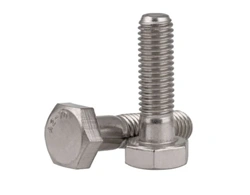
Hex Bolts
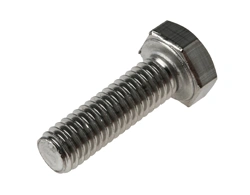
Heavy Hex Bolts
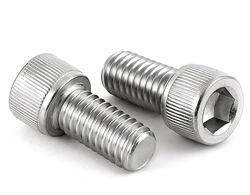
Socket Head Cap Screw
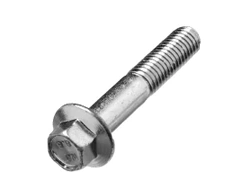
Flange Bolts
Titanium Nuts
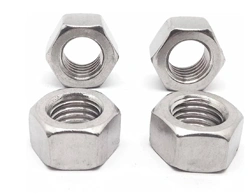
Hex Nuts
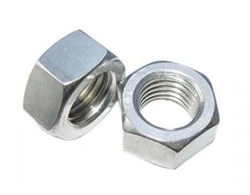
Heavy Hex Nuts
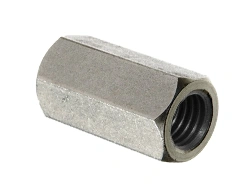
Coupling Nuts
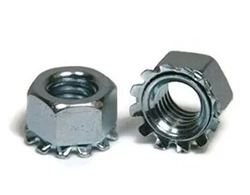
Lock Nuts
Titanium Stud Bolts
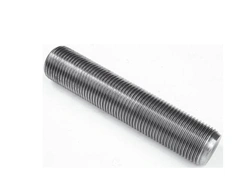
Full Threaded Stud Bolts
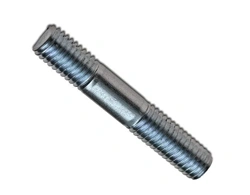
Double Ended Studs
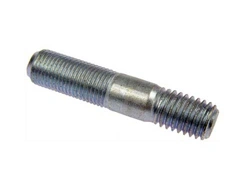
Tap End Stud Bolt
Titanium Washers
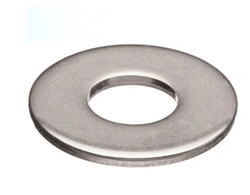
Flat Washers
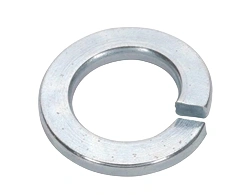
Spring Washers
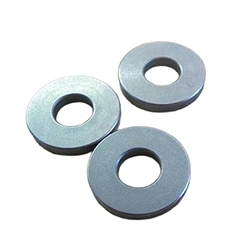
Custom Washers
Titanium Screws
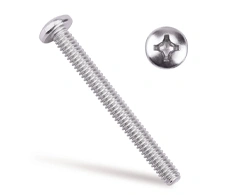
Machine Screw
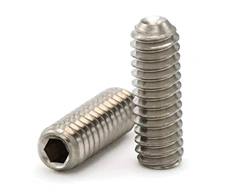
Socket Set Screw
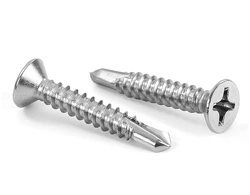
Self Drilling Screw
Titanium Product Range Matrix
| Product Type | Common Configurations | Size Range (Typical) | Standards & References | Key Applications |
|---|---|---|---|---|
| Titanium Bolts | Hex, Heavy Hex, Flange, Socket Head (SHCS) | M3 – M100 | DIN 931/933, ISO 4014/4017, DIN 912, ASME B18.2.1 | Aerospace frames, high-performance racing, engine assemblies. |
| Titanium Nuts | Hex, Heavy Hex, Lock Nuts (Nylon/Metal), Coupling | M3 – M100 | ASTM A194, DIN 934, DIN 985 | Fastening in corrosive environments, aerospace structural joints. |
| Titanium Studs | Full Thread, Double-End (Flange), Tap-End | M6 – M76 | ASME B16.5, DIN 976 | Marine & Chemical: High-reliability piping and flange connections. |
| Titanium Washers | Flat, Spring (Split), Custom Profiles | M2 – M100 | DIN 125, DIN 127, ASME B18.22.1 | Load distribution, preventing surface damage on mating parts. |
| Titanium Screws | Machine Screws, Set/Grub Screws, Custom Drives | M1.6 – M12 | DIN 7985, ISO 7380, ASME B18.6.3 | Electronic housings, medical instruments, precision equipment. |
| Threaded Rods | Metric (Coarse/Fine), Inch (UNC/UNF) | 1m – 3m Lengths | DIN 975, ASME B18.31.2 | Double-nutted anchoring, chemical tank supports, custom suspensions. |
Specifications & Standards of Titanium Fasteners
| Standard | Covers | Typical Products | Notes |
|---|---|---|---|
| ASTM B348 | Titanium Bar, Rod, and Fastener Stock | All machined fasteners (Bolts, Studs) | The primary spec for raw material chemistry and properties. |
| ASTM F468 | Non Ferrous Bolts, Hex Cap Screws, and Studs | External threaded fasteners | Industry Standard for the procurement of finished titanium bolts. |
| ASTM F467 | Nonferrous Nuts for General Use | Hex Nuts, Heavy Hex Nuts, Jam Nuts | Specific to the manufacturing and testing of titanium nuts. |
| ASTM F136 | Ti-6Al-4V ELI (Grade 23) | Medical & Aerospace fasteners | Specified for high-toughness or "Extra Low Interstitial" parts. |
| DIN / ISO | Metric Dimensions & Threading | DIN 931/933, DIN 912, ISO 4014 | Global standard for metric sizing (M3 to M100). |
| ASME B18.2.1 / .2 | Inch Series Dimensions | Hex Bolts (B18.2.1) & Nuts (B18.2.2) | Standard for North American industrial applications. |
| EN 10204 3.1 | Certification & Traceability | Inspection Certificates (MTC) | Validates that the fastener meets the actual order requirements. |
Need Corrosion-Resistant Titanium Fasteners with MTC?
We supply high-performance acid-resistant fasteners with PMI testing and full EN 10204 3.1 / 3.2 Mill Test Certificates, ensuring complete traceability and compliance for critical applications.
Get Quick QuoteChemical Composition of Titanium Fasteners
| Grade | Main Alloying Elements (Nominal %) | Material Note |
|---|---|---|
| Gr 2 | CP Titanium (99.2% Ti) | Commercially Pure: Moderate strength with the best general corrosion resistance for marine use. |
| Gr 5 | Ti-6Al-4V (6% Al, 4% V) | Alpha-Beta Alloy: The "workhorse" grade; provides the highest strength-to-weight ratio. |
| Gr 7 | Ti + Pd (0.12–0.25% Palladium) | Pd-Bearing CP: Chemically identical to Gr 2 but with Palladium added for superior resistance to reducing acids. |
| Gr 12 | Ti-Ni-Mo (0.8% Ni, 0.3% Mo) | Corrosion Alloy: Specifically designed for improved crevice corrosion resistance at high temperatures. |
| Gr 23 | Ti-6Al-4V ELI (Low Interstitials) | ELI Grade: A higher-purity version of Grade 5 with lower oxygen and iron for improved toughness and ductility. |
Mechanical Properties of Titanium Fasteners
| Grade | Tensile Strength (MPa) | Yield Strength (0.2% Offset) (MPa) | Elongation (%) | Material Performance Notes |
|---|---|---|---|---|
| Grade 2 | 345 min | 275 – 450 | 20% | Moderate strength; excellent ductility for bending/forming. |
| Grade 5 | 895 min | 825 min | 10% | Highest Strength: Comparable to high-tensile steel bolts. |
| Grade 7 | 345 min | 275 min | 20% | Same mechanical profile as Gr 2, but with Pd for corrosion. |
| Grade 12 | 480 min | 345 min | 18% | Higher strength than CP grades with good heat resistance. |
| Grade 23 | 860 min | 795 min | 10% | ELI Grade: Better toughness and fatigue life than Gr 5. |
Applications of Titanium Fasteners
- Marine & Offshore: Titanium fasteners are very resistant to corrosion in the sea and salty conditions, and therefore can be used in marine and offshore components. They find extensive application in boat hardware, offshore structures, and coastal installations where corrosion reliability over the long term and minimal maintenance are required.
- Desalination & Water Treatment: In a desalination facility, titanium fasteners are used in reliable seawater inlet and outflow systems in the brine. They have high corrosion resistance, thus have long service life and save a lot of money in terms of maintenance and replacement costs in the long term.
- Chemical Processing: Titanium pieces of fasteners are applied in the aggressive process streams where materials such as SS 316 can be affected by pitting or crevice corrosion. Titanium Grade 7 and Grade 12 are some of the grades that are commonly used in an effort to enhance chemical resistance and durability.
- Aerospace: In the aerospace field, titanium fasteners offer aerospace-weight assemblies that are lightweight yet high-strength, usually with Grade 5 and Grade 23. When they are installed with appropriate preset preload and torque monitoring, they work well in conditions of vibration and fatigue.
- Medical / Biotech: Titanium Grade 23 (ELI) fasteners will be utilized due to their biocompatibility and resistance to corrosion to allow safe and reliable operation in medical and biotech devices.
Industry–Grade Selection Guide
| Industry | Recommended Grades | Why | Alternative Materials | Typical Products |
|---|---|---|---|---|
| Aerospace & Defense | Grade 5, Grade 23 | Extreme strength-to-weight ratio and fatigue resistance. | Inconel 718, 17-4 PH Steel | Engine bolts, airframe fasteners, landing gear studs. |
| Marine & Subsea | Grade 2 | Immune to saltwater corrosion and pitting; cost-effective. | Super Duplex, Monel K500 | Hull fasteners, offshore sensors, desalination piping. |
| Chemical Processing | Grade 7, Grade 12 | Superior resistance to reducing acids and high-temp crevice corrosion. | Hastelloy C276, Tantalum | Reactor vessel bolts, heat exchanger studs, pump hardware. |
| Oil & Gas | Grade 5, Grade 2 | Resistance to sour gas ($H_2S$) and chloride stress corrosion. | Inconel 625, MP35N | Downhole tools, wellhead fasteners, subsea valves. |
| Medical & Biotech | Grade 23 (ELI) | Biocompatible, non-magnetic, and high fracture toughness. | 316LVM Stainless, PEEK | Bone screws, surgical instrument fasteners, MRI components. |
| Automotive / Racing | Grade 5 | Reduces unsprung weight; high strength for engine/suspension. | Chrome-moly steel | Wheel studs, connecting rod bolts, exhaust manifold fasteners. |
Why Choose Titanium Over Other Alloys?
Keep this section short and actionable (avoid fluff).
Titanium vs Stainless Steel:
Where performance at sea and weight minimization are important, titanium fasteners are the first choice with a great performance of corrosion resistance and long life. Stainless steel fasteners are cheaper and more easily available, hence they can be used for general purposes. In the case of normal industrial applications.
Titanium vs Monel:
Monel fasteners are an established marine alloy that works effectively in marine seawater. Nevertheless, depending on use and exposures, titanium may be superior to Monel in the reliability of long-term seawater corrosion.
Titanium vs Inconel:
Inconel fasteners are to be used with high temperature resistance and oxidation. Instead, titanium fasteners are lightweight, with strength and resistance to corrosion, although they cannot withstand very high-temperature oxidation service.
Common Challenges with Titanium Fasteners
Some of the most common challenges that people face while installing the Titanium Fasteners in any structure are given below.
Galling (Seizing)
One of the most widespread problems of titanium fasteners is falling because of the friction between the metals during the process of installation. In order to avoid seizing, apply a suitable anti-seize compound to the service temperature and media. Always use a controlled torque, install fasteners gradually, and use impact tools. Friction can also be minimized with PTFE or other such coatings where necessary. In certain designs, dissimilar mating materials (e.g. titanium bolt with a compatible nut material) are also used to reduce galling.
Torque–Tension Variation
Lubrication has a strong influence on the correlation between applied torque and the real load on the clamp. Even minor alterations may cause over- or under-tightening. Project-specific torque rules are suggested to meet the critical joints, and this offers a good performance that is reliable and repeatable.
Surface Damage / Embedding
Titanium is not very hard and may have a tendency to be damaged on the surface. Embedding and surface wear can be prevented by using appropriate washers, smooth bearing surfaces, and by not including burrs or sharp edges when assembling.
Manufacturing Process of Titanium Fasteners
The step-by-step process of how these high-quality Titanium Fasteners are manufactured is given below.
- Raw Material Sourcing: Titanium raw material is obtained in certified titanium mills to ascertain proper grade, chemistry, and complete traceability.
- Forging / Cold Heading: The material is forged or cold headed, depending on its size and design, to produce the necessary strength and shape, depending on the design of fasteners.
- Machining: The machining is performed with precision with controlled parameters, and titanium is prone to galling and is sensitive to the surface.
- Threading: Threads are rolled or cut through thread rolling or thread cutting, and chosen according to the needs of the loads and application requirements.
- Cleaning / Passivation: The correct cleaning and passivation are undertaken to eliminate contaminants and increase the resistance to corrosion.
- Final Inspection & Packaging: The final inspection, marking, and packing in export grade are done in each batch to make sure that the global delivery is safe.
Quality Assurance & Testing
Below are our quality assurance and testing procedures that we strictly follow to assure the reliability and performance of our titanium fasteners.
- PMI Testing: The verification of grades is done with the help of PMI testing to check the right titanium material.
- Dimensional Inspection: All titanium fasteners are verified to have proper sizes and tolerances.
- Thread Gauging: GO/NO-GO gauges are used to check threads to ensure a good fit and functioning.
- Mechanical Testing: The mechanical testing is conducted to check the strength and reliability of the Titanium Fasteners.
- Third-Party Inspection: We also conduct third party inspection for independent inspection that can be done upon request in case it is necessary.
- Certification: We also provide a Mill Test Certificate (EN 10204 3.1 / 3.2) with every batch of our Titanium Fasteners.
- Traceability: Each batch has a heat and allotment number that can help the user trace.
Size Range & Availability
Include:
- Diameter: M3–M64 (typical) / inch 1/8”–2” (or your real capability)
- Threads: Metric coarse/fine, UNC/UNF
- Length: standard + custom
- Head styles: hex, socket, countersunk, button
- Ex-stock sizes if any (list only what you truly stock)
Common Stock Sizes
| Size (Diameter) | Length Range | Typical Grades | Thread Type | Availability | Notes |
|---|---|---|---|---|---|
| M3 – M10 | 10mm – 100mm | Gr 2, Gr 5 | Metric Coarse/Fine | Ex-Stock | Common for electronics & medical devices. |
| M12 – M24 | 25mm – 250mm | Gr 2, Gr 5, Gr 7 | Metric Coarse | Ex-Stock | Standard for marine piping & automotive. |
| M27 – M64 | Up to 600mm | Gr 2, Gr 5, Gr 12 | Metric Coarse | Made to Order | Heavy industrial and chemical reactors. |
| 1/4 – 1 | 1 – 12 | Gr 2, Gr 5, Gr 23 | UNC / UNF | Stock / MTO | Aerospace and US-standard machinery. |
| 1-1/8 – 2 | Up to 24 | Gr 5, Gr 7 | UNC / 8UN | Made to Order | Large flange studs and subsea hardware. |
Why Choose Unifit Fastener for Titanium?
Unifit Fasteners is a reputable company that manufactures titanium fasteners, where people can find the best solutions to their problematic industrial fittings. Our grade of titanium goes across a variety of Grade 2, Grade 5, Grade 7, Grade 12, as well as Grade 23, with the support of in-house manufacturing capabilities. We are a team that specializes in custom manufacturing as per the drawings or specification sheets, making sure that there are no misfits or performance issues. All products are subject to stringent quality checks and inspection, and MTC 3.1 documentation and complete traceability are provided where necessary. Unifit can be a reliable supplier of titanium fastener needs due to our engineering assistance in grade choice, high-speed delivery, and packaging with international shipping.
Ready to Order Titanium Fasteners?FAQs About Titanium Fasteners
Grade 2 vs Grade 5 titanium fasteners — which should I choose?
Choose Grade 2 to extreme corrosion protection (seawater, chemicals) at relatively low cost with good formability, which is suitable to marine/chemical processing requirements and select Grade 5 (Ti 6Al-4V) to utilize high strength, high-performance, load-bearing for aerospace applications, where strength is the primary consideration and cost is secondary, since it is twice as strong but more expensive.
Are titanium fasteners suitable for seawater?
Yes, titanium fasteners are highly corrosion-resistant in seawater due to their natural oxide passive layer. They are ideal for marine hardware, offshore platforms, desalination plants, and coastal installations, providing long-term reliability with minimal maintenance.
What is Grade 7 titanium used for?
Grade 7 titanium fasteners are alloyed with palladium, making them extremely resistant to reducing acids like hydrochloric acid. They are commonly used in chemical processing plants, acid handling equipment, and aggressive industrial environments.
What is the difference between Grade 5 and Grade 23 (ELI)?
Grade 23 (ELI – Extra Low Interstitials) offers similar strength to Grade 5 but has higher fracture toughness and better ductility, making it suitable for aerospace and medical applications.
Are titanium fasteners magnetic?
No, titanium fasteners are non-magnetic and suitable for electronic assemblies, medical devices, and environments sensitive to magnetic interference.
How do I prevent galling in titanium bolts and nuts?
To prevent galling in titanium bolts and nuts can be easily done by using anti-seize lubricants compatible with the operating environment, controlled torque installation, slow tightening, and avoiding impact tools. PTFE coatings or dissimilar mating materials can also reduce the risk.
Can titanium fasteners be used in high-temperature service?
Titanium fasteners are suitable for moderate to high-temperature applications, but they are not ideal for very high-temperature oxidation services like Inconel. Always check the operating temperature against the fastener grade.
Do you provide MTC 3.1 and traceability?
Yes, all titanium fasteners can be supplied with Mill Test Certificates (EN 10204 3.1) and full traceability to heat and lot numbers, ensuring quality and accountability.
What lead time should I expect for custom titanium studs?
Custom titanium fasteners, including studs, typically have a lead time of 2–8 weeks, depending on size, grade, and order quantity.
Do you support third-party inspection?
Yes, third-party inspection can be arranged upon request, providing an additional layer of quality assurance and compliance with project or client specifications.