Inconel 718 Fasteners Manufacturer & Supplier in India — ASTM B637 / AMS 5663 UNS N07718 Bolts, Nuts, Stud Bolts and Washers

The strongest bolting alloy we make: 185 ksi tensile after double ageing, stable from cryogenic temperatures to 1300°F, and supplied with full EN 10204 3.1 traceability from our Mumbai works.

185 ksi / 1275 MPa
M3 to M100
AMS 5663 double-aged as standard
7–15 Day Dispatch

Request a Same-Day Quote  

Why Inconel 718 Is the Highest-Strength Fastener Alloy in the Nickel Family

Most nickel superalloys trade strength for corrosion resistance. Inconel 718 fasteners refuse that trade-off. Known as Alloy 718, UNS N07718, Werkstoff Nr. 2.4668 and by trade names such as Nicrofer 5219 and Superimphy 718, this precipitation-hardening nickel-chromium alloy develops roughly 185 ksi (1275 MPa) tensile and 150 ksi (1034 MPa) yield after solution treatment and double ageing — comparable to a quenched-and-tempered alloy steel bolt, but with that strength retained at 1200°F and full ductility retained down to cryogenic temperatures. At Unifit Fastener, we manufacture the complete bolting family in Alloy 718 — hex bolts, heavy hex nuts, stud bolts, threaded rods, washers, screws and anchor fasteners — from M3 to M100 and 3/16" to 4", to ASTM B637, ASME SB637, AMS 5662/5663 and ASTM F467/F468. Every lot is PMI-verified, hardness-surveyed after ageing and released with an EN 10204 3.1 mill test certificate. Whether you are bolting a gas turbine casing, a downhole tool, a sour-service wellhead or an LNG transfer line, you get certified heat treatment and documented traceability — not just a bag of nickel-coloured hardware.

What Are Inconel 718 Fasteners?

Inconel 718 fasteners are threaded components manufactured from a precipitation-hardenable nickel-chromium-iron alloy containing niobium, molybdenum, titanium and aluminium. Unlike solid-solution alloys such as Inconel 600 or Inconel 625, Alloy 718 gains most of its strength from a controlled heat treatment that precipitates fine gamma double-prime (Ni₃Nb) particles through the matrix. That single metallurgical difference is why a 718 bolt is roughly twice as strong as a 625 bolt at room temperature.

The Metallurgy in Plain Engineering Terms

  • Niobium (4.75–5.50%) is the strengthening element. During ageing it forms the gamma double-prime precipitate that blocks dislocation movement — this is where the 185 ksi comes from.
  • Nickel (50–55%) and chromium (17–21%) give the corrosion and oxidation backbone, including resistance to hydrogen sulphide and carbon dioxide in sour hydrocarbon streams.
  • Molybdenum (2.80–3.30%) adds solid-solution strength and pitting resistance in chloride-bearing media.
  • Titanium and aluminium contribute a secondary gamma-prime precipitate and refine the response to ageing.
  • Sluggish ageing kinetics are the practical bonus: 718 is far more weldable than most precipitation-hardened superalloys because it does not crack during post-weld heat treatment.

Condition Matters More Than Grade

This is the point most supplier pages miss, and it causes real procurement errors. Alloy 718 is sold in two very different conditions, and the mechanical values differ by nearly a factor of two:

If a quotation does not state the condition, it is not a quotation for a load-bearing fastener. Every Unifit Fastener 718 item is supplied solution treated and double aged unless you specifically instruct otherwise, and the certificate states the cycle used.

Commercial Benefits of Buying From Unifit Fastener

  • Certified heat treatment, documented on the MTC — furnace charts available on request, not just a pass/fail line.
  • Matched bolt-and-nut sets from one heat — avoids the hardness mismatch that causes thread pick-up in high-strength nickel joints.
  • Threads rolled after ageing wherever section allows, for superior fatigue life over cut threads.
  • Anti-galling coatings in-house — Xylan coated fasteners and PTFE / Teflon coated fasteners for predictable torque-to-preload behaviour.
  • Low minimum order quantities so maintenance teams can buy genuine replacement counts, not surplus stock.

Complete Inconel 718 Fastener Product Range

Unifit Fastener manufactures more than 40 fastener forms in Alloy 718, all produced in-house or from our own certified bar stock — we do not re-badge trading material.

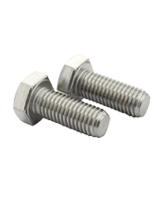
Inconel 718 Bolts

Inconel 718 Bolts

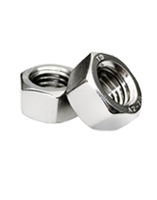
Inconel 718 Nuts

Inconel 718 Nuts

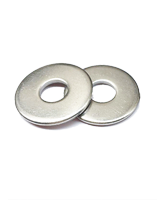
Inconel 718 Washers

Inconel 718 Washers

Inconel 718 Screws

Inconel 718 Screws

Send Your Enquiry

Technical Data

Condition Matters More Than Grade

Condition

Tensile (min)

Yield 0.2% (min)

Elongation

Hardness

When to Specify

Solution annealed (as-supplied bar)

~965 MPa / 140 ksi

~550 MPa / 80 ksi

30% min

≤ 100 HRB

Only where further forming or customer-side ageing is planned

Solution treated + double aged (AMS 5663 / B637)

1275 MPa / 185 ksi

1034 MPa / 150 ksi

12% min

331 HBW min

Virtually all finished fasteners — this is what you should be buying

Inconel 718 Fasteners — Standard Specification Sheet

Parameter

Specification

Material Grade

Inconel 718 / Alloy 718 / Nickel Alloy 718

UNS Designation

UNS N07718

Werkstoff Number

2.4668

Common Trade Names

Nicrofer 5219 Nb, Superimphy 718, Haynes 718, Pyromet 718

Governing Standards

ASTM B637, ASME SB637, AMS 5662 (solution treated), AMS 5663 (solution treated + aged), AMS 5664, ASTM F467, ASTM F468, ASTM F2281, API 6A718

Dimensional Standards

ASME B18.2.1, ASME B18.2.2, ASME B18.3, ASME B18.21.1, DIN 931, DIN 933, DIN 934, DIN 125, DIN 976, DIN 7991, ISO, JIS, BS, GB, IS

Supply Condition

Solution treated and double aged (standard) or solution annealed (on request)

Size Range (Bolts)

M3 – M100 | 3/16" to 4" | custom sizes on request

Size Range (Nuts)

M3 – M56 | 3/16" to 2"

Size Range (Washers)

M3 – M56 | 3/16" to 2"

Length Range

3 mm to 200 mm and above (custom lengths available)

Thread Types

UNC, UNF, UN, 8UN, BSW, BSF, metric coarse, metric fine, left or right hand

Thread Configuration

ASME B1.1 2A/3A – 2B/3B inch unified; ASME B1.13M 6g–6H metric coarse

Head Styles

Hex, heavy hex, square, round, flange, countersunk, socket, T-head, triangular, knurled

Point / End Styles

Chamfered, cone, cup, flat, dog point, rolled thread end

Manufacturing Route

Hot forging, cold heading, CNC turning, thread rolling, solution treatment, double ageing

Surface Finish

Bright / self-colour, passivated, pickled, black oxide, Xylan, PTFE, phosphate, zinc-nickel

Tolerance

OEM / ODM to drawing; ±0.03 mm achievable on machined features

Test Certificate

EN 10204 / 3.1 mill test certificate; PED 2014/68/EU and AD 2000 W2 on request

Certification

Dual certified to ASTM and ASME codes

HS Code

7318 (threaded fasteners of nickel alloy); 7505 applies to bar and rod stock — confirm with your customs broker by product form

Delivery

Standard products 7–15 days; custom products 2–4 weeks

Country of Origin

India (Mumbai, Maharashtra)

Chemical Composition of Inconel 718 Fasteners (UNS N07718)

Composition limits per ASTM B637 / ASME SB637, expressed as weight percentage.

Element

Symbol

Weight %

Metallurgical Role

Nickel (+ cobalt)

Ni

50.00 – 55.00

Austenitic matrix; corrosion backbone

Chromium

Cr

17.00 – 21.00

Oxidation and general corrosion resistance

Iron

Fe

Balance

Matrix constituent; keeps cost workable

Niobium (+ tantalum)

Nb

4.75 – 5.50

Forms gamma double-prime — the primary strengthener

Molybdenum

Mo

2.80 – 3.30

Solid-solution strength; pitting resistance

Titanium

Ti

0.65 – 1.15

Secondary gamma-prime precipitate

Aluminium

Al

0.20 – 0.80

Supports gamma-prime; deoxidiser

Cobalt

Co

1.00 max

Residual limit

Carbon

C

0.08 max

Controlled to limit carbide networks

Manganese

Mn

0.35 max

Deoxidiser

Silicon

Si

0.35 max

Deoxidiser

Copper

Cu

0.30 max

Residual limit

Boron

B

0.006 max

Grain-boundary strengthening in trace amounts

Phosphorus

P

0.015 max

Restricted impurity

Sulphur

S

0.015 max

Restricted to protect hot workability

Mechanical Properties of Inconel 718 Fasteners (Solution Treated + Double Aged)

Property

Metric Value

Imperial Value

Tensile Strength (min)

1275 MPa

185,000 psi

Yield Strength (0.2% offset, min)

1034 MPa

150,000 psi

Elongation in 2" (min)

12%

12%

Reduction of Area (min)

15%

15%

Hardness (min)

331 HBW / ~36 HRC

331 HBW / ~36 HRC

Typical Tensile at 649°C (1200°F)

~1000 MPa

~145,000 psi

*Values are minima for the aged condition per ASTM B637 Grade 718 / AMS 5663. Certified results for your specific heat appear on the accompanying mill test certificate.*

Physical Properties of Inconel 718

Property

Value

Density

8.19 g/cm³ (0.296 lb/in³)

Melting Range

1260 – 1336 °C (2300 – 2437 °F)

Modulus of Elasticity (RT)

~200 GPa (29 × 10⁶ psi)

Poisson's Ratio

0.284 – 0.30

Thermal Conductivity (RT)

11.4 W/m·K

Specific Heat

435 J/kg·K

Electrical Resistivity (RT)

~1.25 µΩ·m (125 µΩ·cm)

Mean Coefficient of Thermal Expansion (25–100°C)

12.8 µm/m·°C

Maximum Continuous Service Temperature

~704 °C (1300 °F)

Magnetic Response

Non-magnetic in the aged condition

Equivalent Grades & International Designations

Standard

Werkstoff Nr.

UNS

JIS

EN

AMS

Trade Names

Inconel 718

2.4668

N07718

NCF 718

NiCr19Fe19Nb5Mo3

5662 / 5663 / 5664

Nicrofer 5219 Nb, Superimphy 718

Inconel 718 Bolts & Screws

Bolt / Screw Type

Common Standard

Typical Use Case

Hex bolts / hex head bolts

ASME B18.2.1, DIN 931/933

General high-strength structural and flange bolting

Heavy hex bolts

ASME B18.2.1

High-pressure and high-preload flanged joints

Socket head cap screws

ASME B18.3, DIN 912

Turbine casings, valve internals, compact assemblies

12-point flange bolts

OEM drawing

Maximum torque in restricted-access aerospace assemblies

Flange head bolts

DIN 6921

Vibration-prone joints without a separate washer

Countersunk / flat head screws

DIN 7991, ISO 10642

Flush-mounted liners and covers

Shoulder bolts

ISO 7379

Precision location under load

Hanger bolts, J bolts, U bolts, eye bolts

DIN 580 / custom

Pipe support, lifting and tube clamping

Anchor bolts and expansion anchors

ASTM B637 / drawing

Equipment and foundation anchoring

Set screws and grub screws

DIN 913–916

Shaft and collar location at temperature

Self-drilling and self-tapping screws

DIN 7504 / 7981

Sheet, duct and cladding fixings

Torx and machine screws

ISO 14579

Tamper-resistant and precision assemblies

Inconel 718 Nuts

Nut Type

Common Standard

Typical Use Case

Hex nuts

ASTM F467, DIN 934

Standard mating nut for Alloy 718 bolting

Heavy hex nuts

ASTM F467, ASME B18.2.2

Pressure-boundary and high-preload joints

Hex jam / thin nuts

DIN 439

Locking and clearance-limited joints

Castle and slotted nuts

DIN 935

Cotter-pin retention on rotating hardware

All-metal prevailing torque lock nuts

DIN 980

High-temperature vibration locking

Keps-K lock nuts

DIN 6923 style

Captive washer for fast assembly

Coupling nuts

DIN 6334

Threaded rod extension

Cap / acorn / dome nuts

DIN 1587

Thread protection and finished appearance

Wing nuts, stove nuts, T-nuts

DIN 315 / custom

Hand-adjusted access hardware

Square nuts and 12-point nuts

DIN 557 / OEM

Channel fixing and high-torque assemblies

Weld nuts, rivet nuts, insert nuts

DIN 928 / custom

Blind and sheet-metal fastening

Inconel 718 Stud Bolts & Threaded Rods

Stud / Rod Type

Description

Fully threaded stud bolts

Continuous thread both ends — the standard ASME B16.5 flange stud

Double-ended studs (tap-end / nut-end)

Plain centre body with threaded ends for tapped-hole assemblies

Reduced-shank stud bolts

Waisted body for controlled elongation and improved fatigue performance

Half-threaded and partial-thread studs

Where a plain grip length passes through the joint

Threaded rods / all-thread rod

DIN 976 in cut-to-length or standard bar lengths

Tie rods and tie bars

Turbine casing and duct restraint hardware

Dowel pins and precision studs

Location hardware machined to h6 tolerance

See our dedicated Inconel stud bolts page and the general stud bolts range, or the guide to types of stud bolts.

Inconel 718 Washers

Washer Type

Standard

Function

Plain / flat washers

DIN 125, DIN 126, ASME B18.21.1

Load distribution under head or nut

Structural and fender washers

F436 style / custom

Large bearing area on soft or oversized holes

Spring / split lock washers

DIN 127

Vibration resistance in cycled joints

Belleville / conical spring washers

DIN 6796

Preload maintenance through thermal cycling

Tab washers and lock plates

DIN 93 / 463

Positive mechanical locking

Star / serrated tooth lock washers

DIN 6797 / 6798

Anti-rotation on coated surfaces

Square and ogee washers

Custom

Heavy plate and structural work

Related pages: Inconel washers, nickel alloy washers and the reference article on types of washers.

Inconel 718 Bolt Torque Guidance

This is the question engineers actually search for, and generic fastener torque charts get it badly wrong for Alloy 718 — most published tables assume a 30–90 ksi proof stress and will leave a 718 joint under-clamped by more than half.

The Method. Torque is derived, not looked up. Use T = K × D × F, where T is torque, K is the nut factor (typically 0.20 dry, 0.15 lubricated, 0.10–0.12 with a PTFE or Xylan coating), D is nominal diameter, and F is the target preload. For aged 718 at a target preload of 65% of the 150 ksi yield strength (97.5 ksi on the tensile stress area), the figures work out as follows.

Size (UNC / 8UN)

Tensile Stress Area (in²)

Target Preload (lbf)

Torque, Dry K=0.20 (ft-lb)

Torque, Lubricated K=0.15 (ft-lb)

3/8"–16

0.0775

7,556

47

35

1/2"–13

0.1419

13,835

115

86

5/8"–11

0.2260

22,035

230

172

3/4"–10

0.3340

32,565

407

305

7/8"–9

0.4620

45,045

657

493

1"–8

0.6060

59,085

985

739

1-1/4"–8

1.0000

97,500

2,031

1,523

Heat Treatment: Where 718 Fasteners Are Won or Lost

Alloy 718 is one of the few fastener materials where the heat treatment matters as much as the chemistry. Two bolts with identical certified analysis can differ by 80 ksi in tensile strength purely because of the ageing cycle.

Stage

Typical Cycle

Purpose

Solution treatment

1725 – 1850 °F (940 – 1010 °C), then rapid cool

Dissolves precipitates and delta phase; sets grain size (AMS 5662 route)

High-temperature solution (creep-rupture route)

1900 – 1950 °F (1040 – 1065 °C)

Coarser grain for optimum stress-rupture life at temperature (AMS 5664)

First age

1325 °F (718 °C) for 8 hours

Nucleates the gamma double-prime precipitate

Furnace cool

To 1150 °F (621 °C) at ~100 °F/hour

Controlled transition between ageing steps

Second age

1150 °F (621 °C) for 8 hours, then air cool

Completes precipitation and develops full 185 ksi strength

Total cycle time is around 18 hours, which is precisely why under-aged material exists in the market — skipping the second stage saves a day of furnace time and is invisible without a hardness check. Ask for the hardness result on the finished fastener, not the billet. Anything below 331 HBW in the aged condition has not been fully processed.

Applications & Industries Served

Alloy 718 bolting is specified where high strength, elevated temperature and corrosive or cyclic conditions occur together — a combination no single conventional material handles.

Industry

Where Inconel 718 Fasteners Are Used

Why This Alloy Wins

Aerospace & gas turbine

Engine casings, turbine discs, exhaust hardware, airframe fittings, lockwire

Highest strength-to-temperature ratio in the nickel family

Oil & gas — downhole

Wellhead components, packers, downhole tool joints, drilling hardware

Strength plus H₂S and CO₂ resistance in sour service

Subsea & offshore

Connector bolting, riser hardware, ROV-serviced joints

Corrosion resistance with high preload capacity

Power generation

Steam and gas turbine bolting, generator retaining hardware

Creep resistance and preload retention over long hot holds

Nuclear engineering

Reactor internals, pressurised water reactor hardware, fuel handling

High strength with controlled magnetic permeability

Cryogenic & space

Liquid oxygen and LNG hardware, rocket motor fasteners, cryogenic tanks

Retains ductility to −253 °C with no transition temperature

Turbomachinery

Turbochargers, compressor casings, high-speed rotating assemblies

Fatigue strength under vibration and thermal cycling

Chemical processing

High-pressure reactors, heat exchangers, exhaust systems

Combined pressure and corrosion duty

Mining & tunnel boring

Cutter head hardware, high-load structural fixings

Impact and fatigue resistance at high preload

Further reading: why Inconel 718 bolts are preferred for high-temperature environments and the broader guide to the applications and uses of Inconel fasteners.

Nickel Alloy Fastener Selection Grid

Over-specifying wastes money; under-specifying costs a shutdown. Use this grid to confirm 718 is the right call before releasing the order.

Grade

Min Yield

Min Tensile

Max Service Temp

Best Suited To

Inconel 718

150 ksi (1034 MPa)

185 ksi (1275 MPa)

~1300°F (704°C)

High-strength hot bolting, downhole, aerospace, cryogenic

Inconel X-750

~115 ksi (795 MPa)

~165 ksi (1140 MPa)

~1300°F (704°C)

Springs, retaining hardware, moderate-strength hot service

Inconel 625

60 ksi (414 MPa)

120 ksi (827 MPa)

~1800°F (982°C)

Seawater, acids, subsea — corrosion-led duty

Inconel 600

35 ksi (240 MPa)

80 ksi (550 MPa)

~2000°F (1093°C)

Furnaces and heat exchangers — temperature-led duty

ASTM A453 Gr 660 (A286)

85 ksi (585 MPa)

130 ksi (896 MPa)

~1200°F (649°C)

Cost-effective alternative below 650°C and mild corrosion

Compare directly with Inconel 600 fasteners, Inconel 601 fasteners, Inconel 625 fasteners, Inconel X-750 fasteners, Incoloy 925 fasteners and ASTM A453 Gr 660 fasteners.

Inconel 718 vs A286 vs 17-4 PH — the High-Strength Shortlist

Criterion

Inconel 718

A286 (A453 Gr 660)

17-4 PH Stainless

Nominal nickel content

50 – 55%

24 – 27%

3 – 5%

Minimum tensile

185 ksi

130 ksi

135 – 190 ksi (by condition)

Practical temperature ceiling

~704°C

~649°C

~315°C

Cryogenic capability

Excellent to −253°C

Good

Limited — embrittles

Sour service (H₂S)

Qualified under API 6A718

Limited

Not suitable

Relative cost index

Highest

Medium-high

Low-medium

Best-fit duty

Extreme strength + heat + corrosion

Hot bolting on a budget

Ambient high-strength corrosion service

Also consider Hastelloy fasteners, titanium grade 5 fasteners, super duplex fasteners and high tensile fasteners where the balance of duty is different.

Testing We Perform

Test

Purpose

Availability

Positive Material Identification (PMI)

Confirms alloy grade before dispatch

100% of lots

Chemical analysis (spectro)

Verifies composition against ASTM B637

Per heat

Hardness survey (Brinell / Rockwell)

Confirms complete ageing — the critical 718 check

Per lot, on finished parts

Tensile, yield, elongation and RA

Confirms mechanical class

Per lot / per heat

Stress-rupture testing

Validates creep performance for AMS 5664 material

On request / per spec

Ultrasonic testing (UT)

Internal flaw detection in billets and large studs

On request / per spec

Dye penetrant (DP) testing

Surface crack detection after ageing

On request

Micro and macro examination

Grain size, delta phase and forging flow verification

On request

Flattening and flaring tests

Ductility verification where specified

On request

Third-party inspection

TÜV, BV, SGS, Lloyd's witness inspection

On request

Standards, Certifications & Documentation

Standard

Scope for Inconel 718 Fasteners

ASTM B637 / ASME SB637

Precipitation-hardening nickel alloy bars, forgings and forging stock for high-temperature service — the primary standard for 718 fasteners

AMS 5662

Solution treated condition — used where the customer will age after forming

AMS 5663

Solution treated and double aged — the standard finished-fastener condition

AMS 5664

High-temperature solution treatment for optimum stress-rupture performance

ASTM F467 / F468

Nonferrous nuts, bolts, hex cap screws and studs for general use

ASTM F2281

Nickel alloy fasteners for high-temperature service

API 6A718 / NACE MR0175 (ISO 15156)

Sour service qualification for oilfield equipment — specify explicitly at enquiry stage

ASME B18.2.1 / B18.2.2 / B18.3

Dimensional standards for inch bolts, nuts and socket screws

ASME B1.1 / B1.13M

Unified inch and metric thread tolerance classes

DIN 931 / 933 / 934 / 125 / 976

Metric bolt, nut, washer and threaded rod dimensions

EN 10204 3.1

Mill test certificate issued by the manufacturer's independent inspection function

PED 97/23/EC, AD 2000 W2

Pressure equipment conformity documentation (on request)

More context in our fasteners standards reference and the guide to ISO fastener standards.

Our Manufacturing & Quality Process

718 punishes process shortcuts more than any other alloy we work. Our route is built around the two things that go wrong most often: incomplete ageing, and threads produced in the wrong sequence.

Step-by-Step Production Route

  1. Raw material intake — certified Alloy 718 bar and wire from approved mills, checked against the mill certificate on arrival.
  2. Incoming PMI and chemistry verification — optical emission spectroscopy confirms Ni, Cr, Nb and Mo before material enters production.
  3. Forming — hot forging for heavy heads and large sections; cold heading for volume sizes within the alloy's work-hardening limits.
  4. Rough machining — CNC turning of the blank, leaving stock for post-ageing finishing.
  5. Solution treatment — per AMS 5662 or AMS 5664 depending on whether tensile or creep-rupture performance governs.
  6. Double ageing — the full 1325°F / 1150°F two-stage cycle with controlled furnace cool, documented on a chart.
  7. Thread production — rolled after ageing wherever section permits, for compressive residual stress at the thread root and superior fatigue life.
  8. Surface treatment — passivation as standard; Xylan, PTFE, phosphate or zinc-nickel where anti-galling or torque control is specified.
  9. Inspection — hardness survey on the finished part, dimensional and thread gauging, tensile testing per lot.
  10. Marking, documentation and packing — heat number stamped, EN 10204 3.1 certificate issued, VCI wrap and export-grade boxing.

Documentation Supplied With Every Order

  • EN 10204 3.1 mill test certificate with heat number and full chemistry
  • Mechanical property report — tensile, yield, elongation, reduction of area and hardness
  • Heat treatment record confirming the solution and double-ageing cycle
  • Dimensional and thread inspection report
  • PMI scan report on request
  • Packing list, commercial invoice and country-of-origin certificate for export
  • Third-party inspection release note where a TPI agency is nominated

Global Supply Footprint

We supply Inconel 718 fasteners across India — Mumbai, Pune, Ahmedabad, Chennai, Hyderabad, Bangalore, Coimbatore, Jamnagar, Vadodara, Kolkata, Vizag and Pimpri-Chinchwad — and export to the UAE, Saudi Arabia, Qatar, Oman, Kuwait, Jordan, Singapore, Malaysia, Thailand, Indonesia, Vietnam, South Korea, Japan, Australia, the United States, Canada, Mexico, Brazil, the United Kingdom, Germany, Netherlands, Italy, Turkey, Egypt, Nigeria and South Africa.

Packing & Dispatch

  • Bulk items in cartons on palletised loads; precision and aerospace items individually separated
  • VCI paper and moisture-barrier wrapping for sea freight
  • Fumigated wooden crates conforming to ISPM-15 for export
  • Heat number and part identification marked on every package
  • Air, sea and courier dispatch with export documentation handled end-to-end

FAQ's About Inconel 718 Fasteners

What is the maximum temperature for Inconel 718 fasteners?

Alloy 718 is rated for continuous service up to approximately 1300°F (704°C). It retains most of its strength to about 1200°F and can survive brief excursions higher, though the strengthening precipitate begins to coarsen and over-age above roughly 1350°F. For sustained service above 800°C, choose Inconel 600 or Inconel 601 instead.

Is Inconel 718 a type of stainless steel?

No. Stainless steel is an iron-based alloy with a minimum of about 10.5% chromium. Inconel 718 is a nickel-based superalloy with 50–55% nickel and iron as the balance. The nickel base is what gives it strength retention at temperature and resistance to chloride and sulphide attack that no stainless grade can match.

What is the difference between Inconel 718 and Inconel 625 fasteners?

718 is precipitation-hardened and 625 is solid-solution strengthened. That makes 718 roughly twice as strong (185 ksi versus 120 ksi tensile) but limits it to about 704°C, while 625 works to about 982°C and offers superior pitting and crevice resistance in seawater and acids. Choose 718 for strength, 625 for corrosion.

What heat treatment do Inconel 718 fasteners require?

Solution treatment at roughly 940–1010°C followed by a two-stage age: 8 hours at 718°C, furnace cool to 621°C, then a further 8 hours before air cooling. Skipping the second stage leaves the fastener significantly under-strength, and the only reliable field check is hardness — aged material should read 331 HBW or higher.

Can Inconel 718 fasteners be used at cryogenic temperatures?

Yes. Alloy 718 retains excellent toughness and ductility down to approximately −253°C (−423°F) with no ductile-to-brittle transition, which is why it is standard for liquid oxygen, LNG and rocket propellant hardware.

What sizes of Inconel 718 fasteners do you manufacture?

Bolts and screws from M3 to M100 (3/16" to 4"), nuts and washers from M3 to M56 (3/16" to 2"), and lengths from 3 mm to 200 mm as standard. Larger diameters and non-standard lengths are produced to drawing.

Get Your Inconel 718 Fastener Quote in One Working Day

Send us your drawing, condition, standard and quantity — our engineering team will confirm grade suitability, ageing route, thread sequence and lead time before quoting. No obligation, no generic price lists, no guesswork.

Speak to a Materials Engineer — call or WhatsApp us today.

Not sure which grade you need? Compare Inconel 600, 625 and X-750, or contact our team for a recommendation.

Request a Free Quote →