Stud Bolts Manufacturer in India
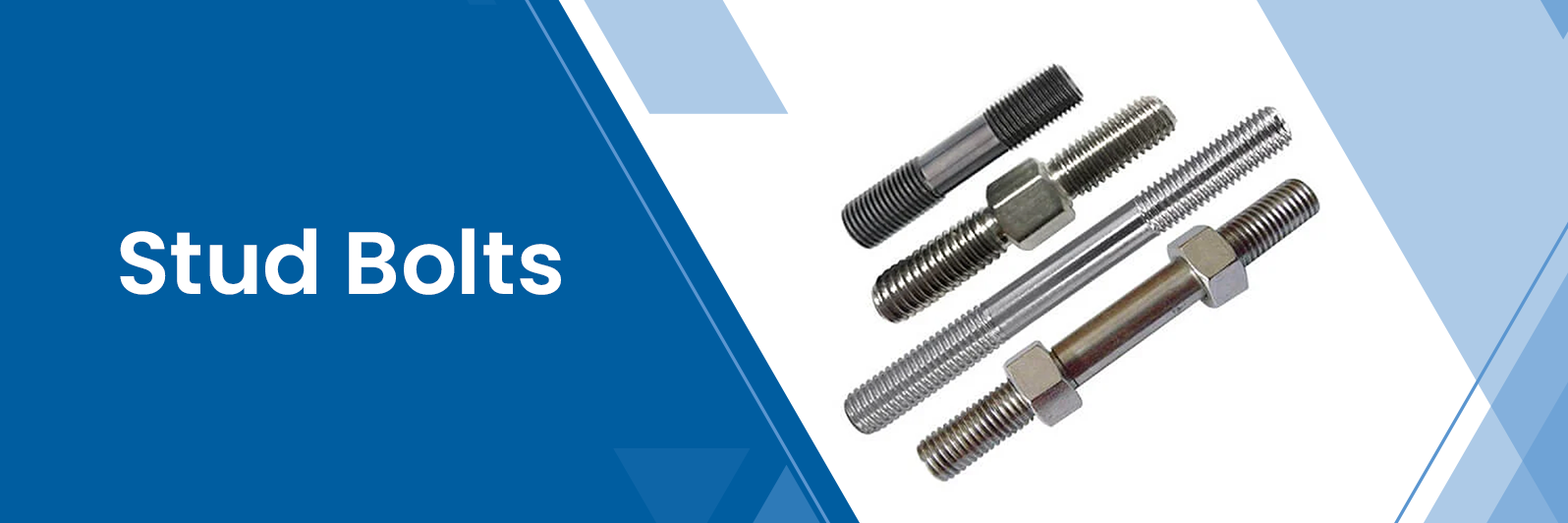
Unifit Fastener is also a major producer of high-quality stud bolts and fasteners, which are specialised in stainless steel bolts, nickel alloy bolts, duplex bolts, super duplex bolts, cupro-nickel bolts, alloy steel and high-strength bolts, Inconel bolts, Monel bolts and Hastelloy bolts. Our products have found wide usage in the oil and gas, petrochemical, chemical, power, solar energy, wind power, and construction industries, where high-pressure flange connections and applications require high levels of reliability.
We have stud bolts that come in full-threaded, part-threaded, reduced shank and all-thread. They are also made to the standards of ASTM, ASME, DIN, and customer standards, providing accuracy in terms of diameter, length, and threading. The most prevalent grades are the ASTM A193 B7, A320, B8, SS304, SS316 and duplex grades. All stud bolts are tested thoroughly using mechanical and chemical procedures such as tensile, impact, hardness and metallurgical tests that are used to ensure that all the stud bolts perform consistently in extreme environments.
In Unifit Fastener, the processes such as CNC machining, thread rolling and heat treatment are highly developed so as to be of the best quality and strength. The mechanisms of our fasteners are highly resistant to corrosion, have mechanical integrity, and are durable, making them suitable for the infrastructure of critical infrastructure, power plants, pipelines, and industrial machinery.
Select Unifit Fastener because of the strong and precisely engineered bolts and stud bolts of international standards. Get in touch with us today, and we would like to discuss your fastener needs and receive custom solutions to meet your project needs.
Request QuoteTable of Contents
- Stud Bolts Materials
- ASTM A193 B8 CL2 & B6 Stud Bolts – Nut and Diameter Guide
- Send Your Enquiry
- ASTM A193 B8MLCuN – Threaded Stud bolts sizes (UNC/UNF)
- Metric Stud Bolts – ASTM A193 B8, B8M, B8C, A182 F51/F53
- ASTM A193 Grade B7 Stud Bolts
- Stainless Steel Stud Bolts
- Applications of Stud Bolts
- FAQs About Stud Bolt
Stud Bolts Materials
Nickel Alloys Stud Bolts
Duplex Stud Bolts
Super Duplex Stud Bolts
Cupro-Nickel Stud Bolts
Inconel Stud Bolts
Monel Stud Bolts
Hastelloy Stud Bolts
ASTM A193 B8 CL2 & B6 Stud Bolts – Nut and Diameter Guide
| Nut Size (mm) | Bolt Diameter (mm) | Hex Nut Height (mm) | Jam Nut Height (mm) | Nylock Nut Height (mm) |
|---|---|---|---|---|
| 2 | 4 | 1.6 | 1.2 | - |
| 2.5 | 5 | 2.0 | 1.6 | - |
| 3 | 5.5 | 2.4 | 1.8 | - |
| 4 | 7 | 3.2 | 2.2 | - |
| 5 | 8 | 4.0 | 2.7 | - |
| 6 | 10 | 5.0 | 3.2 | - |
| 7 | 11 | 5.5 | 3.5 | - |
| 8 | 13 | 6.5 | 4.0 | - |
| 10 | 17 | 8.0 | 5.0 | - |
| 12 | 19 | 10.0 | 6.0 | - |
| 14 | 22 | 11.0 | 7.0 | - |
| 16 | 24 | 13.0 | 8.0 | - |
| 18 | 27 | 15.0 | 9.0 | - |
| 20 | 30 | 16.0 | 10.0 | - |
Send Your Enquiry
ASTM A193 B8MLCuN – Threaded Stud bolts sizes (UNC/UNF)
| Fraction / Number | Decimal Size (in) | UNC TPI | UNF TPI |
|---|---|---|---|
| 1/8 (#6) | 0.1380 | 32 | 40 |
| 5/32 (#8) | 0.1640 | 32 | 36 |
| 3/16 (#10) | 0.1900 | 24 | 32 |
| 1/4 | 0.2500 | 20 | 28 |
| 5/16 | 0.3125 | 18 | 24 |
| 3/8 | 0.3750 | 16 | 24 |
| 7/16 | 0.4375 | 14 | 20 |
| 1/2 | 0.5000 | 13 | 20 |
| 5/8 | 0.6250 | 11 | 18 |
| 3/4 | 0.7500 | 10 | 16 |
| 7/8 | 0.8750 | 9 | 14 |
| 1 | 1.0000 | 8 | 12, 14 |
Metric Stud Bolts – ASTM A193 B8, B8M, B8C, A182 F51/F53
| Nominal Size (mm) | Body Diameter D (mm) | Head Thickness H (mm) | Flats F (mm) | Corners C (mm) |
|---|---|---|---|---|
| M10 | 10.0 | 6.63 – 6.17 | 17.0 – 15.73 | 18.48 – 17.77 |
| M12 | 12.0 | 7.76 – 4.24 | 19.0 – 17.73 | 20.78 – 20.03 |
| M14 | 14.0 | 9.09 – 8.51 | 22.0 – 20.67 | 24.25 – 23.35 |
| M16 | 16.0 | 10.32 – 9.68 | 24.0 – 23.67 | 27.71 – 26.75 |
| M20 | 20.0 | 12.88 – 12.12 | 30.0 – 29.16 | 34.64 – 32.95 |
| M24 | 24.0 | 15.44 – 14.56 | 36.0 – 35.0 | 41.57 – 39.55 |
| M30 | 30.0 | 19.48 – 17.92 | 46.0 – 45.0 | 53.12 – 50.85 |
| M36 | 36.0 | 23.38 – 21.63 | 55.0 – 53.8 | 63.51 – 60.79 |
| M42 | 42.0 | 26.97 – 25.03 | 65.0 – 62.9 | 75.06 – 71.71 |
| M48 | 48.0 | 31.07 – 28.93 | 75.0 – 72.6 | 86.60 – 82.76 |
| M56 | 56.0 | 36.20 – 33.80 | 85.0 – 82.2 | 98.15 – 93.71 |
| M64 | 64.0 | 41.32 – 38.68 | 95.0 – 91.8 | 109.70 – 104.65 |
| M72 | 72.0 | 46.45 – 43.55 | 105.0 – 101.4 | 121.24 – 115.60 |
| M80 | 80.0 | 51.58 – 48.42 | 115.0 – 111.0 | 132.72 – 126.54 |
| M90 | 90.0 | 57.74 – 54.26 | 130.0 – 125.5 | 150.11 – 143.07 |
| M100 | 100.0 | 63.9 – 60.10 | 145.0 – 140.0 | 167.43 – 159.60 |
ASTM A193 Grade B7 Stud Bolts
Unifit Fastener is a manufacturer of steel bolts in ASTM A193 Grade B7 using chromium-molybdenum ferritic alloy that is incredibly strong and reliable. These stud bolts are B7 and can be used at temperatures between -29°C and 427°C and have a wide application in the use of ASTM A105 standard flanges. They are advised to be used together with Grade 2H hex nuts in order to maximise their performance.
Our Grade B7 stud bolts can have any type of surface finish, including plain, blackened, zinc-plated (electroplated), cadmium-coated (yellow) and Teflon-coated (blue). Each finish is chosen depending on the environment in which it is to operate, and it presents great resistance to corrosion and durability in a hard-working environment.
ASTM A193 Grade B16 Stud Bolts
Unifit Fastener also manufactures Grade B16 stud bolts, which are designed to be used in high pressure and high temperature. Grade B16 contains vanadium, unlike B7, and this improves the heat resistance and mechanical strength, making it resistant to temperatures up to 537°C.
Some of the recommended nuts for the B16 stud bolts include Grade 7 hex nuts, which offer better strength and resistance towards corrosion owing to the presence of chromium. Grade 4 nuts are still being used, but Grade 7 nuts are gaining popularity. These bolts are commonly combined with ASTM A283 or Grade F11/F22 flanges that offer positive and dependable links.
Our team has studied bolts that are produced to meet reliable standards to provide consistent quality and performance, thus making them suitable for oil and gas, petrochemical, power, and industrial applications.
Stainless Steel Stud Bolts
Unifit Fasteners is a top producer of stainless steel stud bolts that have been designed with high resistance to corrosion and reliability in service. The stainless steel is the most favoured in water treatment, construction, food processing and chemical conditions because of its longevity and oxidation strength. Our stud bolts are of 304, 304L, 310, 316/316L, 321, 317 and 347 austenitic grades as required by the application. These grades offer good strength in high temperatures along with pitting resistance and overall corrosion. Our SS stud bolts are being produced in accordance with ASTM A193 and ASTM A320, and strain-hardened options are provided on the projects that are to be superior in their mechanical strength.
Duplex Steel Stud Bolts
In the aggressive environments where the normal stainless steel cannot work, we produce the Duplex steel stud bolts. Duplex alloys like UNS S31803/S32205 have a 50/50 austenitic-ferritic microstructure and have a higher yield strength and superior stress corrosion cracking resistance. These stud bolts find application in offshore platforms, desalination plants, marine platforms and chemical storage systems, and they offer structural integrity in applications with chloride-saturated environments.
Duplex Steel Stud Bolts
Our super duplex stud bolts UNS S32750/S32760 are intended to operate in the most extreme of conditions, such as subsea pipes, manifolds and heat exchangers. These grades provide an excellent pitting resistance equivalent number (PREN) as well as excellent high-pressure performance. Heat treatment is also well managed so that it does not become brittle, as a result of which reliability is guaranteed in the long term in such critical infrastructures as deep-water oil and gas operations.
Inconel Stud Bolts
Unifit Fasteners produce in high-temperature, high-stress environments Inconel 600, 601, 625, 718 and X-750 stud bolts. The Inconel alloys retain strength even at temperatures at which pure steels do not have structural integrity. These stud bolts have a common usage in gas turbines, furnaces and heat treatment equipment and in nuclear applications because they resist oxidation and creep.
Incoloy Stud Bolts
Our Incoloy 825 stud bolts are dedicated to excelling in the environment having sulphuric, phosphoric and hydrochloric acids. They contain a nickel-iron-chromium composition with molybdenum and copper, which offers pitting, crevice corrosion and stress corrosion crack resistance. They are very popular in chemical processing plants, pollution control systems and oil and gas extraction units.
Monel Stud Bolts
Our Monel 400 and Monel K500 stud bolts are used in marine and chemical processing. Monel 400 has superior toughness and corrosion resistance in seawater, and Monel K500 is stronger and harder with additional hardness and strength through the age-hardening elements such as aluminium and titanium. They are suitable in pump shafts, seawater valves and marine engineering systems.
Hastelloy Stud Bolts
Our variety of Hastelloy stud bolts (C276, C22, B2) is designed for a severe chemical environment with concentrated acids and chlorides. These alloys offer unparalleled resistance in pharmaceutical equipment, flue gas desulfurization plants and petrochemical plants. All fasteners are subjected to tough quality control measures that ensure that the metallurgical integrity is not compromised during forging and machining.
Nickel Alloy Stud Bolts
Nickel 200 and 201 stud bolts are also produced by us, which are characterised by good mechanical strength and great alkali resistance. The grades are applied in the production of caustic soda, food processing systems, synthetic fibre manufacturing, and low magnetic permeability.
Copper Nickel Stud Bolts
Unifit Fasteners manufactures seawater stud bolts made of Cu-Ni 70/30 and 90/10. They are used to prevent biofouling, erosion and marine corrosion, including heat exchangers, condenser systems, desalination plants and shipbuilding.
Alloy Steel Stud Bolts
In the case of high-temperature and -pressure systems, we also supply ASTM A193 B7 and B16 alloy steel stud bolts – usually applied in flanged joints and pressure vessels in refineries and petrochemical plants. They are heat treated to have excellent tensile strength and load resistance and are threaded carefully so as not to endanger the load-bearing capacity.
Titanium Stud Bolts
In situations where saving weight and high resistance to extreme corrosion are priorities, we have Titanium Grade 2 and Grade 5 stud bolts. They are common in the aerospace, desalination plant, medical equipment, and high-performance automotive sectors because they have the highest strength-to-weight ratio and can resist chlorides.
Stud Bolts – Standards and Specifications Overview
Stud bolts are critical fastening components used in flanged joints, pressure vessels, pipelines, and structural assemblies where high clamping strength, heat resistance, and reliability are required. Unifit Fasteners manufactures stud bolts in accordance with leading global standards, ensuring dimensional accuracy and full material traceability for demanding applications.
DIN Standards for Stud Bolts (Deutsches Institut für Normung)
DIN standards are extensively used in European mechanical and plant engineering. Our stud bolts are manufactured in compliance with several DIN specifications, including:
- DIN 976 – Fully threaded stud bolts with metric threads
- DIN 938 / DIN 939 – Partially threaded studs with two nuts
- DIN 835 / DIN 938 – Double-end stud bolts with equal or unequal thread lengths
- DIN 940 – Stud bolts with fine pitch threads
- DIN 2509 / DIN 2510 – Stud bolts for high-pressure and high-temperature flanged joints
Many older DIN stud bolt standards have been updated to ISO formats, but DIN markings are still widely requested for maintenance, replacement, and legacy machinery.
ISO Standards for Stud Bolts
ISO standards ensure global compatibility across piping, refineries, and offshore projects. We produce stud bolts meeting:
- ISO 8992 – General requirements for bolts, screws, studs and nuts
- ISO 4759-1 – Tolerances for fasteners
- ISO 898-1 – Mechanical properties for carbon and alloy steel stud bolts
- ISO 3506 – Mechanical properties for stainless steel stud bolts (A2, A4)
- ISO 4017 / ISO 4032 combinations – Stud bolts with heavy hex nuts for flange joints
ISO-compliant stud bolts are commonly used in international EPC projects and cross-border construction.
ASME / ASTM Standards for Stud Bolts
For oil & gas, petrochemicals, and power industry applications, stud bolts are manufactured as per:
- ASTM A193 – Alloy and stainless steel stud bolts for high-temperature service
- ASTM A320 – Low-temperature service stud bolts
- ASTM A194 – Carbon, alloy, and stainless steel nuts for pressure and temperature service
- ASME B16.5 / B16.47 – Stud bolts for pipe flanges
These standards are essential for pressure-rated piping systems and refinery equipment.
BS Standards (British Standards)
For UK and Commonwealth markets, we supply stud bolts complying with:
- BS 4882 – Stud bolts for pipelines and flanges
- BS EN ISO equivalents – Harmonized European stud bolt standards
IS Standards (Indian Standards)
For domestic projects, we manufacture stud bolts to BIS specifications, including:
- IS 1862 / IS 1862 Part 2 – Fully and partially threaded studs
- IS 1367 – Technical supply conditions for threaded fasteners
- IS 3757 – High tensile structural bolting assemblies
Applications of Stud Bolts
Our Stud bolts are widely used across industries where high strength, corrosion resistance, and reliability are critical. Their applications include:
- Oil & Gas Industry – For high-pressure pipelines, flange connections, refineries, and petrochemical plants.
- Power & Energy Plants – Used in boilers, turbines, heat exchangers, and solar or wind power installations.
- Chemical & Petrochemical Industry – Ideal for handling corrosive chemicals and high-temperature processes.
- Construction & Infrastructure – Suitable for bridges, industrial structures, and critical machinery assemblies.
- Shipbuilding & Marine Applications – Withstands saltwater corrosion using materials like Inconel, Monel, and Hastelloy.
- Aerospace & Automotive – High-strength stud bolts ensure durability and precision in critical mechanical assemblies.
- Water Treatment & Desalination Plants – Corrosion-resistant bolts for pipelines, flanges, and pressure vessels.
FAQs About Stud Bolt
What is a stud bolt?
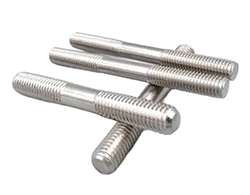
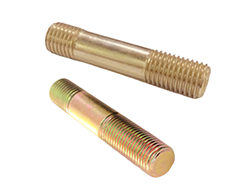
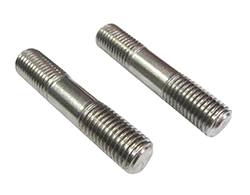
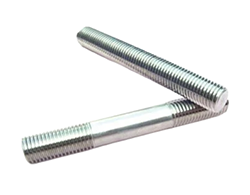
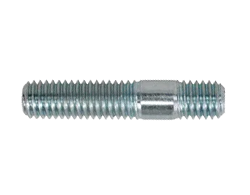
A stud bolt is a threaded fastener with threads on both ends and no head. It is commonly used to secure flanges, machinery, and equipment in high-pressure or high-temperature applications. Nuts are installed on both ends of the stud bolt to firmly clamp the connected components.
What is the difference between a stud bolt and a normal bolt?
The primary difference is that a normal bolt has a head on one end and threads on the other, whereas a stud bolt has threads on both ends and no head. Stud bolts are preferred in applications requiring high torque, precise flange alignment, or frequent maintenance because the stud remains stationary during tightening.
What is a B7 stud bolt?
A B7 stud bolt is manufactured from chromium-molybdenum alloy steel and is designed for high-pressure and high-temperature service. It is commonly used with ASTM A105 flanges and performs well in temperature ranges from -29°C to 427°C. ASTM A194 Grade 2H hex nuts are typically recommended for use with B7 stud bolts.
How to check stud bolt size?
To determine a stud bolt size, measure the thread diameter, overall length, and thread pitch. For critical applications, it is recommended to refer to applicable ASTM or ASME standards, which define the required dimensions based on bolt grade, flange rating, and service conditions.
What are the three types of bolts?
The three most commonly used types of bolts are hex bolts, stud bolts, and carriage bolts. Each type is designed to meet specific fastening, load-bearing, and installation requirements across various industrial applications.