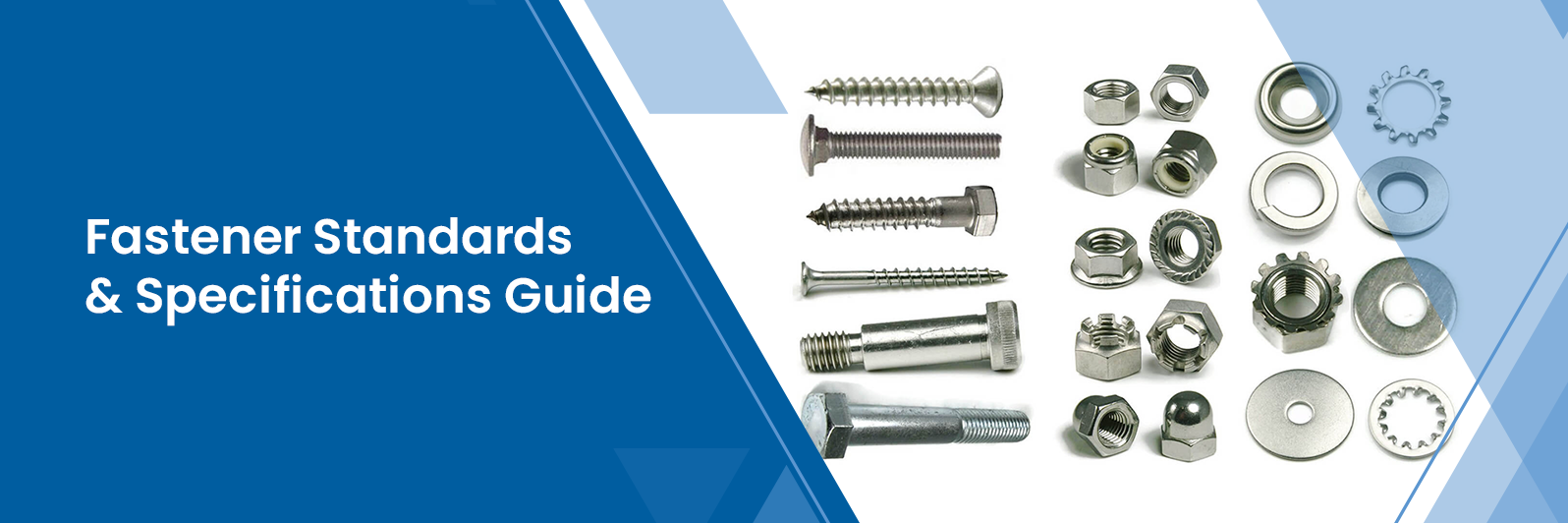
Standards for fasteners represent the language of industrial engineering and purchasing. They ensure safety, compatibility, and performance standards. A bolt is not only an obstinate mass of metal but also a carefully made item characterized by rigid specifications describing its form, power, materials, and quality.
This is important and relevant as it is imperative for standards. These standards ensure that there is compatibility. The reason why any EPC contractor in the Middle East can demand that an M20 bolt be manufactured according to a DIN 931 standard is that this particular fastener will be compatible with a corresponding nut and a corresponding flange whenever the need arises. Additionally, standards are essential as far as environments that experience high pressure are concerned. For instance, pipelines or steel construction.
This can be considered to be an umbrella standards resource page, catering to engineers, purchasing professionals, and maintenance personnel. We will help you through the complexities of ISO, DIN, ASTM, ASME, and EN standards to direct you towards the correct product to suit your application.
Need a specific standard? Share your standard + size for a quick quote:
Request QuoteTable of Contents
- How Fastener Standards Are Organized
- Dimensional Standards for Bolts, Nuts & Washers
- Thread Standards & Thread Identification
- Send Your Enquiry
- Mechanical Property Classes & Strength Grades
- Material Standards (By Material Family)
- Coatings, Finishes & Surface Treatment Standards
- Inspection, Testing & Documentation
- How to Choose the Right Standard
- Frequently Asked Questions (FAQs)
How Fastener Standards Are Organized
Fastener standards are generally categorized into distinct "layers." To fully specify a fastener, you typically need to reference standards from multiple categories simultaneously:
- Dimensional Standards: These define the geometry—head width, head height, shank length, and tolerances. (e.g., ISO 4014, ASME B18.2.1).
- Thread Standards: These define the thread profile, pitch, and class of fit. (e.g., ISO 965, ASME B1.1).
- Mechanical Property Classes: These define the strength (tensile, yield) and hardness. (e.g., ISO 898-1, ASTM A193).
- Material Standards: These define the chemical composition of the raw material. (e.g., ASTM A193 Grade B7, ISO 3506 A4).
- Coatings/Finishes Standards: These define surface treatments for corrosion resistance. (e.g., ISO 4042 for zinc plating, ASTM B633).
- Inspection/Testing Standards: These define how the parts are tested and what documents are required. (e.g., ISO 3269, ASTM F1470).
Send Your Enquiry
Dimensional Standards for Bolts, Nuts & Washers
Dimensional standards ensure that a 1/2" wrench fits a 1/2" bolt head, and that the bolt fits through the intended hole. We primarily deal with Metric (ISO/DIN) and Inch (ASME/ANSI) systems.
Common Bolt Dimension Standards
- ISO (Metric): The modern global standard. ISO 4014 refers to Hexagon head bolts with a shank (partially threaded), while ISO 4017 refers to Hexagon head screws (fully threaded).
- DIN (German): Legacy standards still widely used. DIN 931 corresponds to ISO 4014, and DIN 933 corresponds to ISO 4017. Note: There are minor differences in head sizes (width across flats) between some ISO and DIN sizes (e.g., M10, M12, M14).
- ASME (Inch): The ASME B18.2.1 standard covers square and hex bolts and screws in inch sizes.
Nuts Dimension Standards
- Metric: ISO 4032 (Course thread) is the standard for regular hex nuts. The older DIN 934 is still very common in trade but technically superseded.
- Inch: ASME B18.2.2 covers heavy hex nuts and square nuts.
Washer Dimension Standards
- DIN 125 (ISO 7089) covers standard flat washers.
- DIN 127 covers spring lock washers.
- DIN 9021 (ISO 7093) covers large outer-diameter (fender) washers.
| Standard | Product Type | Equivalent / Notes | Typical Use |
|---|---|---|---|
| ISO 4014 | Hex Head Bolt | DIN 931 | Structural bolting, general assembly (Partial Thread) |
| ISO 4017 | Hex Head Screw | DIN 933 | Used where no shank is needed (Full Thread) |
| ASME B18.2.1 | Hex Bolt (Inch) | ANSI B18.2.1 | Oil & Gas, North American machinery |
| ISO 4032 | Hex Nut | DIN 934 (Legacy) | General purpose nut mating |
| DIN 912 | Socket Head Cap Screw | ISO 4762 | Tight spaces, high-strength machine assembly |
| DIN 125 | Flat Washer | ISO 7089 | Surface protection, load distribution |
| DIN 975 / 976 | Threaded Rod | - | Construction, hanging pipes, HVAC |
Thread Standards & Thread Identification
Metric Threads
The metric threads comply with ISO normations (ISO 68-1). Bicycles use “M” followed by the nominal diameter and the pitch, for example, M12 x 1.75. If the pitch value isn’t specified, the coarse pitch will be taken. The fine-pitched ones, for example, M12 x 1.25, have better resistance to vibration loosening and can be adjusted more finely.
Inch Threads
Unified Thread Standard (UTS) dominates the inch world.
- UNC (Unified National Coarse): Most common general fastener thread.
- UNF (Unified National Fine): Used for precision and higher strength requirements.
- 8-UN: Used specifically in heavy bolting (ASTM A193) for diameters above 1 inch, ensuring a constant 8 threads per inch.
How to Specify Threads Correctly
- Example 1 (Metric): "M16 x 2.0 x 80, ISO 4014, Class 8.8, Zinc Plated"
- Example 2 (Inch): "1/2-13 UNC x 3.00, ASME B18.2.1, ASTM A193 Grade B7"
| Thread System | Typical Standard | Where Used | Notes |
|---|---|---|---|
| ISO Metric Coarse | ISO 261 / 965 | General Industry | Default for 90% of metric fasteners. |
| ISO Metric Fine | ISO 261 / 965 | Automotive, Precision | Resists vibration better; harder to assemble. |
| UNC (Inch) | ASME B1.1 | Construction, USA Equipment | Easy assembly, robust threads. |
| UNF (Inch) | ASME B1.1 | Aerospace, Automotive | Larger stress area, stronger than UNC. |
| 8-UN | ASME B1.1 | Petrochemical / Oil & Gas | Standard for ASTM A193 bolts > 1" diameter. |
Mechanical Property Classes & Strength Grades
Metric Carbon/Alloy Steel (ISO 898-1)
Metric bolts use a two-number system (e.g., 8.8, 10.9, 12.9).
The first number represents 1/100th of the nominal tensile strength (8 = 800 MPa).
The second number represents the ratio of yield point to tensile strength (8 = 80% yield/tensile ratio).
Example: Class 8.8 has ~800 MPa Tensile Strength and ~640 MPa Yield Strength.
Inch / ASTM Strength Concepts
Inch fasteners often use the "Grade" system (SAE J429 Grades 2, 5, 8) or specific ASTM standards (A193, A320) which designate materials based on application (High Temp, Low Temp).
| Standard System | Typical Marking | General Strength | Common Material |
|---|---|---|---|
| ISO 898-1 | 8.8 | Medium High (800 MPa) | Carbon Steel |
| ISO 898-1 | 10.9 | High Strength (1000 MPa) | Alloy Steel |
| ASTM A193 | B7 | High Temp / Strength | Chromium-Molybdenum Steel |
| ISO 3506 | A2-70 | Medium (700 MPa) | Stainless Steel 304 |
| ISO 3506 | A4-80 | High (800 MPa) | Stainless Steel 316 |
Material Standards (By Material Family)
Selecting the right material standard is crucial for environmental survival. We supply fasteners in a wide range of exotic alloys.
Carbon & Alloy Steel
For general structural use and high-pressure bolting. ASTM A193 is the go-to standard for high-temperature/high-pressure service (e.g., Grade B7, B16). ASTM A320 covers low-temperature service (e.g., Grade L7).
Stainless Steel
ISO 3506 governs corrosion-resistant stainless steel fasteners. Common grades are A2 (304) for general outdoor use and A4 (316) for marine environments.
Nickel Alloys & Exotic Metals
For extreme environments involving acids, chlorides, or extreme heat, we utilize Nickel alloys defined by ASTM B series or specific UNS designations.
| Material / Grade | UNS / Common Name | Typical Standard | Link to Grade |
|---|---|---|---|
| Alloy Steel | Grade B7 | ASTM A193 | Stud Bolts |
| Stainless 316 | S31600 / A4 | ASTM A193 B8M / ISO 3506 | SS 316 Fasteners |
| Inconel 625 | N06625 | ASTM B446 | Inconel 625 Fasteners |
| Hastelloy C276 | N10276 | ASTM B574 | Hastelloy C276 Fasteners |
| Monel 400 | N04400 | ASTM B164 | Monel 400 Fasteners |
| Titanium Gr 5 | R56400 | ASTM B348 | Titanium Fasteners |
Coatings, Finishes & Surface Treatment Standards
Coatings provide the first line of defense against corrosion and control the friction coefficient during tightening.
| Coating / Finish | Primary Standard | Benefit | Typical Use |
|---|---|---|---|
| Zinc Electroplating | ISO 4042 / ASTM B633 | Basic corrosion protection | Indoor / Dry environments |
| Hot Dip Galvanizing | ISO 10684 / ASTM F2329 | Thick, durable protection | Outdoor structural steel |
| PTFE / Xylan | - | Corrosion + Lubricity | Offshore, Subsea, Oil & Gas |
| Passivation | ASTM A967 | Restores oxide layer | Stainless Steel fasteners |
Inspection, Testing & Documentation
Quality assurance is what separates a reliable fastener from a liability. At Unifit Fastener, we adhere to strict testing protocols.
- MTC (Mill Test Certificate): Verifies chemical composition and heat treatment history (EN 10204 3.1).
- PMI (Positive Material Identification): XRF analysis to confirm alloy elements.
- Dimensional Inspection: Checking threads (Go/No-Go gauges) and physical dimensions.
| Requirement | Why It Matters | When to Specify |
|---|---|---|
| EN 10204 3.1 Cert | Traceability to raw material | Always for critical projects |
| PMI Testing | Confirm no material mix-up | High-value alloys (Inconel, Hastelloy) |
| Charpy Impact Test | Verify toughness at low temp | Cryogenic applications (L7, L7M) |
| Proof Load Test | Verify load capacity without failure | Structural Safety |
How to Choose the Right Standard
Choosing the right fastener standard involves evaluating the operating environment and the mechanical load.
- Marine / Saltwater: Avoid standard carbon steel. Choose Stainless Steel 316, Duplex 2205, or Monel 400.
- High Temperature (>400°C): Standard 8.8 bolts will lose strength. Specify ASTM A193 B16 or Inconel 625.
- Strong Acids: For sulfuric or hydrochloric acid environments, Hastelloy C276 is the industry standard.
- General Construction: ISO 4014 Class 8.8 (Zinc Plated) or ASTM A325 (Structural) are cost-effective choices.
Unsure which standard fits your project? Send us your service conditions for a free consultation.
Contact Engineering SupportFrequently Asked Questions (FAQs)
What is the difference between DIN 931 and ISO 4014?
They are functionally equivalent standards for Hex Head Bolts (Partially Threaded). However, for sizes M10, M12, M14, and M22, the Width Across Flats (WAF) of the head differs slightly (ISO heads are generally smaller by 1-2mm). Always check if your wrenches or clearances require the specific DIN or ISO dimension.
How do I convert ISO metric bolts to ASME inch bolts?
You cannot directly convert them as the threads (pitch and angle) are different. However, you can find "comparable" strengths. For example, a Metric Class 8.8 is roughly similar in strength to an Inch Grade 5. A Metric Class 10.9 is roughly similar to an Inch Grade 8.
What does A2-70 and A4-80 mean on stainless bolts?
"A2" refers to 304 Stainless Steel, and "A4" refers to 316 Stainless Steel. The number following it is the Tensile Strength divided by 10. So, "70" means 700 MPa tensile strength, and "80" means 800 MPa tensile strength (High Tensile Stainless).
What is the difference between UNC and UNF threads?
UNC (Unified National Coarse) is the most common thread type for general assembly, offering easy cross-threading resistance. UNF (Unified National Fine) has more threads per inch, offering higher tensile strength and finer tension adjustment, but is more susceptible to damage and galling.
What documents should I request with my fastener order?
For industrial use, always request an EN 10204 3.1 Mill Test Certificate (MTC). This document certifies the chemical and mechanical properties of the specific heat lot you purchased. For critical alloy fasteners, you may also request PMI reports.
How do I avoid buying the wrong grade of fastener?
Always specify the full standard string in your RFQ: Standard + Diameter + Length + Property Class/Grade + Coating. Example: "ISO 4017 M12x50 Class 8.8 Zinc Plated."