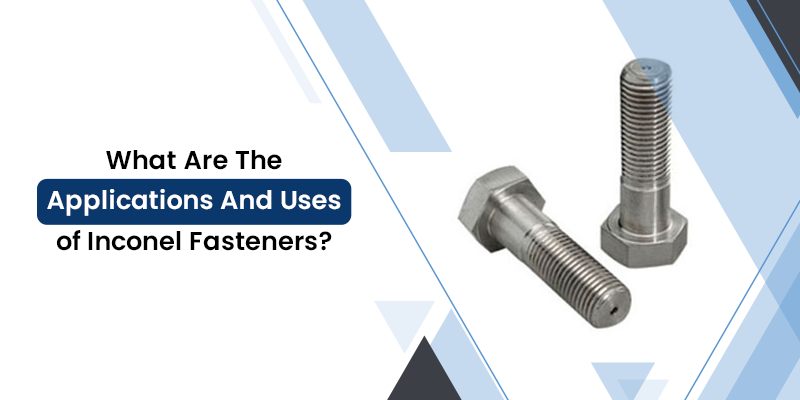
Standard steel fasteners cannot be depended upon in an industry where failure of any one fastener may cause disastrous effects such as those in jet engines, ruptures in subsea pipelines, and a nuclear reactor leak. When temperatures are too high, when corrosion occurs through the teeth, cryogenic cold endangers the metal integrity, engineers resort to the one material which cannot be beaten by all others, i.e., Inconel fasteners. The nickel-chromium superalloy is the best of fastening technology, and is designed to be used in settings where failure is not an option. Inconel fasteners are now being used in aerospace, oil and gas extraction and chemical processing as well as in marine applications not only as preference, but as a necessity.
What Are Inconel Fasteners and Why They're Critical for Extreme Conditions
Inconel is an alloy that involves superalloy and is normally characterized by a nickel component that ranges between 50-55% and chromium component that ranges between 15-25% plus certain grades such as Inconel 718 fasteners,Inconel 625 fasteners,Inconel 600 fasteners, andInconel 601 fastenerswhich have customized mechanical strength and surface stability up to elevations exceeding 1,000deg F. Inconel forms a stable, passivating oxide layer which grows well in heat unlike stainless steel which loses tensile strength at temperatures above 800 deg F. Whether one is using the high-strength Inconel 718 fastenersor the corrosion-resistant Inconel 625 fasteners, it works at temperatures up to 2,200degF, and even more, the material resists oxidation, carburization, and chloride-ion stress-corrosion cracking.
The difference between Inconel and the other stainless steel is that it develops an oxide layer of considerable thickness that is stable and passivating and in fact, becomes stronger with the exposure to heat. Although 304 or 316 stainless steel fasteners start losing tensile strength over 800 degF and corrode faster in chloride environments, Inconel fasteners will continue to work reliably at 2,200degF and they resist oxidation, carburization, and chloride-ion stress-corrosion cracking. This is a combination of high-temperature strength retention, oxidation resistance and superior corrosive protection which is why Inconel can be used when the conditions become too extreme to tolerate normal metals.
Understanding Different Inconel Grades: 600, Inconel 601 Fasteners, 625, and 718
To choose the right Inconel grade, one should know what types of problems each of the alloys was solving. Inconel 600, Inconel 601 fasteners,Inconel 625, andInconel 718 have four major grades that have specific benefits depending on the industry application. A detailed comparison is provided below to help you make your choice:
| Inconel Grade | Key Characteristic | Primary Temperature Range | Typical Use Case |
| Inconel 600 | Solid solution-strengthened alloy with outstanding resistance to carburization and chloride stress-corrosion cracking. Excellent for chemical processing environments. | Up to 2000°F | Chemical Processing, Heat Treating, Nuclear Applications |
| Inconel 601 | Contains added aluminum (1-1.7%) for significantly enhanced oxidation resistance. Preferred choice for prolonged high-temperature exposure and sulfur-bearing environments. | Up to 2200°F | Thermal Processing, Gas Turbines, Industrial Furnaces |
| Inconel 625 | Strengthened by molybdenum (8-10%) and niobium (3.15-4.15%). Delivers exceptional high-strength without heat treatment, outstanding fatigue strength, and resistance to localized corrosion. Most versatile for temperature variations. | Cryogenic to 1800°F | Marine Applications, Aerospace, Chemical Processing, Subsea Equipment |
| Inconel 718 | Precipitation-hardenable with extremely high yield strength (up to 200 ksi). Contains niobium for intermetallic precipitates that dramatically strengthen while maintaining excellent weldability. Industry standard for aerospace. | -423°F to 1300°F | Jet Engines, Rocket Motors, High-Stress Structural Components |
Key Properties That Make Inconel 625 Fasteners Superior
Inconel 625 fasteners have the lowest density of all grades of Inconel; they are highly versatile in a variety of extreme conditions. The molybdenum-niobium synergistic behavior in the nickel-chromium alloy forms performance traits that render such corrosion-resistant Inconel 625 bolts the choice of action at the arduous end:
- Outstanding Resistance to Localized Corrosion: The molybdenum alloy (8-10%) offers superior resistance to pitting and crevice corrosion in chloride environments wherein stainless steel is destroyed within a short period of time. This is why Grade 625 fastening solutions are perfect in the offshore platforms and underwater equipment.
- Superior Chloride-Ion Stress-Corrosion Cracking Resistance: Inconel 625 can resist brittle failure of a fastener suddenly and unexpectedly as in high-strength stainless steel fasteners when subjected to saltwater or chloride environments Inconel 625 can resist such catastrophic structural failure.
- Exceptional Fatigue Strength: Large fatigue is resistant to good service in cyclic loading situations that are typical of vibrating equipment, thermal expansion cyclical, and pressure changing environments. In contrast to the precipitation-hardened alloys that may develop a brittle structure, 625 has tremendous ductility with tensile strengths over 120 ksi.
- Excellent Temperature Flexibility:Inconel 625 fastener is tough and ductile even at low temperatures near the cryogenic temperature of -423degF, thus is used in liquefied natural gas (LNG) systems and cryogenic fuel handling of aerospace. On the other extreme they remain strong down to 1,800degF, a range of over 2,200 degrees.
- No Heat Treatment Needed: Parallel terms attain excellent performance based on solid solution strengthening, which dispenses with elaborate heat treatment that may add variation in mechanical characteristics.
Aerospace and Aviation Applications of Inconel 718 Fasteners
High-strength Inconel 718 fasteners have now been adopted in the industry as standard, critical propulsion and structural fasteners in aerospace engineering where the need to minimize weight must not jeopardize the safety requirements. There is no other fastener material in the same family that can compete with the extreme tensile strength (as high as 200 ksi when hardened with precipitation) and superb fatigue resistance of 718 as well as be able to maintain mechanical properties at high temperatures.
Jet Engine Important Components:
- Turbine Section Assemblies: Turbine blades attachment bolts, compressor casings and exhaust system flanges are subjected to temperatures in excess of 1,200degF and undergo strong vibrational forces and thermal action between takeoff and cruise engine operations.
- Combustion Chamber Structures: The microstructure, which is precipitation-hardened, offers superior creep-rupture strength, i.e. aerospace grade 718 bolts can withstand elongation or deformation under sustained high temperatures when conventional bolts would loosen or even fail over time under high temperatures.
- Hot Gas Components: These Fasteners do not change their dimensional stability and carrying capability over time because of continual exposure to combustion gases and thermal cycling.
Rocket Motor and Space Applications:
Cryogenic liquid fuel systems are exceptionally demanding with extremely high demands on fasteners that remain ductile at -423degF (liquid hydrogen temperature) and hot gas parts may be above 1,500degF. Inconel 718 fasteners are the only fasteners that meet the two requirements in a single system. The Space Shuttle primary engines, SpaceX Merlin engines and the modern satellite propulsion are all dependent upon 718 fasteners to carry out critical pressure vessel closures and structural load paths.
Structural Airframe Applications:
- Bolted joints that have high loads and those that are in exposed regions with high temperatures.
- Landing gear attachments that need optimum strength weight proportions.
- Carry through structures Engine pylon connection and wing-fuselage connection.
- Applications requiring superior fatigue performance and vibration resistance
The regulations on aviation safety require fastener materials that are able to sustain full design strength during projected service life without the likelihood of environmental degradation, which is a characteristic Inconel 718 has consistently exhibited.
Oil & Gas Industry Uses for Inconel 600 Fasteners
Oil and gas extraction industry is the field of fasteners that pose no challenges at all: downhole pressure of over 20,000 psi, temperature of up to 500degF and highly corrosive sour gas environment with hydrogen sulfide (H 2 S). Inconel 600 stud bolts under such circumstances are offering the corrosion resistance, as well as mechanical integrity, to operate safely and reliably.
Applications of Downhole Equipment:
- Christmas Trees and Blowout Preventers: Heat-resistant Grade 600 fasteners ensure the integrity of the seal in case of joint attack by pressure, temperature, and chemical aggressor.
- Subsurface Safety Valves: Sulphide stress cracking in other normal steel fasteners under the influence of hydrogen sulfide results in unexpected catastrophic failure. The nickel-laden structure of Inconel 600 inhibits this mode of attack and therefore inhibits the embrittlement of high-strength steel, which is caused by hydrogen.
- Wellhead Components: Stress-corrosion cracking of chloride-ions due to drilling muds, completion brines and high chloride concentration formation waters is a problem posing threats to standard stainless steel fasteners. Inconel 600 bolts have excellent durability to this mode of failure.
Petrochemical Refining Operations:
Inconel 600 finds extensive application in building bubble towers (distillation column), heat exchanger assemblies, and reactor vessel closures in which the fasteners are exposed to organic and inorganic substances at high temperatures.Inconel 600 fasteners have a long history of exceeding the service life of stainless steel equivalents 5 to 10 times in applications taking sulfuric acid, nitric acid and other hydrocarbon compounds at temperatures above 800degF, significantly lowering maintenance expenses, and enhancing operational safety.
Chemical Processing and Marine Applications of Inconel Fasteners
One of the most hostile environments to fasteners corrosion environments are marine environments, which combine the electrochemical corrosion response of salt water, the mechanical forces of loading and vibration at the wave, and in most cases, high temperatures in propulsion systems.
Marine Applications:
- Propeller Shaft Assemblies: Inconel 625 fasteners do not pitter, or develop localized corrosion cavities that destroy typical 316 stainless steel fasteners in months.
- Subsea Valve Actuators: The molybdenum level is very high, which results in a high level of resistance to pitting and crevice corrosion which are two major forms of failure in marine fasteners.
- Seawater Cooling Systems: Subsea equipment below 1,000 feet in pressure are subjected to pressure enhanced corrosion where the hydrostatic pressure promotes the rate of the electrochemical reaction. Even in these extreme conditions Grade 625 fastening solutions retain their passive oxide layer.
- Naval Vessel Propulsion Components: Essential systems that must be absolutely reliable when in the saltwater environment.
Chemical Processing Plants:
Fasteners are commonly subjected to concentrated acids, caustic solutions, and organic solvents at ambient temperature or higher, up to excessive of 600 degrees F, in heat exchangers, reaction vessels, evaporators and distillation columns.
- Acid Resistance: Inconel fasteners are highly resistant to sulfuric acid (especially at concentration above 80 per cent), phosphoric acid, nitric acid and hydrochloric acid.
- Clean-In-Place (CIP) Systems: Pharmaceutical and food processing industries designate Inconnel in systems whereby the fasteners are subjected to repeated exposure to harsh cleaning agents such as sodium hydroxide and phosphoric acid and solutions of hypochlorite, among others.
- Product Purity Applications: Inconel fasteners are not harmed by corrosion and do not pollute the process fluids, as stainless steel fasteners do.
Power Generation and High-Temperature Applications
Inconel fasteners are used in nuclear power plants in the internals of the reactor core, in control rod drive mechanisms, and also in steam generator assemblies. The nuclear environment is a combination of several fastener stressors: neutron intense radiation, high temperature water (up to 650degF), and borated water chemistry which hastens the corrosion.
Nuclear Power Applications:
- Control Rod Drive Mechanisms: These are safety critical mechanisms that utilize Inconel fasteners solely due to the fact that the reliability of the system is non-negotiable. Clamps should be able to operate successfully even after years of being used as a reaction environment.
- Reactor Core Internals: Inconel 600 and 625 retain mechanical properties in the face of neutron bombardment which would lead to embrittlement in ferritic steels.
- Steam Generator Assemblies: Resistance to corrosion ensures that cracks do not start and this may cause leakage of radioactive coolant.
Gas Turbine Power Generator:
The elevated temperature of the combustion gas of the modern high-efficiency designs, over 2,500 deg F, necessitates fasteners used in high-temperature applications which retain their dimensions. Combustion can fasteners and transition liners operate at metal temperatures in excess of 1800 deg F.
Industrial Furnace Construction:
- Heat Treating Equipment:Inconel 601 fasteners are the best choice in cases of high oxygen resistance where temperatures are the most important.
- Thermal Processing Systems: This material has an addition of aluminum in 601 which forms an aluminum oxide scale, which offers greater resistance to cyclic oxidation - the repeated heating and cooling that spalls the oxide layers.
- Furnace Internal Supports: Carburization (absorption of carbon) and sulfidation resistance increases the equipment life by a factor of many times that of the traditional heat-resistant alloy.
Selecting the Right Grade: Application-Based Decision Guide
The selection of the best grade of Inconel involves a logical evaluation of the three vital decision considerations including operating temperature range, nature of corrosive medium and mechanical loading demands.
- Decision Factor 1- Temperature: Inconel 718 fasteners start to lose strength at temperatures above 1,300degF and, therefore, Inconel 625or 601 should be used. Low temperatures below -100degF Cryogenic applications prefer 625 or 718 that are ductile even at the lowest temperatures. The cycling of temperature must be done in regards to the thermal expansion and fatigue resistance.
- Decision Factor 2 - Corrosive Medium: Saltwater and chloride environments highly prefer Inconel 625 fasteners because of the excellent pitting resistance. Sulfide stress cracking is needed in sour gas (H2S) environments and has to be Inconel 600 or 625. The application of 625 with specific benefits in acid reduction such as hydrochloric acid.
- Decision Factor 3 - Mechanical Load: High-strengthInconel 718 fasteners are required when the primary structural loads in an aerospace application are carried by fasteners such as bolts that have preloads in excess of 150 ksi. To seal applications at moderate preload (80-100 ksi) the weaker strength of 625 or 600 is adequate.
- Decision Factor 4- Cost vs Performance Balance: Inconel fasteners are 5-15 times more expensive than the stainless steel fasteners of the same type. Nevertheless, the financial cost of fastener failure; whether in time-out, accidents or environmental pollution, is usually much greater than material cost differences. Estimate the cost of lifecycle such as installation and the anticipated service life and frequency of replacement.
| Industry | Primary Environmental Challenge | Recommended Fastener Grade |
| Aerospace Engine | Extreme Heat + High Stress | Inconel 718 |
| Offshore Marine | Saltwater Corrosion | Inconel 625 |
| Chemical Processing | Acidic Corrosion | Inconel 600 / 625 |
| Heat Treating | Extreme Oxidation | Inconel 600 / 601 |
Quality Standards and What to Look for in Inconel Fasteners Manufacturers
Identifying the appropriate Inconel grade is only half the battle, to be sure that provided fasteners are correct in specification, quality check must be closely performed. Certifications and test documentation of the material is extensive and is given by reputable Inconel fasteners manufacturers to confirm chemical composition as well as mechanical properties.
Material Certifications:
- ASTM Standards: ASTM B166(rod, bar and wire), ASTM B637(precipitation-hardening nickel
- alloy bars and forgings) and similar DIN/EN standards lay down the specifications of the chemical composition and the minimum mechanical properties.
- Mill Test Reports (MTRs): This requires tracking of a lot of fasteners to the original alloy heat, recording actual results of chemical analysis against specification limits.
- Third-Party Inspection: Critical fasteners The critical fasteners should be subject to independent utilization of composition by spectroscopic examination.
Manufacturing process Quality:
Hot forging of fasteners at the recrystallization temperature or higher results in a better grain structure and mechanical properties than cold headed. The work-hardening properties of Inconel cause cold heading to be challenging and possibly harmful to fatigue resistance. After heat treatment thread rolling yields a better surface finish and fatigue strength.
Traceability Requirements:
- Every fastener must be identified permanently (with a head stamp, laser etched or color coding) to MTR documentation.
- Full traceability of the melting to final inspection is required in case of aerospace and nuclear requirements.
- Purchaser inspections on the source through certified representatives or third party quality agencies.
Testing Requirements:
- Tensile Testing: Ascertains the ultimate strength, yield strength and the values of elongation.
- Hardness Testing: Consists of rapid technique of verifying the adequacy of heat treatment.
- Intergranular Corrosion Test: This is used to identify improper heat treatment which might lead to premature failure during corrosive service.
Evaluating the suppliers, find those manufacturers who are administrating the ISO 9001 quality management system, NADCAP certification of aerospace products, or the ASME certification of pressure vessel components.
Trust Unifit Metalloys Inc. for Your Critical Fastener Needs
Inconel fasteners can perform where other materials fail miserably in extreme heat of jet engine turbines, in offshore oil field depths that are corrosive, in an oxidizing environment of industrial furnaces, and in cyclic loads of chemical processing equipment. The unique benefits of each grade Inconel 625 fasteners are the most versatile at the onset of corrosion, Inconel 718 fasteners are the most robust in the aerospace field, Inconel 600 fasteners are the most adaptable to chemical and petrochemical fields, and Inconel 601 fasteners are the most extreme in oxidation resistance will allow the engineer to identify the best option.
At Unifit Fastener, we pool vast inventory of specialty alloy bolts with profound technical skills to guide you through the complex process of choice. Our nickel alloy fasteners are available in a wide variety, with the highest standards of quality world-wide, and are fully traceable of material, with certification documentation available.
When failure is not an option, trust the proven performance of Inconel and the reliability of Unifit Fastener. Contact our technical team today to discuss your specific fastener requirements and discover how our extreme heat bolting solutions can ensure the safety, reliability, and longevity of your critical equipment.