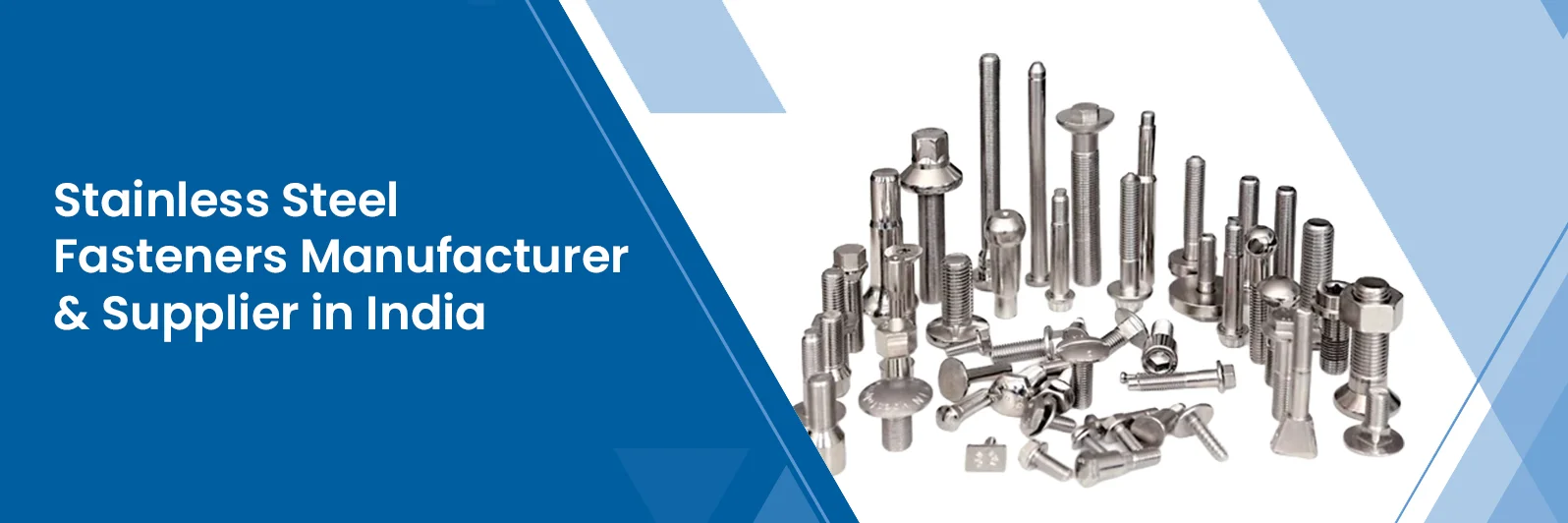
Stainless Steel Fasteners Manufacturer & Supplier in India

Precision-engineered SS bolts, nuts, screws, washers and stud bolts in 304, 316, 310, built to ASTM, ASME, DIN and ISO standards, backed by ready stock and fast dispatch.

ISO 9001:2015 Certified | ASTM F593 / F594 Compliant | EN 10204 3.1 Test Certificate | Ready Stock | Export to 25+ Countries

Product & Range Overview

Explore our core stainless steel fastener range, covering standard and made-to-order products for industrial, marine, construction, power and process applications.

What are Stainless Steel Fasteners?

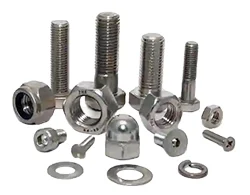
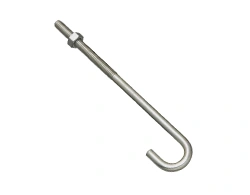
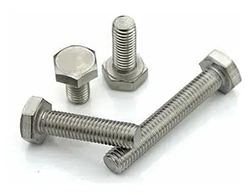
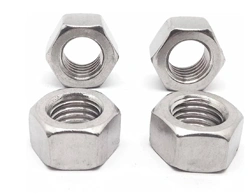
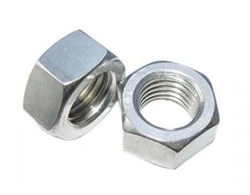
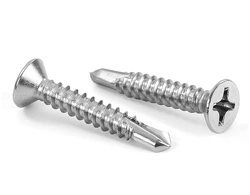
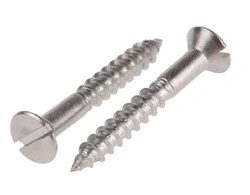
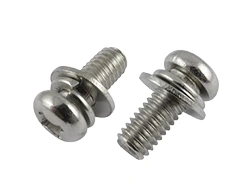
Unifit Fastener is a manufacturer and supplier of stainless steel fasteners in India, offering a complete range of bolts, nuts, washers, screws, stud bolts and anchor bolts such as bolts, nuts, washers, screws, stud bolts and anchor bolts for industries that demand safety and lasting durability. All fasteners we manufacture are manufactured with verified mill-certified raw material and finished on modern cold-forging, hot-forging and CNC lines, which ensure reliable clamp load, accurate threading and corrosion resistance. Available in popular grades including SS 304,  SS 316,  SS 310 grades for the most demanding marine, chemical and offshore environments. Our fasteners meet ASTM F593/F594, ASME B18, DIN and ISO standards and we can provide an EN 10204 3.1 material test certificate with our fasteners. We have the ability to produce up to 90% of our products in standard sizes in addition to the fully customised drawings, and offer strict quality control and competitive pricing along with timely delivery making us a preferred fastening partner for all construction, oil & gas, power, marine and heavy-engineering projects in India as well as globally.

Request Quote

Stainless Steel Grades Comparison of Stainless Steel Fasteners

Stainless Steel Grade UNS Series Key Characteristics Corrosion Resistance Common Fastener Applications
SS 304 S30400 Austenitic Excellent strength, good formability, and cost-effectiveness High General industrial fasteners, construction, food processing equipment
SS 304L S30403 Austenitic Low carbon content for improved weldability and reduced carbide precipitation High Welded structures, pressure vessels, piping systems
SS 316 S31600 Austenitic Molybdenum alloyed for superior resistance to chlorides and chemicals Very High Marine fasteners, chemical processing plants, offshore equipment
SS 316L S31603 Austenitic Low carbon version of SS 316 with enhanced weldability and corrosion resistance Very High Pharmaceutical equipment, marine structures, process industries
SS 310S S31008 Austenitic Excellent oxidation resistance and high-temperature strength High Furnace components, heat treatment plants, high-temperature fasteners
SS 321 S32100 Austenitic Titanium-stabilized grade with excellent resistance to intergranular corrosion at elevated temperatures High Exhaust systems, boilers, heat exchangers, expansion joints

ISO 3506 Property Classes

ISO 3506 Property Class Minimum Tensile Strength (MPa) Minimum Yield Strength (MPa) Common Stainless Steel Grade Typical Applications
A2-50 500 210 SS 304 Light-duty assemblies, architectural fittings, decorative applications
A2-70 700 450 SS 304 General engineering, construction, industrial machinery, standard fasteners
A2-80 800 600 SS 304 Heavy-duty fastening, structural assemblies, high-strength applications
A4-50 500 210 SS 316 Chemical processing equipment, tanks, and low-load marine applications
A4-70 700 450 SS 316 Marine, offshore, chemical processing, and coastal infrastructure
A4-80 800 600 SS 316 High-strength marine fasteners, offshore platforms, critical industrial equipment

Send Your Enquiry

Types of Stainless Steel Fasteners We Supply

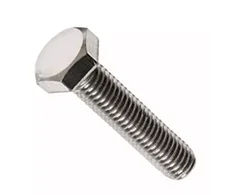
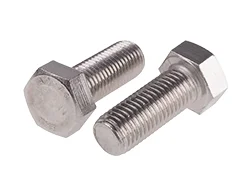
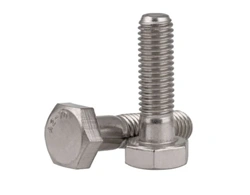
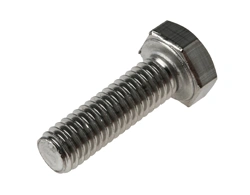
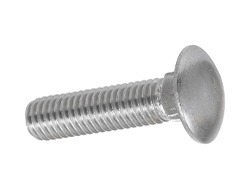
Stainless Steel Bolts

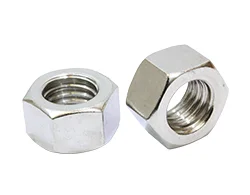
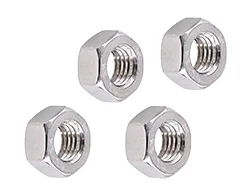
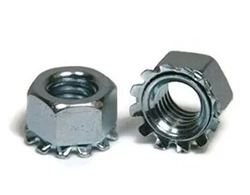
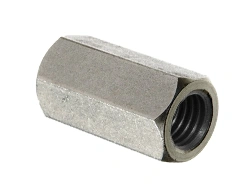
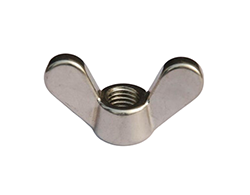
Stainless Steel Nuts

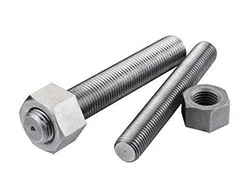
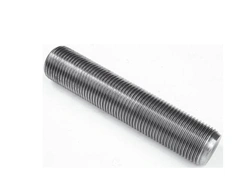
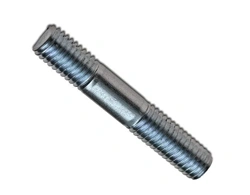
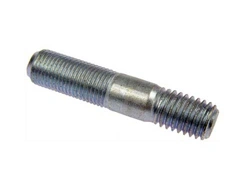
Stainless Steel Stud Bolts

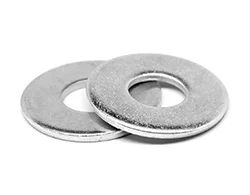
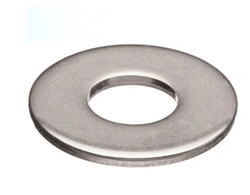
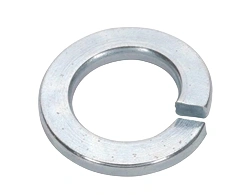
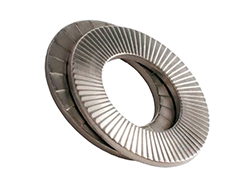
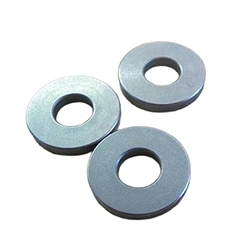
Stainless Steel Washers

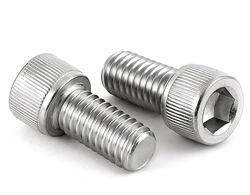
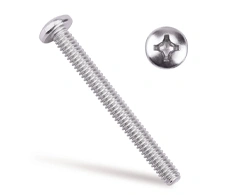
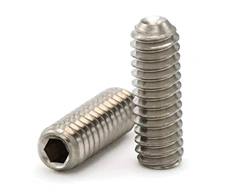
Stainless Steel Screws

Product Range Matrix of Stainless Steel Fasteners

Product Type Available Grades Size Range Common Standards Surface Finish Typical Industries
Bolts & Hex Bolts SS 304, SS 304L, SS 316, SS 316L, SS 310S M3–M100 (1/8"–4") DIN 931, DIN 933, ISO 4014, ASME B18.2.1 Plain, Passivated, Electropolished Construction, Marine, Food Processing, Chemical
Nuts & Lock Nuts SS 304, SS 304L, SS 316, SS 316L M2–M100 (#2–4") DIN 934, ISO 4032, DIN 985, ASME B18.2.2 Plain, Passivated, Waxed (Anti-Galling) Water Treatment, Food Processing, Industrial Equipment
Stud Bolts SS 304, SS 304L, SS 316, SS 316L M6–M64 (1/4"–2½") ASTM A193, ASME B16.5 Plain, PTFE Coated, Passivated Oil & Gas, Petrochemical, Pipeline Systems
Washers SS 304, SS 304L, SS 316, SS 316L M1.6–M100 DIN 125, DIN 9021, DIN 127, ASME B18.22.1 Plain, Passivated, Electropolished Infrastructure, HVAC, Renewable Energy
Machine & Self-Tapping Screws SS 304, SS 304L, SS 316, SS 316L M2–M12 DIN 7985, DIN 7504, DIN 571 Passivated, Electropolished Electronics, Marine, General Engineering
Threaded Rods SS 304, SS 304L, SS 316, SS 316L, SS 310S M6–M64 DIN 975, DIN 976, ASME B18.31.2 Plain, Passivated Structural Steel, HVAC, Plumbing
Specialty Fasteners (Pins, Anchors & Custom Parts) SS 304, SS 316 As Per Drawing DIN 1, DIN 7, DIN 94, Custom Standards Passivated, Electropolished Precision Engineering, Marine, Industrial Projects

Specifications & Standards of Stainless Steel Fasteners

Parameter Specification
Product types Bolts, Nuts, Screws, Washers, Stud Bolts, Anchor Bolts, Threaded Rod
Standards ASTM F593 / F594, ASME B18, DIN 931/933/934, ISO 4014/4017/4032
Size range M3 – M56 | 3/8" to 2" | custom sizes on request
Length range 3 mm to 200 mm+
Thread standards UNC, UNF, BSW, BSF, Metric coarse & fine
Head / drive types Hex, socket, button, countersunk, Phillips, slotted, Torx
Test certificate EN 10204 3.1 manufacturer test certificate
Certification Dual certified to ASTM & ASME codes; ISO 9001:2015
Packing Bulk cartons, small boxes, pallet packing or per customer request

Chemical Composition of Common SS Grades

Grade Carbon (C) Chromium (Cr) Nickel (Ni) Molybdenum (Mo) Manganese (Mn) Silicon (Si) Phosphorus (P) Sulfur (S) Nitrogen (N)
SS 304 ≤0.08 18.0–20.0 8.0–10.5 ≤2.00 ≤0.75 ≤0.045 ≤0.030 ≤0.10
SS 304L ≤0.03 18.0–20.0 8.0–12.0 ≤2.00 ≤0.75 ≤0.045 ≤0.030 ≤0.10
SS 316 ≤0.08 16.0–18.0 10.0–14.0 2.0–3.0 ≤2.00 ≤0.75 ≤0.045 ≤0.030 ≤0.10
SS 316L ≤0.03 16.0–18.0 10.0–14.0 2.0–3.0 ≤2.00 ≤0.75 ≤0.045 ≤0.030 ≤0.10
SS 310S ≤0.08 24.0–26.0 19.0–22.0 ≤2.00 ≤1.50 ≤0.045 ≤0.030
SS 321 ≤0.08 17.0–19.0 9.0–12.0 ≤2.00 ≤0.75 ≤0.045 ≤0.030 ≤0.10

Mechanical Properties of Stainless Steel Fasteners

Grade Tensile Strength (MPa) Yield Strength (0.2% Offset) (MPa) Elongation (%) Hardness (HB) Magnetic?
SS 304 ≥515 ≥205 ≥40 ≤201 No
SS 304L ≥485 ≥170 ≥40 ≤201 No
SS 316 ≥515 ≥205 ≥40 ≤217 No
SS 316L ≥485 ≥170 ≥40 ≤217 No
SS 310S ≥515 ≥205 ≥40 ≤217 No
SS 321 ≥515 ≥205 ≥40 ≤217 No

Surface Finishes & Coatings for Stainless Steel Fasteners

The right finish and coating boost stainless steel fastener performance, and here are some of the most common finishes below.

Natural Finishes

There are a number of natural finishes of stainless steel fasteners. Mill finish is machined and dull gray in appearance, suitable for typical industrial use. Bright finish is both reflective and polished using cold drawing, and it provides aesthetics and smoothness. The satin finish (#4 brushed) is smooth and even to the touch, possessing functional durability.

Passivation

Passivation is a chemical process that reinforces the layer of chromium oxide on stainless steel, which increases corrosion resistance and erases the free iron surface. It is usually done in accordance with ASTM A967 standards and consists of either nitric acid or citric acid, depending on the needs. It makes fasteners more resistant to adverse conditions.

Electropolishing

Electropolishing is an electrochemical treatment that removes a thin layer of material on the surface, leaving it with a mirror-like finish. This finish is suited to pharmaceutical, food and semiconductor applications in which cleanliness, hygiene and smooth surfaces are of paramount importance.

Coatings (Special Cases)

Specialized coating can be used in certain applications. PTFE/ Teflon coatings are used in order to decrease friction and eliminate galling, whereas Xylan coating is utilized in order to ensure very high chemical resistance in harsh conditions. Stainless steel fasteners are not typically plated with zinc or cadmium since this may result in galvanic corrosion and negate the advantage of stainless steel. In coated types, please see PTFE Coated Fasteners and Xylan Coated Fasteners.

Applications of Stainless Steel Fasteners by Industry

Our stainless steel fasteners perform in the most demanding sectors where corrosion, vibration and load are constant challenges:

  • Oil & Gas (upstream, midstream, downstream)
  • Power Plants & Renewable Energy
  • Marine & Shipbuilding
  • Construction & Structural Engineering
  • Chemical & Petrochemical
  • Water & Wastewater Treatment
  • Pharmaceutical & Food Processing
  • Cement & Heavy Engineering
  • Automotive & Railways
  • Pipeline & Refinery Projects

Industry-Grade Selection Guide of Stainless Steel Fasteners

Industry Recommended Stainless Steel Grade Why It's Preferred Typical Fastener Applications
Marine & Coastal SS 316 / SS 316L Excellent resistance to chlorides, seawater, and salt spray Marine bolts, dock hardware, coastal structures
Food & Beverage SS 304 / SS 304L Hygienic surface, good corrosion resistance, easy to clean Food processing equipment, conveyors, kitchen equipment
Pharmaceutical SS 316L Low carbon content improves corrosion resistance after welding and supports sanitary applications Cleanroom equipment, reactors, process piping
Chemical Processing SS 316 / SS 316L Excellent resistance to chemicals, acids, and corrosive environments Pumps, valves, flanges, process equipment
Oil & Gas SS 316 / SS 316L Good corrosion resistance for offshore and process applications Pipeline flanges, pressure vessels, offshore equipment
Power & High Temperature SS 310S Excellent oxidation resistance and high-temperature strength Furnaces, boilers, heat exchangers
Construction & Infrastructure SS 304 High strength, durability, and weather resistance Structural bolts, anchors, handrails, bridges
Aerospace SS 321 Titanium-stabilized grade suitable for elevated-temperature applications Exhaust systems, engine components, aerospace assemblies

Stainless Steel vs Other Materials

Carbon Steel vs Stainless Steel

In a comparison between stainless steel (SS) and carbon steel, the most distinguishable characteristic is the corrosion resistance- stainless steel is better than carbon steel, thus it is applicable in the outdoors, corrosive, and hygienic environment. Carbon steel, in its turn, is able to be heat-treated to get higher strength and, as a rule, is cheaper. Stainless steel has better finishing, and it does not rust aesthetically. Look into High Tensile Fasteners in case of high strength and durability.

Galvanized Steel vs Stainless Steel

Galvanized steel is carbon steel that has been covered using zinc to combat corrosion. Although it is inexpensive at first, its durability and looks are minimal; scratches interfere with protection. Stainless steel forms a passive chromium oxide layer, which keeps its shine and heals itself and provides durability in the long run. Stainless steel is used where aesthetics and low maintenance are needed in the project.

304 vs 316 Stainless Steel

316 stainless steel contains 2-3 percent molybdenum, which gives the material high resistance to chlorides and salt, and is suitable in marine, chemical and coastal applications as well as in the general corrosion applications. 304 stainless steel is good for indoor and general corrosion. Note that 316 costs 20-30 % higher than 304 because it has a higher corrosion resistance.

Austenitic (300) vs Ferritic (400) vs Martensitic

The most commonly used stainless steel is called austenitic (300 series) and is non-magnetic, extremely corrosion-resistant, and non-ferromagnetic. Ferritic (400 series) is magnetic, cheaper and moderately corrosion resistant. The Martensitic stainless steel is magnetic and has a heat treatment and the greatest strength, but has low corrosion resistance. The balance between the strength, corrosion resistance, and application environment is what determines the choice of the correct grade.

Common Challenges with Stainless Steel Fasteners

Challenge Cause Prevention
Galling (Thread Seizing) Friction between mating stainless steel threads Anti-seize lubricant, PTFE coating, controlled tightening
Thread Stripping Excessive torque or inadequate thread engagement Follow recommended torque values and proper installation practices
Stress Corrosion Cracking Tensile stress in chloride-rich environments Select suitable grades such as SS 316 and reduce tensile stress where possible
Crevice Corrosion Moisture trapped in narrow gaps Improve joint design and use corrosion-resistant grades
Galvanic Corrosion Contact between dissimilar metals in the presence of an electrolyte Use insulating washers, compatible materials, or protective coatings

Manufacturing Process & Quality Assurance

Every Unifit fastener passes through a controlled, multi-stage process designed to guarantee dimensional accuracy and material integrity:

Manufacturing Workflow

  • Step 1: Raw material inspection & PMI verification
  • Step 2: Cold forging / hot forging / bar stock selection
  • Step 3: CNC machining (facing, grooving, profiling)
  • Step 4: Heat treatment (grade-dependent)
  • Step 5: Thread rolling for superior fatigue life
  • Step 6: Surface finishing & protective coating
  • Step 7: Dimensional, form & fit inspection
  • Step 8: Batch certification, packing & dispatch

In-House Testing Facilities

Our quality lab performs destructive and non-destructive testing on every batch:

  • Tensile & proof-load testing
  • Hardness testing (HRC / HB / HV)
  • Positive Material Identification (PMI) via optical emission / X-ray spectrometry
  • Intergranular corrosion (IGC) test
  • Ultrasonic & dye-penetrant inspection
  • Surface roughness & thread-gauge verification

Fold 18 — Certifications & Standards Reference

Unifit fasteners are dual-certified and cross-referenced across the major global standards, so you can specify with confidence.

Fastener Type DIN ISO / ASME
Hex Bolt / Set Screw DIN 931, DIN 933 ISO 4014, ISO 4017, ASME B18.2.1
Hex Nut DIN 934 ISO 4032, ASME B18.2.2
Socket Cap Screw DIN 912 ISO 4762, ASME B18.3
Countersunk Screw DIN 7991, DIN 963 ISO 10642
Stud Bolt DIN 976 BS 4882, ASTM A193 / F593
Plain / Spring Washer DIN 125, DIN 127 ISO 7089, ISO 7090

Size Range & Availability of Stainless Steel Fasteners

Size Length Range Head Style Grade Thread Type Availability
M6 6–100 mm Hex, Socket, Button SS 304 / 316 Metric ISO Ex-stock
M8 8–150 mm Hex, Socket, Flat SS 304 / 316 Metric ISO Ex-stock
M10 10–200 mm Hex, Socket, Pan SS 304 / 316 Metric ISO Ex-stock
M12 12–250 mm Hex, Socket, Button SS 304 / 316 Metric ISO Ex-stock
M16 16–300 mm Hex, Socket, Flat SS 304 / 316 Metric ISO Ex-stock
M20 20–400 mm Hex, Socket, Pan SS 304 / 316 Metric ISO Ex-stock
M24 24–500 mm Hex, Socket SS 304 / 316 Metric ISO Ex-stock
M30 30–600 mm Hex SS 316 Metric ISO Made to order
M36 36–800 mm Hex SS 316 Metric ISO Made to order
M42 – M100 Upto 1000+ mm Hex / Custom As Specified Metric / UNC / UNF Custom (2–4 weeks)

Why Choose Unifit Fastener for Stainless Steel?

Unifit Fastener is a reliable supplier of stainless steel fasteners because it has a broad range of grades, such as 304,316, 316L, 310, 410, and 430 fasteners produced in accordance with ISO 3506 and ASTM requirements. We supply various industrial requirements precisely with high-pressure ASTM A193 B8/ B8M bolts, as well as with custom-made fasteners based on drawings. The passivation is done in-house, PMI testing is done on each batch, and full certification of MTC 3.1 ensures that quality and grades are consistent. Unifit Fastener has an easy stock of common sizes, competitive bulk prices, fast delivery within and outside India, and high-quality technical support that ensures it is a reliable supplier of stainless steel fasteners in a variety of food, pharma, marine, and chemical industries in Mumbai and India.

Maintenance & Care for Stainless Steel Fasteners

The maintenance and care of the stainless steel fasteners can increase the lifespan of your components. So the basic maintenance and care rules are given below.

  • Regular Cleaning: The first step would be to get used to washing the stainless steel fasteners every so frequently to prevent the build up of dirt, salt, and grease which will eventually corrode the fasteners.
  • Use Mild Cleaning Agents: At this point, you should use a light detergent and clean water since strong chemicals or detergent made of chlorine may destroy the coating on stainless steel.
  • Thorough Rinsing: Then clean the fasteners well so that no remnant of detergent or chloride is left behind which may cause corroding.
  • Periodic Inspection: Occasionally, inspect the fasteners more closely to examine them against pitting or crevice corrosion, in particular in coastal or marine or chemical environments.
  • Re-Passivation: When you observe that there is staining or discoloration or even surface damage, then you should perform re-passivation to recover corrosion resistance.
  • Proper Storage: In addition, store fasteners in a dry location and store them separate from carbon steel to avoid contamination.
  • Lubrication for Outdoor Use: In the case of the outside or coastal set-up, it is advised to provide the right lubrication to improve the corrosion protection, and it will ensure a smooth and prolonged performance.
Get Your Stainless Steel Fasteners Quote Today

Need SS 304, 316 or 310 Fasteners with MTC?

Email your BOM for a same-day quote and ready-stock dispatch.

Request a Quote

FAQs - Stainless Steel Fasteners

What is the difference between SS 304 and SS 316 fasteners?

SS 304 contains chromium and nickel and offers good general corrosion resistance at a lower cost. SS 316 includes molybdenum, which gives it better resistance to chlorides and chemicals, making it ideal for marine and chemical environments, but it is more expensive.

Are stainless steel fasteners magnetic?

The Austenitic grades like 304 and 316 are generally non-magnetic. Ferritic (430) and martensitic (410) stainless steels are magnetic by nature.

Can I use stainless steel bolts with carbon steel nuts?

No, it is not recommended. Mixing materials can cause galvanic corrosion. Using the same material for both bolt and nut is best.

What does A2-70 or A4-80 mean?

These are ISO 3506 property classes. A2 and A4 indicate the material grade (304 and 316), while 70 or 80 shows the strength level.

How do I prevent galling in stainless steel fasteners?

By using simple methods like anti-seize or lubrication, install slowly, and consider coated fasteners to reduce friction.

Can stainless steel fasteners be used in saltwater?

Yes, SS 316 (A4) is recommended. SS 304 may corrode faster in saltwater conditions.

What is passivation and is it necessary?

Passivation is a chemical process that improves corrosion resistance by strengthening the protective oxide layer. It is recommended after manufacturing.

Do stainless steel fasteners need plating or coating?

No, stainless steel is naturally corrosion resistant. PTFE coatings may be used to prevent galling.

What is the maximum temperature for SS 304 and SS 316 fasteners?

SS 304 handles up to about 800°C intermittently, SS 316 up to around 850°C. For higher temperatures, SS 310 is preferred.

Can stainless steel fasteners rust?

Yes, if the passive layer is damaged or in very harsh environments. Types of corrosion include pitting, crevice, and stress corrosion.