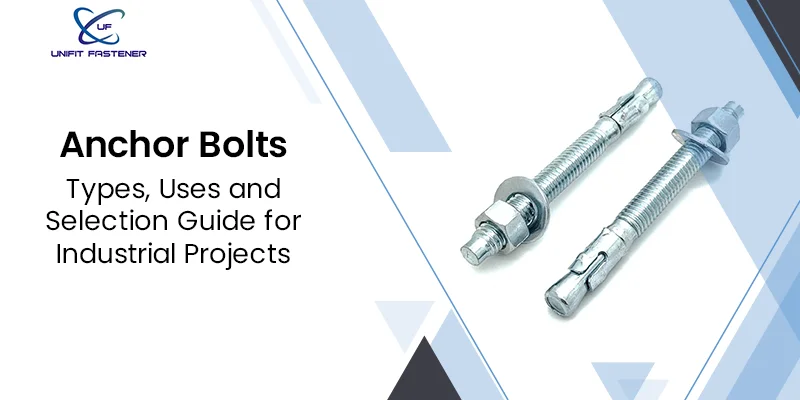
Anchor bolts are the connection between a structure or machine and its foundation. That sounds straightforward until a buyer has to choose between cast-in anchors, J or L types, straight anchor rods, mechanical expansion anchors and chemical systems, then match the material, diameter, embedment, corrosion protection and documentation to the project specification.
For contractors, EPC companies, steel fabricators, equipment manufacturers and industrial distributors, the anchor bolt is not a commodity to select only by diameter and length. It is part of a load path. This guide explains the main types, where they are used and what information to provide when sourcing from an anchor bolt manufacturer for projects in the Middle East, United States, United Kingdom and Africa.
Quick answer
Choose an anchor bolt by installation stage, load direction, base material, embedment, edge distance, environment and governing project standard. Cast-in J, L and straight anchor rods suit planned concrete work; post-installed mechanical or adhesive anchors suit completed concrete where the selected system has the required design approval.
What Is an Anchor Bolt?
An anchor bolt secures steelwork, equipment, columns, base plates, pipe supports, tanks, skids or other assemblies to concrete or masonry. Some anchors are placed before the concrete is poured. Others are installed into drilled holes after the concrete has cured. The design can be simple in appearance, but performance depends on the complete system: steel grade, geometry, embedment, concrete condition, spacing, edge distance, tightening and installation quality.
Because anchor design affects structural and equipment safety, the final specification should come from the project engineer and the applicable design code. A manufacturer can supply the required geometry and material, but should not replace project-specific engineering calculations.
1. Cast-In Anchor Bolts
Cast-in anchors are positioned in formwork before concrete placement. They are common in new foundations where the bolt locations can be set using a template. The embedded end may be bent, headed or fitted with an anchor plate depending on the design. Their main advantage is that the anchorage can be integrated into the foundation from the start, with position, embedment and reinforcement coordinated before the pour.
Typical uses include structural steel columns, process skids, equipment bases, towers, pipe racks and heavy machinery foundations.
2. J-Type and L-Type Anchor Bolts
J and L anchor bolts use a bent embedded end to develop resistance within concrete. They are widely recognised in construction and foundation work, particularly where the project drawing calls for a traditional bent anchor configuration. Buyers should provide the thread diameter, overall length, threaded length, bend dimensions, material grade and finish.
These should not be selected solely by visual similarity. The bend geometry and embedment must follow the engineering drawing because capacity depends on the foundation and reinforcement arrangement, not just the bar diameter.
3. Straight Anchor Rods with Plate or Nut Assemblies
Straight anchor rods are often used with embedded plates, anchor nuts, sleeves or other engineered components. They are useful where the designer wants a straight load path, adjustable projection above the concrete, or a heavy-duty foundation connection. Large anchor rods may be supplied in carbon steel, alloy steel or stainless steel depending on strength and corrosion requirements.
For US-origin specifications, ASTM F1554 is commonly referenced for anchor rods and bolts. Other projects may use project-specific material grades or DIN/ISO dimensional requirements. Always follow the exact drawing and bill of materials.
4. Mechanical Expansion Anchors
Mechanical anchors are installed after the concrete has cured. Wedge, sleeve and other expansion mechanisms transfer load by expanding against the drilled hole or engaging the base material. They are convenient for retrofit work, supports and equipment where cast-in anchors were not planned.
Selection depends on the approved anchor system, concrete condition, hole preparation, embedment and installation torque. For safety-critical construction, buyers should use the exact approved product and design basis specified by the engineer rather than substituting a generic anchor with similar dimensions.
5. Adhesive or Chemical Anchor Systems
Adhesive anchoring uses a threaded rod or reinforcing element bonded into a drilled hole with a qualified resin system. It can be useful for retrofit, close-to-edge details, deep embedment or installations that require a particular design solution. The performance is highly dependent on hole cleaning, resin type, cure conditions, temperature, base material and installation procedure.
The steel element may be carbon steel, stainless steel or another specified grade, but the rod and adhesive must be treated as one engineered system. Follow the design approval and installation instructions for the exact system used.
Anchor Bolt Type Comparison
| Type | Installation | Typical use | Key procurement detail |
|---|---|---|---|
| Cast-in bent anchor | Before concrete pour | Columns, foundations, base plates | Template position, bend geometry, embedment |
| Straight anchor rod | Before or through engineered anchorage | Heavy equipment, steel structures | Grade, plate/nut assembly, projection |
| Mechanical expansion anchor | After concrete cures | Retrofit supports and equipment | Approved system, hole diameter, embedment, torque |
| Adhesive/chemical anchor | After concrete cures | Retrofit and engineered anchorage | Rod grade + qualified resin system + installation procedure |
How to Select an Anchor Bolt for the Application
- Load type: tension, shear, combined load, vibration, fatigue or seismic requirements as defined by the engineer.
- Base material: concrete strength and condition, masonry type, cracked or uncracked concrete where relevant to the design approval.
- Geometry: diameter, embedment, projection, spacing, edge distance, base-plate hole and template requirements.
- Environment: indoor dry service, outdoor exposure, marine/coastal chloride conditions, chemical plants, high temperature or buried service.
- Material and finish: carbon steel, alloy steel, stainless 304/316, duplex or project-specified material; galvanising or other approved coating where required.
- Standard and documentation: drawing, ASTM/DIN/ISO/BS reference, MTC, inspection, marking, traceability and any third-party requirement.
Material Choice for Middle East, US, UK and African Projects
The operating environment should drive material selection. In Gulf coastal and desalination work, chloride exposure can make corrosion resistance a central requirement. Oil and gas or petrochemical projects may have additional material, coating and documentation requirements. US infrastructure and industrial projects often specify ASTM material standards and inch-series threads, while UK and European-origin packages often use metric ISO, DIN or BS references. In Africa, mining, ports, energy, water and infrastructure projects may use several standard systems depending on the owner, consultant and equipment source.
The safe procurement approach is to follow the project specification exactly. Do not switch between zinc-coated carbon steel, stainless steel and high-strength alloy steel based only on apparent corrosion resistance or strength; coatings, hydrogen embrittlement risks, weldability, temperature and galvanic compatibility can affect the correct choice.
What an Anchor Bolt RFQ Should Include
- Drawing or sketch with all dimensions, including diameter, overall length, threaded length, bend radius and projection.
- Material grade and governing standard.
- Thread type and pitch: Metric, UNC, UNF or other project requirement.
- Nut and washer requirements, including heavy hex or plate washers where specified.
- Surface finish or coating and any corrosion-performance requirement.
- Quantity and whether templates, sleeves or plates are part of the supply scope.
- Inspection, MTC, PMI, dimensional reports, third-party inspection or project documentation.
- Destination, Incoterm preference and delivery schedule for export planning.
Why Procurement Teams Work with a Specialist Anchor Bolt Manufacturer
Standard anchors may be available from stock, but project anchor bolts often depend on drawings. A specialist manufacturer can control bar material, cutting, threading, forming, machining, heat treatment where applicable, coating, dimensional inspection and traceability as one supply package.
Unifit Fastener manufactures industrial fasteners in Mumbai and supplies custom products to drawing. Its broader range includes stainless steel, alloy steel, high tensile, duplex, super duplex and nickel-alloy fasteners, with ASTM, ASME, DIN, ISO and BS capability and EN 10204 3.1 material certificates. For export buyers, this supports a single technical conversation from specification through packing and dispatch.
Anchor Bolt Buying Checklist
- Confirm whether the anchor is cast-in or post-installed.
- Use the structural or equipment drawing as the controlling document.
- Verify material, thread standard, strength class and corrosion protection.
- Check the required nut, washer, plate, sleeve and template scope.
- Confirm testing, MTC and inspection before production.
- Do not substitute anchor types or embedment without engineering approval.
- Request a manufacturer review when dimensions are non-standard or the application is corrosion-critical.
Frequently Asked Questions
Common categories include cast-in J or L anchor bolts, straight anchor rods with plates or nuts, mechanical expansion anchors and adhesive/chemical anchor systems.
ASTM F1554 is widely referenced for anchor bolts and rods in US construction, but the project drawing may also specify other material and dimensional standards. Follow the exact contract specification.
316/316L is often considered for chloride-exposed service because of improved corrosion resistance over 304, but the final grade must follow the project corrosion and structural requirements.
Yes. Custom anchor bolts are commonly produced to project drawings covering diameter, length, thread, bends, plates, nuts, washers and finish.
Typical requirements can include a mill test certificate, dimensional inspection, material traceability, coating reports and third-party inspection when specified by the project.
Need a technical quote? Send your grade, standard, size, quantity, drawing (if custom) and destination.
Request a QuoteRelated resources: DIN 126 Plain Washers Guide | High Tensile Fasteners