In refinery heaters, pressure equipment and other assemblies that remain hot for long periods, austenitic stainless steel can become vulnerable to intergranular corrosion if chromium carbides form at the grain boundaries. ASTM A193 Grade B8C uses Type 347 / UNS S34700 stainless steel stabilized with niobium (historically called columbium) and tantalum, helping keep chromium available for corrosion resistance after elevated-temperature exposure.
Unifit Fastener manufactures ASTM A193 Grade B8C bolts, stud bolts and threaded bolting in India for valves, flanges, pressure vessels, process piping and high-temperature equipment where B8C is specified. B8C is available in Class 1 (carbide solution treated) and Class 2 (carbide solution treated and strain hardened). For the wider ASTM grade family, see ASTM A193 grades and specifications. For generic Type 347/347H products across standards, see Stainless Steel 347 / 347H Fasteners.
Request a Quote | Send ASTM A193 B8C Specification
Why ASTM A193 B8C Uses Stabilized Type 347
B8C is based on Type 347 rather than standard Type 304. Its defining addition is niobium/columbium with tantalum. These stabilizing elements combine preferentially with carbon, reducing the amount of carbon available to form chromium carbides during elevated-temperature exposure.
That stabilization is useful where the bolting may remain in the sensitization temperature range for extended periods or see repeated thermal cycles. It does not make B8C universally superior to every stainless grade. For severe chloride pitting service, a molybdenum-bearing grade such as B8M or a higher alloy may still be more appropriate.
ASTM A193 B8C should also be kept separate from generic 347H material terminology. B8C is tied to the Type 347 / UNS S34700 A193 grade requirements; 347H is a higher-carbon material variant with its own generic material intent.
Technical Data
ASTM A193 B8C Fasteners Specification Chart
ASTM A193 B8C Class 1 and Class 2 Mechanical Properties
The chemistry remains Type 347 in both classes. The difference is the mechanical condition. Class 1 is carbide solution treated. Class 2 receives additional strain hardening to increase tensile and yield strength, with the required values changing as diameter increases.
Class 2 is not simply a higher grade. It is a different strength condition. The higher-strength requirement is most pronounced at smaller diameters, where strain hardening can be developed more effectively through the section.
ASTM A193 B8C Chemical Composition
The B8C chemistry below is specific to the ASTM A193 Type 347 grade and includes the stabilization requirement that is missing from the current Unifit table. Verify final values against the ASTM A193/A193M edition named in the project specification.
ASTM traditionally uses the term columbium (Cb); niobium (Nb) is the modern name for the same element. The Cb/Nb + Ta requirement is central to B8C's stabilized Type 347 identity.
B8C Bolts, Stud Bolts and Matching ASTM A194 Grade 8C Nuts
ASTM A193 controls the B8C bolting material and class. Product geometry, dimensions, thread and the compatible nut specification still need to be stated on the RFQ.
For generic geometry, use industrial bolts and stud bolts.
ASTM A193 B8C RFQ Checklist
Types of ASTM A193 Grade B8C Fasteners
Identifying different fastener types allows buyers to pick the exact products tailored to their unique industrial application needs.
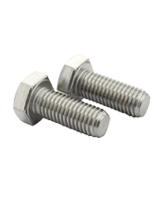
ASTM A193 B8C Heavy Hex / Hex Bolts
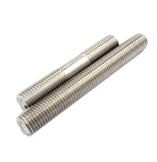
ASTM A193 B8C Threaded Studs / Rods
Matching ASTM A194 Grade 8C Nuts
ASTM A194 Grade 8C is the corresponding Type 347 stainless nut grade commonly used with A193 B8C bolting when the joint specification calls for that pairing. For Class 2 bolting, any required strain-hardened nut condition or supplementary requirement should be stated under the applicable A194 purchase specification rather than assumed from the bolt class.
See ASTM A194 Grade 8C hex nuts.
Corrosion Resistance, Galling and Tightening Control
B8C's main material advantage is stabilization against sensitization-related intergranular corrosion after elevated-temperature exposure. It should not be positioned as a universal chloride or seawater grade. Type 347 does not have the molybdenum content of Type 316/B8M, so chloride pitting conditions may point to B8M or a higher-alloy material.
Like other austenitic stainless fasteners, B8C threads can gall during tightening. Thread finish, cleanliness, lubrication and the tightening procedure should be controlled. Do not publish one universal B8C torque chart without defining the thread size, lubricant/coating, nut factor and target preload because these variables materially change torque-tension behaviour.
Industrial Applications for ASTM A193 B8C
B8C is used where the equipment or piping specification calls for stabilized Type 347 ASTM A193 bolting. Typical applications include:
- Refinery and petrochemical equipment - elevated-temperature flanges, valves and equipment joints where stabilized 347 bolting is specified.
- Power-generation systems - hot piping and pressure-equipment assemblies exposed to extended or cyclic elevated temperatures.
- Pressure vessels and heat exchangers - bolts or studs where the design requires B8C chemistry and the applicable Class 1 or Class 2 strength.
- High-temperature process piping - flange assemblies where resistance to sensitization-related intergranular attack is part of the material-selection basis.
- Maintenance and replacement bolting - like-for-like B8C or B8CSH replacement where marking, class, dimensions, thread and traceability must match the existing specification.
The application list is not a substitute for engineering selection. Operating temperature, pressure, process chemistry, chloride exposure, required strength, gasket/joint design and the governing code determine the final grade.
ASTM A193 B8C vs B8T, B8 and B8M
| Grade |
Material |
Key alloy feature |
Selection emphasis |
Owner |
B8C |
Type 347 / UNS S34700 |
Niobium/columbium + tantalum stabilized |
Elevated-temperature service where stabilized 347 is specified |
THIS PAGE |
B8T |
Type 321 / UNS S32100 |
Titanium stabilized |
Alternative stabilized austenitic grade; different stabilizing element |
B8T page |
B8 |
Type 304 / UNS S30400 |
Unstabilized 18-8 stainless |
General A193 austenitic stainless service |
B8 parent |
B8M |
Type 316 / UNS S31600 |
Molybdenum bearing |
Improved chloride pitting resistance vs 304/347; not a stabilized 347 grade |
B8M parent |
Related grade pages: ASTM A193 B8T fasteners | ASTM A193 Grade B8 fasteners | ASTM A193 Grade B8M fasteners.
Marking, Inspection and Documentation
B8C receiving inspection should confirm the grade, class and traceability. For Class 2, B8CSH marking is a key indicator of the strain-hardened condition.
- Grade marking - B8C for Class 1 and B8CSH for Class 2, using the applicable ASTM marking convention.
- Heat/lot traceability - link the finished bolting to the material certificate and production lot.
- Chemical verification - confirm Type 347 chemistry, including the Cb/Nb + Ta stabilization requirement.
- Mechanical testing - verify the class- and diameter-specific tensile, yield, elongation, reduction-of-area and hardness requirements.
- Dimensions and threads - product form, diameter, length, pitch/TPI, thread class/fit and dimensional standard.
- EN 10204 3.1 MTC, PMI, hardness or third-party inspection - state these at RFQ stage where required and only claim services actually available for the order.
What is ASTM A193 Grade B8C?
ASTM A193 Grade B8C is Type 347 / UNS S34700 austenitic stainless-steel bolting stabilized with niobium/columbium and tantalum. It is used in high-temperature, high-pressure and other special-purpose A193 applications where the project specifies stabilized Type 347 bolting.
What is the difference between B8C Class 1 and Class 2?
Both classes use the same B8C Type 347 chemistry. Class 1 is carbide solution treated and has a 75 ksi minimum tensile and 30 ksi minimum yield baseline. Class 2 receives additional strain hardening, is marked B8CSH and has higher diameter-dependent mechanical requirements.
What does B8CSH mean?
B8CSH is the ASTM A193 marking used for Grade B8C Class 2 strain-hardened bolting. The SH identifies the strain-hardened condition and should be checked against the order documentation during receiving inspection.
Is ASTM A193 B8C the same as Stainless Steel 347 fasteners?
B8C uses Type 347 / UNS S34700 chemistry, but ASTM A193 also controls the bolting class, mechanical properties, testing and marking. A generic 347 fastener is therefore not automatically ASTM A193 B8C compliant.
Is ASTM A193 B8C the same as 347H?
No. B8C is tied to the Type 347 / UNS S34700 ASTM A193 grade requirements. Stainless Steel 347H is a higher-carbon material variant with separate generic material intent. Do not use 347H as an automatic synonym for B8C.
What is the difference between B8C and B8T?
Both are stabilized austenitic A193 grades used for elevated-temperature service. B8C is based on Type 347 and uses niobium/columbium plus tantalum stabilization. B8T is based on Type 321 and uses titanium stabilization. The project specification determines which grade is required.
Which nuts are commonly used with ASTM A193 B8C studs?
ASTM A194 Grade 8C is the corresponding Type 347 stainless nut grade commonly paired with A193 B8C bolting when specified. Nut dimensions, thread fit and any supplementary requirements should be confirmed as part of the complete joint.
What should I send for a B8C quotation?
Send the B8C class, product form, diameter, length, thread, dimensional standard or drawing, matching nut/washer requirement, finish or lubricant, quantity, delivery location and any MTC, PMI, mechanical testing, third-party inspection or marking requirement.