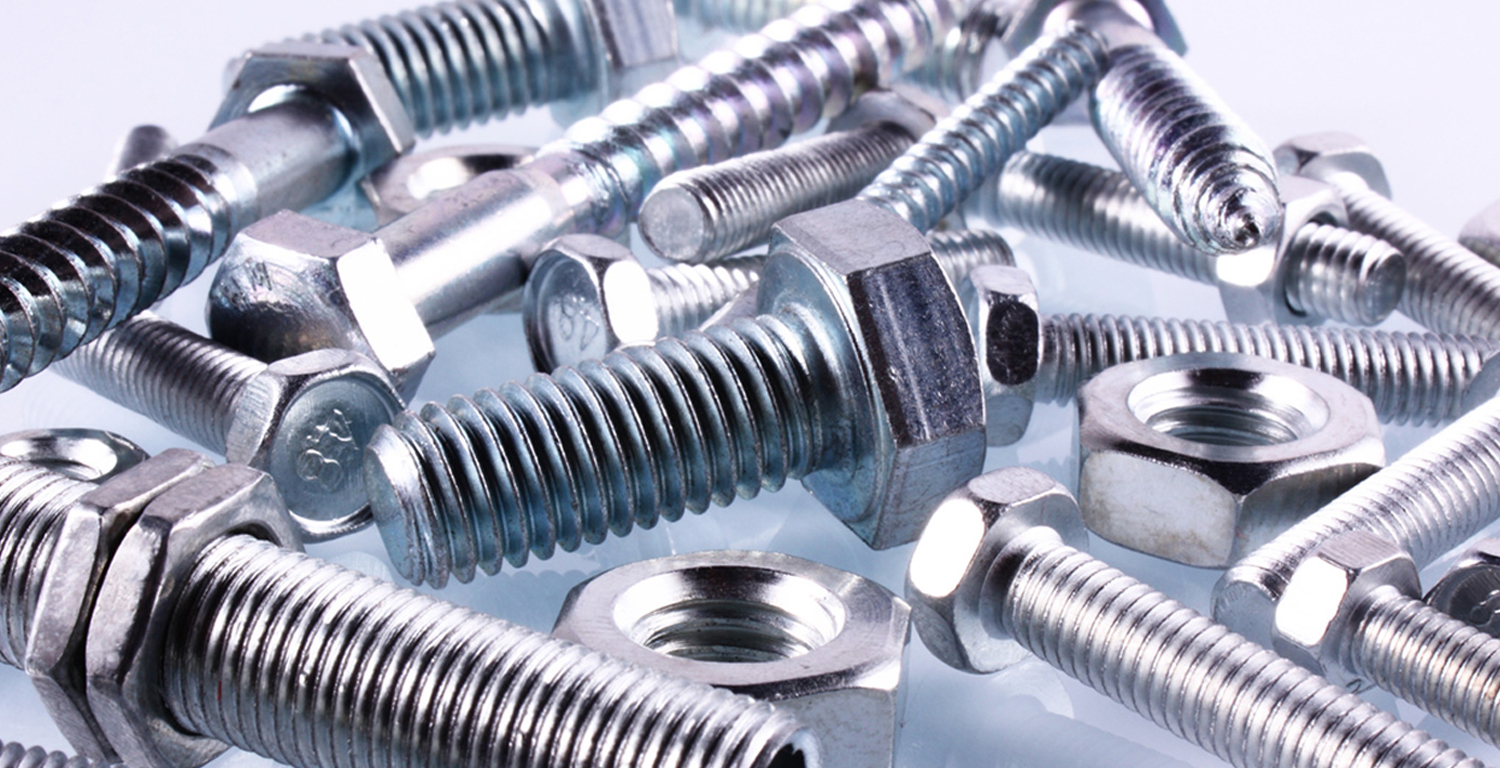
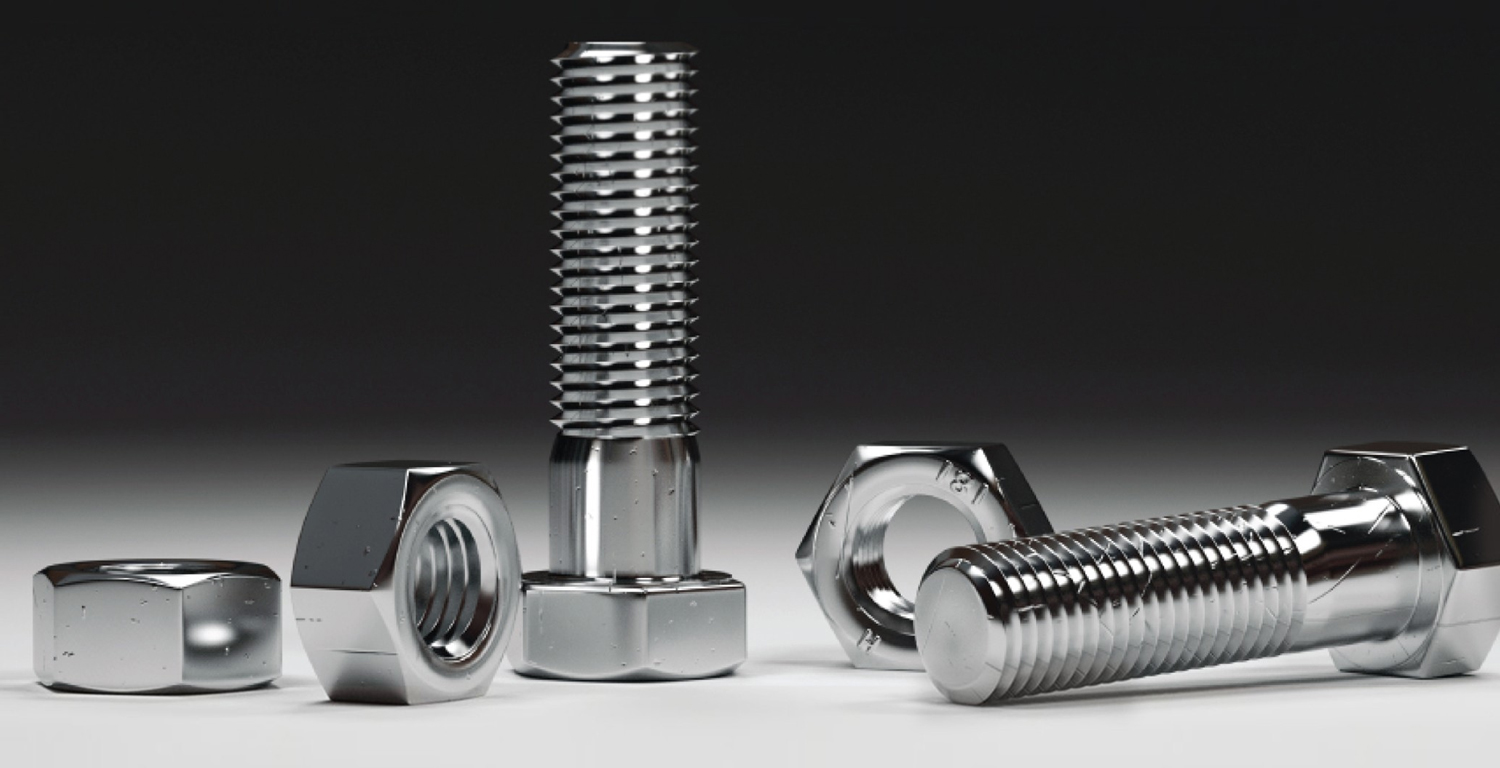
In refinery, chemical-process and pressure-equipment joints, Type 304 stainless bolting is often specified when the assembly needs corrosion resistance together with the ASTM A193 pressure/high-temperature bolting requirements. ASTM A193 Grade B8 Class 1 is the carbide-solution-treated Type 304 condition. Unlike Class 2, it is not strain hardened, so its mechanical requirements remain the Class 1 baseline across the full size range.
Unifit Fastener manufactures ASTM A193 B8 Class 1 bolts, stud bolts and threaded bolting in India for pressure vessels, valves, flanges, fittings and process piping. For the broader grade overview, see ASTM A193 Grade B8 fasteners. For the wider specification family, see ASTM A193 grades and specifications.
Request a Quote | Send B8 Class 1 Specification
What Is ASTM A193 B8 Class 1?
B8 Class 1 is an austenitic stainless-steel bolting condition based on Type 304 chemistry. The material is carbide solution treated (often described as solution annealed) to place the stainless steel in the required solution-treated condition. Class 1 does not receive the additional strain-hardening step used to raise the strength of B8 Class 2.
That difference matters during purchasing. If the PO only needs the standard solution-treated B8 condition, Class 1 is the correct branch. If the joint design requires the higher strength of strain-hardened B8, the requirement should be written as Class 2 and routed to the dedicated Class 2 page. The fastener marking also changes: Class 1 uses the B8 grade mark, while A193 Class 2 is identified as B8SH.
If your requirement is generic Type 304 / 304L / 304H fasteners rather than ASTM A193 bolting, use the Stainless Steel 304/304L/304H fasteners page instead.
Technical Data
ASTM A193 B8 Class 1 Chemical Composition
Grade B8 uses Type 304 stainless-steel chemistry. The limits below are the common A193 B8 values used in industry reference tables. The project-specified ASTM A193/A193M revision remains the controlling document for an order.
Mechanical Properties of B8 Class 1
The most useful distinction for procurement is that the Class 1 mechanical baseline applies across sizes; it does not step down by diameter in the way the Class 2 strength table does.
These properties should be checked together with the material heat treatment, dimensions, thread requirements and purchase-order inspection plan. Do not use Class 1 simply because it is stainless steel; the joint design must accept the Class 1 strength level.
Types of ASTM A193 Grade B8 Class 1 Fasteners
Keep the product range centred on pressure-service bolting rather than an unrestricted screw catalogue. Typical B8 Class 1 order forms include:
- Stud bolts and fully threaded studs for flange, valve and pressure-equipment joints.
- Heavy-hex or hex headed bolts where the project specifies headed A193 stainless bolting.
- Threaded studs / rods in the specified diameter, thread series, length and end configuration.
- Drawing-based or project-specific bolting where the B8 Class 1 material condition is explicitly named.
For generic geometry and dimension information, use the industrial bolts and stud bolts pages.
ASTM A193 B8 CL 1 Fasteners
ASTM A193 Grade B8 CL 1 Fasteners
Stainless Steel ASTM A193 B8 CL 1 Fasteners
Stainless Steel ASTM A193 B8 CL 1 Bolts
Stainless Steel ASTM A193 B8 CL 1 Screws
Stainless Steel ASTM A193 B8 CL 1 Stud Bolt
Threads, Dimensions and ASTM A194 Grade 8 Nuts
ASTM A193 defines the bolting material and class; it does not replace the dimensional or thread specification. Headed A193 bolts are commonly supplied in heavy-hex form unless the purchase order states otherwise, and traditional A193 piping work often uses 8UN threads above 1 in. diameter. The PO should still state the required ASME/ISO/DIN or drawing dimensions, thread series, pitch/TPI and class/fit.
For flange assemblies, ASTM A194 Grade 8 heavy-hex nuts are a common matching specification for A193 B8 Class 1 bolting. The nut grade and condition should be written separately rather than described as a “B8 Class 1 nut”.
Related nut specification: ASTM A194 Grade 8 hex nuts.
Corrosion, Galling and Torque-Tension Considerations
B8 Class 1 provides Type 304 stainless corrosion resistance, but it is not a universal answer for chloride or seawater exposure. When chloride concentration, temperature or crevice conditions become significant, B8M/Type 316 or a higher-alloy stainless grade may be more appropriate. Material selection should follow the actual corrosion environment and project specification.
Threaded austenitic stainless assemblies also need galling control. Surface finish, thread condition, lubricant, nut material and installation speed can all affect friction and seizure risk. For that reason, a universal B8 Class 1 torque chart should not be published without a defined friction/lubrication basis and target preload. The tightening procedure should be based on the actual assembly condition.
Where ASTM A193 B8 Class 1 Is Used
B8 Class 1 is used when the design calls for solution-treated Type 304 stainless bolting under the ASTM A193 pressure/high-temperature specification. Typical project areas include:
- Process piping and refinery systems - selected flange and valve joints where Type 304 stainless A193 bolting is specified.
- Pressure vessels and heat exchangers - covers, flanges and bolted connections that call for B8 Class 1 material and strength.
- Chemical-processing equipment - joints exposed to process conditions where Type 304 corrosion resistance is acceptable for the actual media.
- Power and utility equipment - pressure-service valves, fittings and auxiliary piping where the equipment specification names A193 B8.
- Food, pharmaceutical or clean-process equipment - only where the pressure/joint specification specifically calls for ASTM A193 B8 rather than a general stainless fastener standard.
Low-temperature note
Do not position this A193 page around cryogenic service. ASTM A320 is the specification family commonly used for low-temperature bolting. If a project requires low-temperature B8, the order should identify the ASTM A320 requirement rather than relying on this A193 Class 1 page.
Marking, Inspection and Documentation
For project bolting, specify the marking, traceability and inspection scope before production or dispatch. B8 Class 1 is identified by the B8 grade mark together with the manufacturer identification required by the applicable specification.
- Material traceability - heat or batch identification linked to the material documentation.
- Chemical verification - chemistry consistent with the ordered B8 grade; PMI can be specified where the project requires it.
- Mechanical verification - Class 1 tensile, yield, elongation and hardness requirements.
- Dimensional and thread inspection - diameter, length, thread pitch/TPI, class/fit and drawing or dimensional standard.
- MTC / EN 10204 3.1 - provide when it is part of the order; describe it as an inspection certificate, not as a company certification.
- Third-party inspection or extra tests - state the exact requirement in the RFQ so it is included in the quotation scope.
What is ASTM A193 Grade B8 Class 1?
ASTM A193 Grade B8 Class 1 is the carbide-solution-treated Type 304 stainless-steel condition within ASTM A193. It is used for pressure vessels, valves, flanges, fittings and other special-purpose bolting where the project calls for A193 B8 in the Class 1 condition.
What is the difference between B8 Class 1 and Class 2?
Both use Type 304 stainless chemistry. Class 1 is carbide solution treated and is not strain hardened. Class 2 receives additional strain hardening, which raises strength and introduces size-dependent mechanical requirements. A193 Class 2 is marked B8SH.
What are the mechanical properties of B8 Class 1?
Common ASTM A193 reference data lists a minimum tensile strength of 75 ksi, minimum yield strength of 30 ksi, 30% minimum elongation, 50% minimum reduction of area and 223 HBW / 96 HRB maximum hardness for B8 Class 1 across sizes. Verify the project-specified ASTM edition before order release.
Is B8 Class 1 the same as generic 304 stainless fasteners?
No. B8 Class 1 is an ASTM A193 bolting designation with specific solution-treatment, mechanical, marking and inspection requirements. Generic 304 or 304L fasteners may be manufactured to other dimensional or material standards and should not automatically be treated as A193 B8 Class 1.
Which nuts are commonly paired with A193 B8 Class 1 studs?
ASTM A194 Grade 8 heavy-hex nuts are a common matching specification. The final nut condition, dimensions, lubricant or finish and project requirements should be checked as part of the complete bolted-joint specification.
Is B8 Class 1 suitable for seawater or high-chloride service?
Do not assume so from the stainless-steel designation alone. B8 is Type 304. Where chloride pitting or crevice corrosion is a major concern, the engineering specification may move toward B8M/Type 316 or a higher-alloy grade depending on temperature, concentration and joint conditions.
Is ASTM A193 B8 Class 1 a cryogenic bolting specification?
ASTM A193 is primarily a high-temperature/high-pressure and special-purpose bolting specification. ASTM A320 is the specification family normally associated with low-temperature bolting. If a project requires low-temperature B8, the purchase order should identify the appropriate A320 requirement.
What information should I send for a B8 Class 1 quotation?
Send the ASTM grade and class, product form, diameter, length, thread, dimensional standard or drawing, matching nut/washer requirement, surface or lubricant requirement, quantity, delivery location and any MTC, PMI, third-party inspection or marking requirement.