Incoloy 825 Fasteners Manufacturer & Supplier in India — ASTM B425 / B564 UNS N08825 Bolts, Nuts, Stud Bolts and Washers

Titanium-stabilised nickel-iron-chromium bolting engineered for sulphuric and phosphoric acid service, chloride stress-corrosion immunity and sour gas duty — supplied with full EN 10204 3.1 traceability from our Mumbai works.

ASTM B425 / B564
M3 to M100
40+ Fastener Types
7–15 Day Dispatch

Request a Same-Day Quote  

Why Incoloy 825 Is the Workhorse Alloy for Acid-Service Bolting

Most corrosion-resistant alloys are good at either oxidising or reducing conditions — rarely both. Incoloy 825 fasteners are specified precisely because they handle both. Known as Alloy 825, UNS N08825 and Werkstoff Nr. 2.4858, this titanium-stabilised nickel-iron-chromium alloy combines roughly 38–46% nickel for chloride stress-corrosion resistance, 19.5–23.5% chromium for oxidising media, 2.5–3.5% molybdenum for pitting and crevice resistance, and 1.5–3% copper for sulphuric and phosphoric acid duty. The titanium addition stabilises the grain boundaries against intergranular attack after welding. At Unifit Fastener, we manufacture the complete bolting family in Alloy 825 — hex bolts, heavy hex nuts, stud bolts, threaded rods, washers, screws and anchor fasteners — from M3 to M100 and 3/16" to 4", to ASTM B425, ASTM B564, ASME SB425 and ASTM F467/F468. Every lot is PMI-verified, hardness-checked and released with an EN 10204 3.1 mill test certificate. Whether you are bolting a pickling line, a phosphoric acid evaporator, a sour gas wellhead or an FGD absorber, you get the right metallurgy and documented traceability — the first time.

*Word count: 196 words.*

What Are Incoloy 825 Fasteners?

Incoloy 825 fasteners are threaded components machined, forged or cold-headed from a solid-solution-strengthened nickel-iron-chromium alloy. It is best understood as a heavily upgraded austenitic stainless steel: take 316L, roughly quadruple the nickel, add molybdenum, copper and a titanium stabiliser, and you arrive at 825. That composition is why it survives service streams that strip 300-series stainless steel fasteners within a single campaign.

The Metallurgy in Plain Engineering Terms

  • Nickel (38–46%) delivers resistance to chloride-ion stress corrosion cracking — the failure mode that most often removes 304 and 316 studs from coastal and brine service.
  • Chromium (19.5–23.5%) forms the passive oxide film that handles oxidising acids such as nitric.
  • Molybdenum (2.5–3.5%) raises pitting and crevice resistance; the alloy's PREN sits at roughly 30–32.
  • Copper (1.5–3.0%) is the distinguishing addition. It is what gives 825 its genuine resistance to reducing acids — sulphuric and phosphoric — where chromium alone offers little protection.
  • Titanium (0.6–1.2%) stabilises the alloy against chromium carbide precipitation, so welded and heat-affected zones resist intergranular attack without a post-weld solution anneal.

Where 825 Sits in the Corrosion Hierarchy

825 is a mid-tier corrosion alloy, and specifying it correctly means knowing both its floor and its ceiling. It comfortably outperforms 316L, 904L and Alloy 20 in mixed acid and chloride service. It does not match Hastelloy C-276 in hot hydrochloric acid, nor Inconel 625 in high-temperature or severe seawater crevice conditions. Buying 825 where C-276 is required is a false economy; buying C-276 where 825 would serve is money left on the table.

Field observation from our works: the most common misuse of Alloy 825 bolting we see is temperature, not chemistry. Buyers treat "Incoloy" as a synonym for "high temperature" and specify 825 for furnace or exhaust hardware. It is not that alloy. Sustained service above roughly 540°C (1000°F) risks sensitisation and loss of corrosion performance. For hot service, Incoloy 800/800HT or Inconel 600 is the correct choice — and we will tell you so before quoting.

Related products in the same alloy: Incoloy 825 round bars for machined specials and Incoloy 825 tube plugs for heat-exchanger repair. Browse the complete nickel alloy fasteners catalogue for adjacent grades.

Complete Incoloy 825 Fastener Product Range

Unifit Fastener manufactures more than 40 fastener forms in Alloy 825, produced in-house or from our own certified bar stock — we do not re-badge trading material.

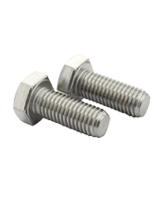
Incoloy 825 Bolts

Incoloy 825 Bolts

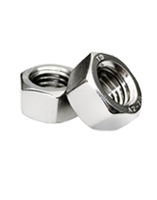
Incoloy 825 Nuts

Incoloy 825 Nuts

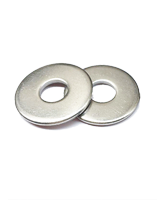
Incoloy 825 Washers

Incoloy 825 Washers

Incoloy 825 Screws

Incoloy 825 Screws

Send Your Enquiry

Technical Data

Incoloy 825 Fasteners — Standard Specification Sheet

Parameter

Specification

Material Grade

Incoloy 825 / Alloy 825 / Nickel Alloy 825

UNS Designation

UNS N08825

Werkstoff Number

2.4858

Alloy Type

Titanium-stabilised nickel-iron-chromium alloy with molybdenum and copper

Governing Standards

ASTM B425, ASME SB425 (rod and bar); ASTM B564, ASME SB564 (forgings); ASTM B424 (plate and sheet); ASTM F467, ASTM F468 (finished nuts and bolts)

Dimensional Standards

ASME B18.2.1, ASME B18.2.2, ASME B18.3, ASME B18.21.1, DIN 931, DIN 933, DIN 934, DIN 125, DIN 976, DIN 7991, ISO, JIS, BS, GB, IS

Supply Condition

Solution annealed (standard for Alloy 825 fasteners)

Size Range (Bolts)

M3 – M100 | 3/16" to 4" | custom sizes on request

Size Range (Nuts)

M3 – M56 | 3/16" to 2"

Size Range (Washers)

M3 – M56 | 3/16" to 2"

Length Range

3 mm to 200 mm and above (custom lengths available)

Thread Types

UNC, UNF, UN, 8UN, BSW, BSF, metric coarse, metric fine, left or right hand

Thread Configuration

ASME B1.1 2A/3A – 2B/3B inch unified; ASME B1.13M 6g–6H metric coarse

Head Styles

Hex, heavy hex, square, round, flange, countersunk, socket, button, truss, T-head

Manufacturing Route

Cold heading, hot forging, CNC turning, thread rolling, solution annealing

Surface Finish

Pickled and passivated (standard), bright, polished, mill, Xylan, PTFE, zinc-nickel, electroless nickel

Tolerance

OEM / ODM to drawing; ±0.03 mm achievable on machined features

Test Certificate

EN 10204 / 3.1 mill test certificate; PED 97/23/EC and AD 2000 W2 on request

Additional Compliance

NACE MR0175 / ISO 15156 for sour service; free from mercury and radioactive contamination on request

Certification

Dual certified to ASTM and ASME codes

Delivery

Standard products 7–15 days; custom products 2–4 weeks

Country of Origin

India (Mumbai, Maharashtra)

Chemical Composition of Incoloy 825 Fasteners (UNS N08825)

Element

Symbol

Weight %

Metallurgical Role

Nickel

Ni

38.00 – 46.00

Chloride SCC resistance; austenitic stability

Iron

Fe

22.00 min

Balance element; keeps cost below fully nickel-based alloys

Chromium

Cr

19.50 – 23.50

Passive film for oxidising acids and general corrosion

Molybdenum

Mo

2.50 – 3.50

Pitting and crevice resistance in chlorides

Copper

Cu

1.50 – 3.00

The key addition — resistance to reducing acids (H₂SO₄, H₃PO₄)

Titanium

Ti

0.60 – 1.20

Stabiliser against chromium carbide precipitation and intergranular attack

Manganese

Mn

1.00 max

Deoxidiser; sulphur control

Silicon

Si

0.50 max

Deoxidiser

Carbon

C

0.05 max

Restricted to limit sensitisation risk

Aluminium

Al

0.20 max

Residual limit

Sulphur

S

0.03 max

Restricted to protect hot workability

Mechanical Properties of Incoloy 825 Fasteners (Solution Annealed)

ASTM B425 Minimum

Typical Value

586 MPa / 85,000 psi

~690 MPa / 100,000 psi

241 MPa / 35,000 psi

~310 MPa / 45,000 psi

30% min

35 – 45%

~75 – 90 HRB

~80 HRB

Physical Properties of Incoloy 825

Property

Value

Density

8.14 g/cm³ (0.294 lb/in³)

Melting Range

1370 – 1400 °C (2500 – 2550 °F)

Modulus of Elasticity (RT)

~196 GPa (28 × 10⁶ psi)

Specific Heat

440 J/kg·K

Thermal Conductivity (RT)

11.1 W/m·K

Electrical Resistivity (RT)

~1.13 µΩ·m (113 µΩ·cm)

Mean Coefficient of Thermal Expansion (20–100°C)

~14.0 µm/m·°C

Recommended Maximum Service Temperature

~540 °C (1000 °F) for sustained service

PREN (Cr + 3.3Mo)

~30 – 32

Magnetic Response

Non-magnetic (austenitic)

Equivalent Grades & International Designations

Standard

Werkstoff Nr.

UNS

JIS

BS

GOST

AFNOR

EN

Incoloy 825

2.4858

N08825

NCF 825

NA 16

ЭИ703

NFE30C20DUM

NiCr21Mo

Incoloy 825 Bolts & Screws

Bolt / Screw Type

Common Standard

Typical Use Case

Hex bolts / hex head bolts

ASME B18.2.1, DIN 931/933

General flange and structural bolting in acid service

Heavy hex bolts

ASME B18.2.1

Pressure-boundary flanged joints

Socket head cap screws

ASME B18.3, DIN 912

Pumps, valve internals, compact process equipment

Button and truss head screws

ISO 7380

Low-profile covers and guards

Countersunk / flat head screws

DIN 7991, ISO 10642

Flush-mounted liners and tank internals

Flange head bolts

DIN 6921

Vibration-prone joints without a separate washer

Carriage bolts and square head bolts

DIN 603 / ASME B18.2.1

Through-bolted plate, lining and cladding work

U bolts, J bolts, eye bolts, hook bolts

DIN 580 / custom

Pipe support, lifting and tube clamping

Anchor bolts, sleeve and wedge anchors

ASTM B564 / drawing

Equipment and foundation anchoring in corrosive plants

Set screws and grub screws

DIN 913–916

Shaft and collar location

Self-drilling, self-tapping and hi-lo screws

DIN 7504 / 7981

Sheet, duct and FRP-adjacent fixings

Machine screws, lag screws, wood screws

ISO 14579 / custom

General assembly and support hardware

Incoloy 825 Nuts

Nut Type

Common Standard

Typical Use Case

Hex nuts

ASTM F467, DIN 934

Standard mating nut for Alloy 825 bolting

Heavy hex nuts

ASTM F467, ASME B18.2.2

Pressure-boundary flange joints

Hex jam / thin nuts

DIN 439

Locking and clearance-limited joints

Nyloc / nylon insert lock nuts

DIN 985

Vibration resistance below the polymer temperature limit

All-metal prevailing torque lock nuts

DIN 980

Vibration locking where polymer inserts are unsuitable

Castle and slotted nuts

DIN 935

Cotter-pin retention

Dome / acorn / cap nuts

DIN 1587

Thread protection against acid ingress and splash

Coupling nuts

DIN 6334

Threaded rod extension

Wing nuts, eye nuts, handle nuts, T-nuts

DIN 315 / custom

Hand-adjusted access hardware

Square nuts, cage nuts, panel nuts

DIN 557 / custom

Channel fixing and enclosure work

Weld nuts, rivet nuts, self-clinching nuts

DIN 928 / custom

Blind and sheet-metal fastening

Incoloy 825 Stud Bolts & Threaded Rods

Stud / Rod Type

Description

Fully threaded stud bolts

Continuous thread both ends — the standard ASME B16.5 flange stud

Double-ended studs (tap-end / nut-end)

Plain centre body with threaded ends for tapped-hole assemblies

Half-threaded and partial-thread studs

Where a plain grip length passes through the joint

Reduced-shank stud bolts

Waisted body for controlled elongation and improved fatigue performance

Threaded rods / all-thread rod

DIN 976, cut to length or supplied in standard bar lengths

Weld studs and clinch studs

Attachment hardware for vessel and duct fabrication

Tie rods, rod ends and turnbuckles

Adjustable restraint hardware in corrosive plant

Dowel pins and precision studs

Location hardware machined to h6 tolerance

Incoloy 825 Washers

Washer Type

Standard

Function

Plain / flat washers

DIN 125, DIN 126, ASME B18.21.1

Load distribution under head or nut

Fender and structural washers

F436 style / custom

Large bearing area on oversized or soft-lined holes

Spring / split lock washers

DIN 127

Vibration resistance in cycled joints

Belleville / conical spring washers

DIN 6796

Preload maintenance through thermal and chemical cycling

Tab washers and lock plates

DIN 93 / 463

Positive mechanical locking

Star / serrated tooth lock washers

DIN 6797 / 6798

Anti-rotation on coated or lined surfaces

Square, ogee and dock washers

Custom

Heavy plate and structural work

Sealing and bonded washers

Custom

Fluid-tight fixings on panels and tank roofs

Fold 7 — Corrosive Environments: Where Alloy 825 Actually Performs

Environment

Alloy 825 Performance

Practical Guidance

Sulphuric acid (H₂SO₄)

Very good across a wide concentration and temperature band

The classic application — pickling lines, acid plants, battery-grade handling

Phosphoric acid (H₃PO₄)

Very good, including wet-process conditions

Fertiliser plants and phosphoric acid evaporators

Chloride-bearing streams

Effectively immune to chloride stress corrosion cracking

Where 304 and 316 studs crack, 825 does not

Seawater

Good in flowing conditions

For stagnant or crevice-prone seawater, consider Inconel 625 or super duplex

Sour gas / H₂S service

Suitable when procured to NACE MR0175 / ISO 15156

State the requirement at enquiry stage — it is not automatic

Sulphur-bearing flue gases

Good — a standard FGD and pollution-control material

Absorber internals, ducting and damper hardware

Nitric and other oxidising acids

Good

Chromium content carries the oxidising duty

Organic acids and alkalis

Good

Broad process-industry suitability

Hot hydrochloric acid

Limited — not the right alloy

Specify Hastelloy C-276 or C-22 instead

Sustained high temperature (>540°C)

Not suitable — sensitisation risk

Specify Incoloy 800/800HT or Inconel 600

Fold 8 — Temperature Limits and Heat Treatment

Parameter

Value

Why It Matters

Recommended maximum sustained service temperature

~540 °C (1000 °F)

Above this, prolonged exposure risks carbide precipitation and loss of corrosion resistance

Sensitisation risk band

~650 – 760 °C (1200 – 1400 °F)

Avoid prolonged holds here; the titanium stabiliser helps but does not make the alloy immune

Solution annealing temperature

~930 – 980 °C (1710 – 1800 °F), rapid cool

Restores a homogeneous austenitic structure and dissolves carbides

Stabilise anneal (where specified)

~940 °C, controlled cool

Used where maximum intergranular attack resistance is required

Hot working range

~870 – 1180 °C

Forging window for heads and anchors

Low-temperature capability

Cryogenic — no ductile-to-brittle transition

Usable in refrigerated and cryogenic process hardware

Fold 9 — Incoloy 825 Bolt Torque Guidance

Read this before using any 825 torque chart you find online. Published nickel-alloy torque tables are frequently built around higher-strength grades and then reused for Alloy 825 without adjusting the proof stress. A 1/2"–13 figure in the 69–78 ft-lb range — which is common in circulated tables — implies a bolt stress of about 58 ksi. The ASTM B425 minimum yield for Alloy 825 is 35 ksi. On minimum-property material, that would take the fastener past yield during assembly.

The Method

Size (UNC)

Tensile Stress Area (in²)

Target Preload (lbf)

Torque, Dry K=0.20 (ft-lb)

Torque, Lubricated K=0.15 (ft-lb)

3/8"–16

0.0775

1,763

11

8

1/2"–13

0.1419

3,228

27

20

5/8"–11

0.2260

5,142

54

40

3/4"–10

0.3340

7,599

95

71

7/8"–9

0.4620

10,511

153

115

1"–8

0.6060

13,787

230

172

1-1/4"–8

1.0000

22,750

474

355

Fold 10 — Applications & Industries Served

Industry

Where Incoloy 825 Fasteners Are Used

Why This Alloy Wins

Sulphuric acid production & pickling

Acid plant bolting, pickling line hardware, tank and launder fixings

The alloy was developed for exactly this duty

Phosphoric acid & fertiliser

Evaporators, reactor internals, agitator and pump hardware

Copper addition resists wet-process phosphoric attack

Oil & gas — sour service

Wellhead bolting, downhole hardware, separator internals

H₂S resistance under NACE MR0175 procurement

Chemical processing

Heat exchangers, reactors, piping supports, agitator shafts

Handles mixed oxidising and reducing streams

Pollution control & FGD

Absorber internals, ducting, damper and expansion joint hardware

Resists sulphur-bearing flue gas condensate

Nuclear fuel reprocessing

Spent fuel handling, storage and auxiliary reprocessing hardware

Nitric acid resistance with controlled contamination limits

Marine & offshore

Seawater heat exchangers, splash-zone fixings, platform hardware

Chloride SCC immunity with useful pitting resistance

Pulp & paper

Digesters, bleach plant hardware, recovery equipment

Chloride and acid resistance in wet service

Power generation

Condenser and cooling water hardware, FGD systems

Long service life in chloride-bearing cooling circuits

Pharmaceutical & food processing

Reactor and clean-in-place skid hardware

Non-contaminating, cleanable passive surface

Corrosion Alloy Selection Grid

Grade

Nominal Ni

PREN (approx.)

Min Yield

Best Suited To

Incoloy 825

38 – 46%

~30 – 32

35 ksi (241 MPa)

Sulphuric and phosphoric acid, chlorides, sour service

Alloy 20 (N08020)

32 – 38%

~30

35 ksi (241 MPa)

Sulphuric acid focus; slightly lower chloride capability

Stainless Steel 904L

23 – 28%

~34

31 ksi (216 MPa)

Dilute sulphuric acid on a tighter budget

Incoloy 800 / 800HT

30 – 35%

N/A (heat-focused)

30 ksi (205 MPa)

High-temperature process hardware, not acid service

Inconel 625

58% min

~45

60 ksi (414 MPa)

Severe seawater, high temperature, high strength

Hastelloy C-276

57% min

~68

41 ksi (283 MPa)

Hot hydrochloric acid and the most aggressive media

Incoloy 825 vs Stainless Steel 316L vs Inconel 625

Criterion

Incoloy 825

Stainless Steel 316L

Inconel 625

Nominal nickel content

38 – 46%

10 – 14%

58% min

Sulphuric acid resistance

Very good (copper-bearing)

Poor

Good

Chloride SCC resistance

Effectively immune

Poor above ~60°C

Effectively immune

Pitting resistance (PREN)

~30 – 32

~24

~45

Max sustained temperature

~540°C

~870°C (scaling limit)

~982°C

Minimum yield strength

35 ksi

30 ksi

60 ksi

Relative cost index

Medium-high

Low

High

Best-fit duty

Acid service with chlorides

General corrosion service

Severe seawater and high temperature

Testing We Perform

Test

Purpose

Availability

Positive Material Identification (PMI)

Confirms alloy grade before dispatch

100% of lots

Chemical analysis (spectro)

Verifies composition against ASTM B425

Per heat

Tensile, yield and elongation

Confirms mechanical class against B425 minima

Per lot / per heat

Hardness (Rockwell / Brinell)

Confirms annealed condition

Per lot

Intergranular corrosion test (ASTM G28)

Confirms freedom from sensitisation — critical for 825

On request / per spec

Pitting corrosion test (ASTM G48)

Validates chloride performance

On request

Ultrasonic and radiographic testing

Internal flaw detection in billets and large studs

On request / per spec

Dye penetrant (DP) testing

Surface crack detection

On request

Impact and flattening tests

Ductility verification where specified

On request

Third-party inspection

TÜV, BV, SGS, Lloyd's witness inspection

On request

Fold 14 — Standards, Certifications & Documentation

Standard

Scope for Incoloy 825 Fasteners

ASTM B425 / ASME SB425

Nickel-iron-chromium-molybdenum-copper alloy rod and bar — the primary stock standard for 825 fasteners

ASTM B564 / ASME SB564

Nickel alloy forgings — heavy hex heads, anchors and forged specials

ASTM B424 / ASME SB424

Plate, sheet and strip — relevant for washers and formed hardware

ASTM F467 / ASME SF467

Nonferrous nuts for general use

ASTM F468 / ASME SF468

Nonferrous bolts, hex cap screws and studs for general use

NACE MR0175 / ISO 15156

Sour service qualification — specify explicitly at enquiry stage

ASME B18.2.1 / B18.2.2 / B18.3

Dimensional standards for inch bolts, nuts and socket screws

ASME B1.1 / B1.13M

Unified inch and metric thread tolerance classes

DIN 931 / 933 / 934 / 125 / 976

Metric bolt, nut, washer and threaded rod dimensions

EN 10204 3.1

Mill test certificate issued by the manufacturer's independent inspection function

PED 97/23/EC, AD 2000 W2

Pressure equipment conformity documentation (on request)

Fold 15 — Why Buy Incoloy 825 Fasteners From Unifit Fastener

EEAT Pillar

What Unifit Fastener Delivers

Experience

Production and export experience across acid plant, fertiliser, refinery, FGD and marine bolting projects — including emergency turnaround supply where the shutdown date, not the price, is the constraint.

Expertise

In-house metallurgists who advise on alloy selection against your actual service chemistry, plus thread class, anti-galling strategy and preload method before you buy.

Authoritativeness

Manufacturing to ASTM, ASME, DIN, ISO, JIS, BS and IS; dual certification; acceptance by third-party inspection agencies and EPC approval processes.

Trustworthiness

Heat-number traceability, EN 10204 3.1 certification as standard, correct standard references on every certificate, and published technical data that matches what we ship.

Fold 16 — Incoloy 825 Fasteners Price: What Actually Drives Your Quote

Cost Driver

Effect on Price

LME nickel, chromium and molybdenum pricing

The dominant input; raw material is typically 60–70% of a finished fastener cost

Size and section

Large-diameter studs and heavy hex nuts consume disproportionately more bar stock

Standard vs custom geometry

Catalogue DIN/ASME items cost far less than drawing-specific specials requiring new tooling

Thread type and class

3A/3B and fine threads require tighter control and add cost over 2A/2B

Order quantity

Cold-headed volume runs are materially cheaper per piece than machined small batches

Surface treatment

Xylan, PTFE, electroless nickel and zinc-nickel add per-piece processing

Testing and compliance route

G28 / G48 corrosion testing, NACE MR0175 procurement and witnessed inspection add cost and lead time

Delivery urgency

Expedited turnaround supply carries a premium over planned procurement

Our Manufacturing & Quality Process

Step-by-Step Production Route

  1. Raw material intake — certified Alloy 825 bar and wire from approved mills, verified against the mill certificate on arrival.
  2. Incoming PMI and chemistry check — optical emission spectroscopy confirms Ni, Cr, Mo, Cu and Ti before material enters production.
  3. Forming — cold heading for volume sizes; hot forging between roughly 870°C and 1180°C for heavy heads and anchors.
  4. Machining and thread production — CNC turning for specials; threads rolled wherever section permits, for better grain flow and fatigue life than cut threads.
  5. Solution annealing — restores a homogeneous austenitic structure and dissolves chromium carbides.
  6. Pickling and passivation — the standard finish for 825, ensuring a fully developed passive film before service.
  7. Optional surface treatment — Xylan, PTFE, electroless nickel or zinc-nickel where anti-galling or torque control is specified.
  8. Inspection and testing — dimensional, hardness, tensile and corrosion testing against the applicable ASTM clause.
  9. Marking, documentation and packing — heat number stamped, EN 10204 3.1 certificate issued, VCI wrapping and export-grade boxing.

FAQ's About Incoloy 825 Fasteners

What is the tensile strength of Incoloy 825 bolts?

The ASTM B425 specification minimum for solution-annealed Alloy 825 is 586 MPa (85,000 psi) tensile and 241 MPa (35,000 psi) yield, with 30% minimum elongation. Typical certified mill results run higher — often around 690 MPa tensile and 310 MPa yield — but joint calculations should always use the specification minimum unless you are designing against a specific certificate.

What is the maximum temperature for Incoloy 825 fasteners?

Approximately 540°C (1000°F) for sustained service. Alloy 825 is a corrosion-resistant alloy, not a high-temperature one, and prolonged exposure above that range risks carbide precipitation and loss of corrosion performance. For hot service, specify Incoloy 800/800HT or Inconel 600 instead.

Is Incoloy 825 resistant to sulphuric acid?

Yes — it is the alloy's defining property. The 1.5–3% copper addition provides genuine resistance to reducing acids including sulphuric and phosphoric acid across a wide concentration and temperature range, which chromium-only alloys cannot match. This is why 825 dominates pickling lines, acid plants and phosphoric acid evaporators.

Why is titanium added to Incoloy 825?

Titanium acts as a stabiliser. It preferentially combines with carbon to form titanium carbides, preventing chromium from being drawn out of solution to form chromium carbides at grain boundaries. That protects the heat-affected zone of welds from intergranular attack without requiring a post-weld solution anneal.

What is the difference between Incoloy 825 and Inconel 625 fasteners?

825 is a nickel-iron-chromium alloy with copper, optimised for sulphuric and phosphoric acid service at moderate temperature. 625 is a fully nickel-based alloy with molybdenum and niobium, offering roughly double the yield strength, far higher pitting resistance (PREN ~45 versus ~31) and service to about 982°C. Choose 825 for acid duty and value; 625 for severe seawater, high temperature or higher strength.

Get Your Incoloy 825 Fastener Quote in One Working Day

Send us your drawing, service chemistry, standard and quantity — our engineering team will confirm that Alloy 825 is the right grade for your exposure before quoting. If a cheaper alloy will do the job, we will say so. No obligation, no generic price lists.

Speak to a Corrosion Engineer — call or WhatsApp us today.

Not sure which grade you need? Compare Alloy 20, 904L and Hastelloy C-276, or contact our team for a recommendation.

Request a Free Quote →