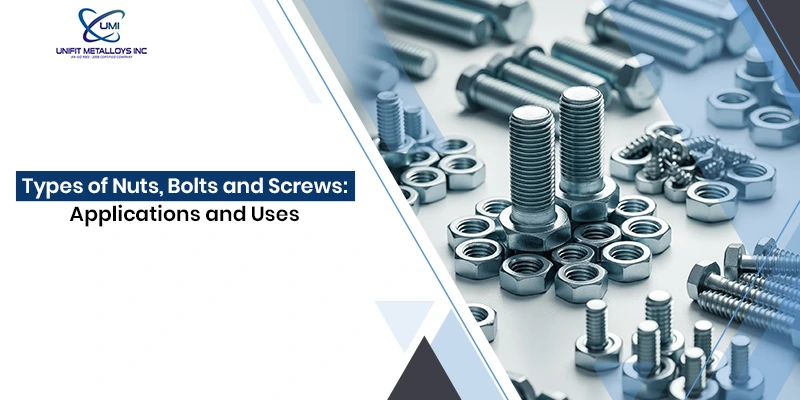
Fasteners hold modern engineering together. from steel structures and heavy machinery to home furniture and electronics. In this guide, we’ll cover the most common types of nuts and bolts (including the different types of nuts and bolts), the types of screws used across industries, so you can pick the right hardware for performance, safety, and service life.
Understanding Nuts, Bolts and Screws
Before choosing a fastener, it helps to know what each part does. Bolts are externally threaded fasteners typically used with a nut to clamp parts together; nuts provide the mating internal thread and help prevent axial movement; screws are externally threaded fasteners designed to form or mate with an internal thread in a part (or a nut) and are often used without a separate nut. In practice, the difference between bolts and screws comes down to how they’re used in the joint.
Various Types of Nuts and Bolts and Screws
Selecting the correct fastener is about joint design, materials, operating loads, vibration, environment (corrosion/temperature), assembly method, and maintenance access. Getting this match right reduces failures, loosening, and costly rework across construction, automotive, MRO, and OEM settings. Let us discuss the various types of nuts and bolts used in these contexts.
Types of Nuts
Choosing a nut means balancing strength, space, vibration resistance, and service conditions. Here are widely used options:
- Hex Nuts: Six-sided general-purpose nuts for standard bolted joints in structures, machinery, and equipment. Available in numerous grades and finishes.
- Lock Nuts: Include all-metal crimped types and nylon-insert styles to resist loosening under vibration or thermal cycling. Good for rotating equipment, engines, and assemblies subject to shock.
- Wing Nuts: Hand-tightened, tool-free nuts for frequent adjustments and light-duty clamping (fixtures, covers).
- Cap (Acorn) Nuts: Domed top encloses the bolt end for a clean look and to protect threads; used where appearance or snag prevention matters.
- Coupling Nuts: Long hex nuts for joining two male threads, commonly threaded rods in hangers, supports, and extensions.
- Flange Nuts: Built-in washer-like flange spreads load over a larger area and helps with seating on thin or uneven surfaces. Serrated versions add bite to resist back-off.
- Serrated Flange Nuts: Same flange footprint with serrations under the face to increase friction and combat loosening in high-vibration areas.
- Square Nuts: Four-sided profile for older fixtures, channels, and applications needing greater surface contact with tools or captive slots.
Types of Bolts
Bolt selection starts with head style, shank/thread design, and how the bolt interfaces with the joint and tooling:
- Hex Bolts / Hex Head Cap Screws: The everyday workhorse for machinery and structural connections; hex head allows higher torque with standard wrenches. Heavy-hex and structural patterns are used for steel-to-steel connections.
- Carriage Bolts: Rounded dome head with a square neck that locks into wood or square holes to prevent rotation during tightening; common in wood structures and fixtures.
- Lag Bolts (Lag Screws): Large wood-thread fasteners with a hex head for heavy timber, frames, and equipment anchoring into wood.
- U-Bolts: U-shaped with two threaded legs for clamping round objects like pipes/tubes to supports or frames.
- Eye Bolts: Feature a forged or formed eye for lifting points, guying, or attaching cables/ropes. Use rated lifting eye bolts where overhead loads are involved.
- J-Bolts: J-shaped anchors for securing items to concrete or framing; commonly used as cast-in anchors for base plates and fixtures.
Types of Screws
Screws vary by thread form, point, and intended material. Pick based on the substrate and required pull-out/strip resistance:
- Wood Screws: Coarse, tapered threads and pointed tip for timber; designed to clamp boards and hardware into wood without a nut.
- Machine Screws: Uniform (machine) threads for use with tapped holes or nuts in metal and plastics; available in many head/drive styles for equipment assembly.
- Self-Tapping Screws: Cut/form their own mating thread in thin metal or plastics; reduce pre-tapping steps in production.
- Sheet Metal Screws: Sharp point and fine, closely spaced threads for thin sheet joints, HVAC ducts, and enclosures.
- Drywall Screws: Bugle head to seat flush in gypsum board; optimized threads for fastening drywall to wood or steel studs.
Choosing the Right Fastener
A good selection process looks at the whole joint, not just size:
- Material & Finish: Match corrosion exposure and temperature. Stainless (304/316) for marine or food lines; zinc-plated or alloy steel for general service; structural grades for steelwork.
- Strength Class: Use the correct grade (e.g., 8.8/10.9 metric, Grade 5/8 inch) for the loads. Over- or under-specifying can lead to failures or unnecessary cost.
- Thread & Fit: Coarse vs. fine threads, tolerance class, and engagement length change clamp force and vibration resistance.
- Vibration & Service: Add locking features (nylon insert, all-metal lock, serrated flange) where vibration or thermal cycling is present.
- Assembly & Access: Head/drive style should suit tools and clearances; carriage bolts for one-side access, socket heads for tight spaces.
Applications of Nuts, Bolts, and Screws
Fasteners appear in every sector, but real-world use depends on joint design, duty cycle, environment, and service access. Below are common application areas with typical hardware choices and selection notes.
- Construction & Infrastructure: Structural steel frames use heavy hex structural bolts with matching nuts and hardened washers for high clamp loads. Lag bolts anchor timber beams, handrails, and equipment bases into wood. Carriage bolts are common in decks and walkways where a smooth, snag-free head is preferred. Material and coating selection depends on outdoor exposure, wind loads, and local codes.
- SAutomotive & Transportation: Engines, suspensions, brakes, and body panels rely on fine-thread bolts for precise preload and compact packaging. Lock nuts, serrated flanges, and thread lockers help resist vibration and thermal cycling. High-strength alloy steel grades are used in safety-critical joints, while stainless is used for corrosion-prone areas. Torque-angle methods and replacement policies are common for service reliability.
- Machinery & OEM: Powertrain housings, pumps, conveyors, and frames use hex bolts with flange or serrated flange nuts to speed assembly and spread load. Machine screws with tapped holes support enclosure panels, guards, and control boxes. Socket head cap screws are selected where tool clearance is tight. Consistent torque, joint lubrication, and thread engagement are key to uptime.
- DIY & Maintenance: Home projects, furniture, fixtures, and light repairs often use carriage bolts, wood screws, and drywall screws. Pan, countersunk, or bugle heads are chosen to sit flush and protect surfaces. Zinc-plated carbon steel is typical indoors, while stainless is preferred outdoors and in damp locations. Keep a basic kit covering common diameters and lengths for quick fixes.
Conclusion
From hex nuts and carriage bolts to machine screws, the right choice comes from understanding the joint, environment, and service loads. If you’re sourcing for a project or building a standard parts list, explore Unifit Metalloys’ fastener range for reliable quality, grades, and finishes aligned to your application.
Partner with Unifit Fastener for one-stop sourcing across materials (carbon/alloy steel, stainless 304/316), metric and inch sizes, and protective finishes (zinc, HDG, black oxide). Get application-driven guidance, consistent QC, and documentation support as well as fast dispatch and global shipping, so your projects stay on schedule with dependable, compliant fasteners.
Frequently Asked Questions About Types of Nuts, Bolts and Screws
A short primer before the specifics: naming often reflects head style, thread form, and intended substrate. Here are quick answers to common questions buyers and engineers ask.
What are 6-sided screws called?
When referring to the head shape, the common term is hex head (used on hex bolts/hex head cap screws). For nuts, the six-sided standard is a hex nut.
How many types of bolts are there?
There’s no single count, but common families include hex, carriage, lag, flange, socket, eye, U- and J-bolts, each with multiple variants by grade, material, and head/drive.
Can nuts and bolts be reused?
Often yes for general service if threads and seating faces are undamaged and torque-tension specs can be met. However, certain applications (e.g., structural joints, prevailing-torque lock nuts, and critical safety joints) may require replacement. Follow the relevant standard or OEM guidance.
What are specialty fasteners and when are they used?
Specialty fasteners include structural bolts, high-temperature alloys, security heads, and application-specific designs (e.g., lifting eye bolts, serrated flange nuts). Use them when standard hardware can’t meet load, environment, access, safety, or compliance requirements.